
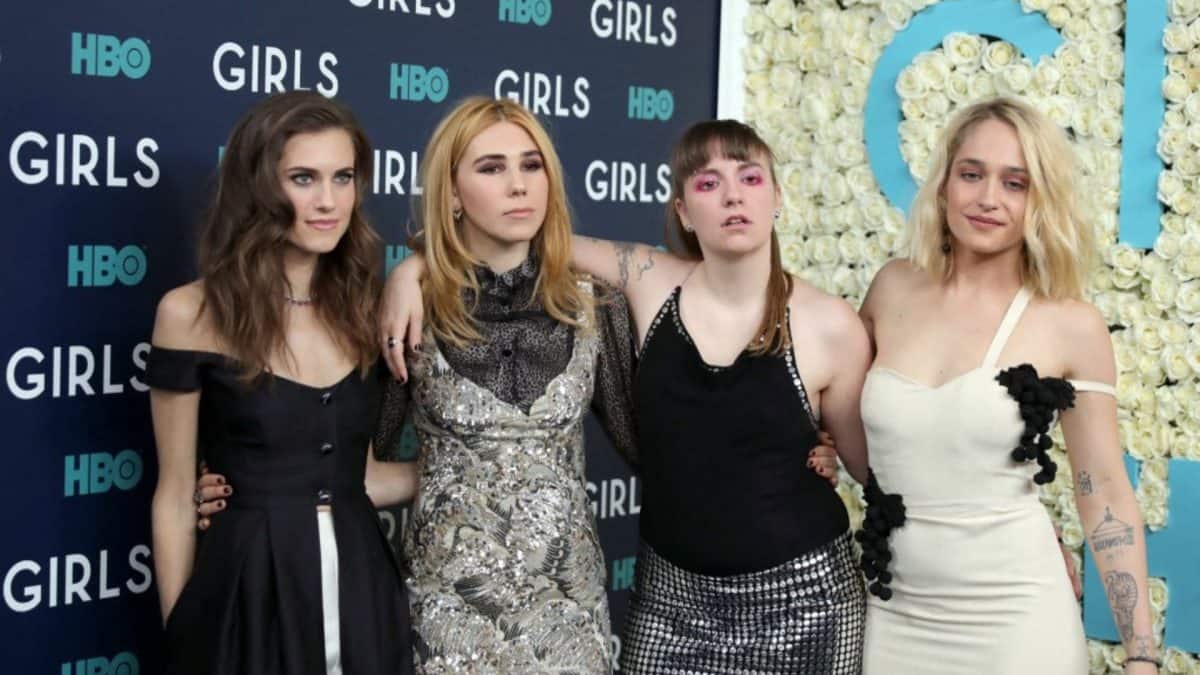
HBO ordered a five-episode revival of Girls, with production set to begin in 2027. Lena Dunham will return as Hannah alongside the original cast. The new episodes will bring the characters into their forties. Dunham said, "The group had proved difficult to silence once they started talking" about life.
Lena Dunham's Girls will return for five episodes in 2027, bringing its central characters into their forties. When the series premiered in 2012, its portrayal of female friendship, sexual awkwardness, professional uncertainty and millennial self-absorption made it one of television's most debated shows.
When Lena Dunham's Girls premiered in 2012, its aspiring writer was struggling to make a living in New York, navigating unsatisfying relationships and trying to reconcile her ambitions with the person she actually was. Her friends were doing little better. Between bad sex, bruised egos and professional uncertainty, the four women spent much of their time making mistakes they were not always equipped to recognise.
Now, nearly 10 years after the series finale, they are coming back. HBO has ordered a five-episode revival of Girls, with production set to begin in 2027. Dunham will return as Hannah, alongside Allison Williams as Marnie Michaels, Jemima Kirke as Jessa Johansson, Zosia Mamet as Shoshanna Shapiro and Andrew Rannells as Elijah Krantz. Judd Apatow, who executive produced the original series, will return in the same capacity.
The new episodes will bring the characters into their forties. Details of the plot and the revival's title have yet to be announced, and Adam Driver, who played Hannah's on-and-off boyfriend Adam Sackler, has not been confirmed as part of the returning cast.
In a statement, Dunham said she had missed the characters but had struggled to imagine them in the present day. They began coming back to her around her fortieth birthday, she said, adding that the group had proved difficult to silence once they started talking.
The appeal of getting it wrong
When Girls released on HBO, its characters offered a different sort of coming-of-age story. They were not really accomplished, and the show did not rush to make them more likeable. Hannah could be self-absorbed and oblivious, Marnie was preoccupied with appearances and control, Jessa's restlessness often hurt people and Shoshanna's determination to get everything right was frequently its own source of trouble.
Their lives were full of small humiliations. Creative ambition did not guarantee success, sexual confidence did not prevent awkward encounters, and being close to someone did not necessarily mean knowing how to treat them well.
For better or worse, it was, essentially, rather realistic.
Dunham, who wrote the pilot in her early twenties, became a prominent cultural figure, while the series helped establish Adam Driver as a rising screen actor.
It also earned 19 Emmy nominations and two wins, including one for outstanding casting for a comedy series.
Who gets to represent a generation?
Girls was frequently discussed as a portrait of millennial life, although its world was considerably narrower than that label suggested.
Its four central women were white, educated and living in New York, with access to forms of cultural and financial support that many young people did not have. Critics questioned the show's limited representation of race and class, particularly given the size of the claim being made on behalf of its generation.
Those objections were difficult to separate from the show's reception. Hannah's financial anxieties and professional frustrations could be recognisable, but the circumstances in which she experienced them were not universal. The freedom to make mistakes, pursue creative work and rely on family support was itself a form of privilege.
What happens after your twenties?
The original Girls ended in 2017 with Hannah beginning a new chapter as a mother. The finale offered a sense of movement in her life without suggesting that she had suddenly worked everything out.
The revival will pick up with its characters in a different stage of adulthood. The questions that occupied them in their twenties may have changed, but they are unlikely to have disappeared altogether. Careers take unexpected turns, friendships shift and relationships accumulate histories that cannot be neatly resolved.
Dunham has since worked on projects including the Netflix series Too Much and the independent film Sharp Stick. Her memoir Famesick, published in 2026, revisited the experience of sudden fame and the responsibilities that came with the success of Girls.