
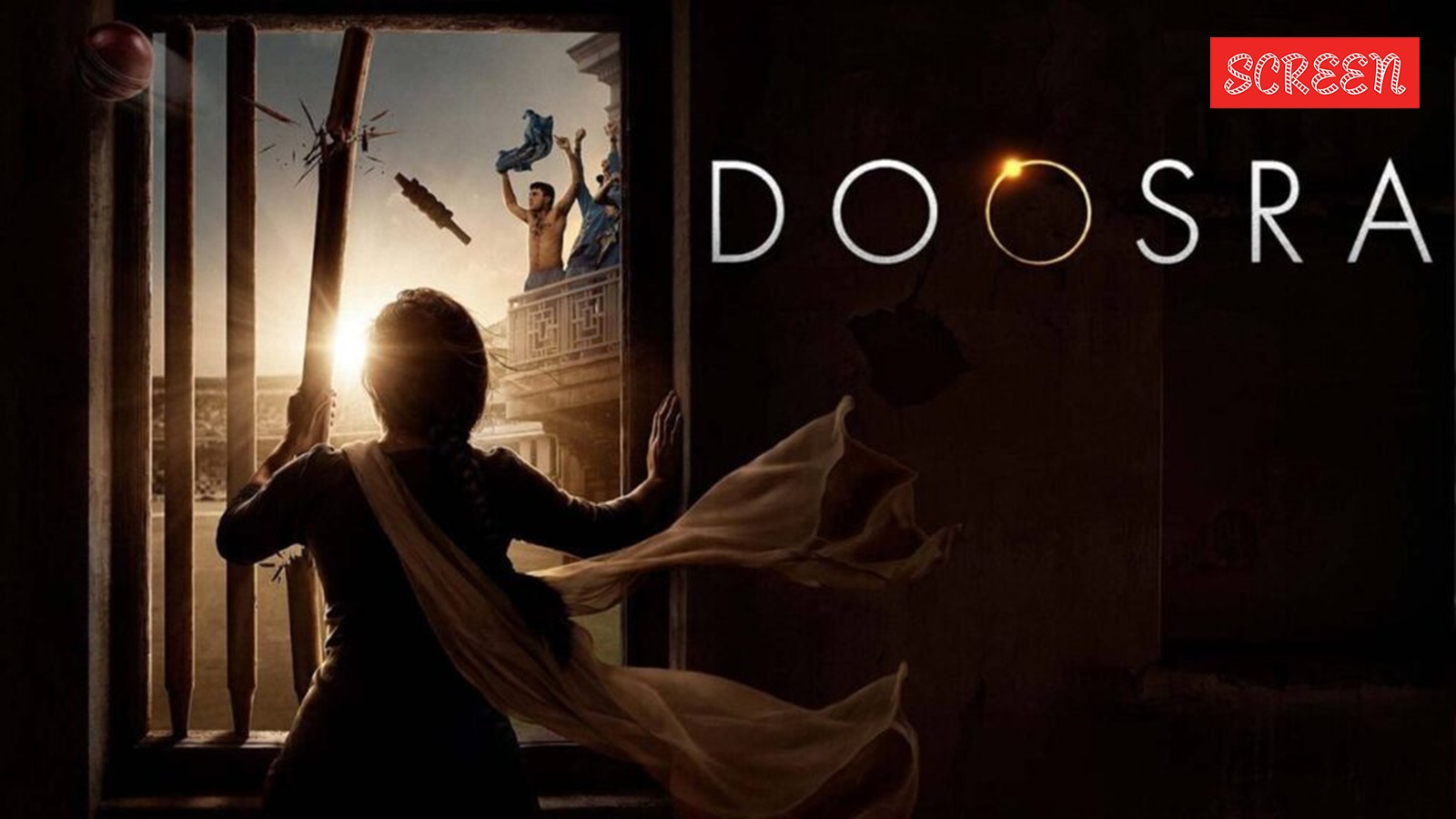
The film Doosra explores India in the 90s by mixing cricket history with a young woman’s coming-of-age story. It showed how the nation and the sport changed during that era. However, the movie got messy as it tried to link these two paths, and it finally fell short overall.
The film begins in the 90s, with a snapshot ride of the decade — the declaration of liberalisation, the empty RBI coffers, the banking on our gold reserves, the rath-yatra and the rise of the ruling party, amongst other important markers — along with developments in the Indian cricket team, with its highs and lows.
Watch Doosra movie trailer:
It felt like an exercise in remembering that turbulent era: nothing comes out of vacuum; the match fixing that rocked both the cricketing and the then political establishment was an outcome of the times.
Did a certain 12th man really refuse to carry water out to his teammates on the field, or was it yet another myth-building exercise of the captain that led us to that nail-biting Lords’ win, topped with that storied Saurav-shirt-off moment?
Clearly, the film believes in it, as fans all over the world cheer lustily for India’s big leap of faith and fortune: real-life commentators are corralled for their opinions, to the point the film seems to turn into a cricket documentary, with the story of the girl — Plabita Borthakur is credible as the conflicted young woman — almost being sidelined.
To begin with, the twinning of the two trajectories feels organic, especially when young Tara is sitting in her aangan with her family, clapping for the Indian team. But then it becomes a stretch. The team’s win being attributed to breaking free from ‘a colonial hangover,’ and Tara’s shaking off gender constraints while discovering who she really is, feels like a forced connection.
Fashioned as a coming-of-age saga of a young woman and a nation’s belief in itself, the film falls short.