
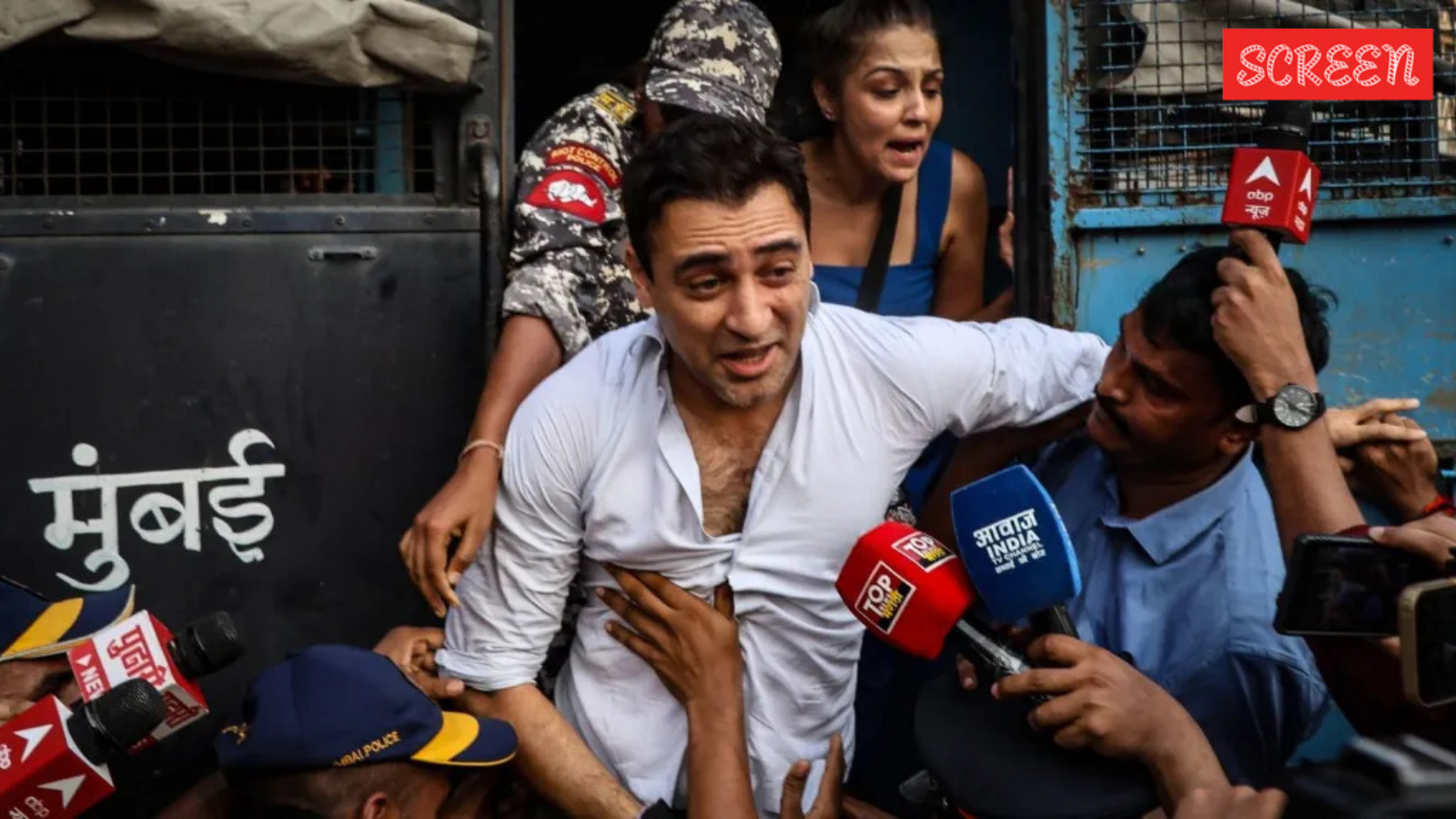
Bollywood remains silent on the legal issues facing Imran Khan, raising questions about industry solidarity. Many stars fear public hostility, online abuse, and threats if they speak out. They choose to protect their careers and families instead. This deep fear makes the film fraternity retreat into safety over taking risks.
The legal questions surrounding the case deserve scrutiny, and the distinction between Indian citizenship and OCI status cannot be ignored. Due process must be followed, and the precise grounds for the notice must be established. But beyond the legalities lies another question, one that should concern Bollywood as much as it concerns the rest of the country: Where is the solidarity of an industry that has spent decades celebrating its collective identity? Why has an incident involving one of its own not prompted a stronger, more visible conversation within the film fraternity? And why does speaking up for a colleague increasingly seem like a risk that few are willing to take?
The price of having an opinion
To pretend that Bollywood’s silence exists in a vacuum would be naive. Over the years, celebrities who have expressed political opinions or questioned those in power have found themselves at the receiving end of online abuse, organised trolling and public hostility. Some have faced calls for boycotts, while others have watched their personal lives and families become targets of vicious attacks. Death threats, including threats directed at family members, are a particularly chilling consequence of an environment in which disagreement can quickly turn into intimidation.
For a celebrity, the consequences can extend beyond social media. There is a career to protect, a film to promote, a production house to work with, a brand endorsement to honour and, perhaps most importantly, a family whose safety matters more than any public statement.
The fear is not necessarily imaginary. In an industry where business relationships, public perception and political sensitivities can intersect, a celebrity may reasonably wonder whether expressing an opinion today could cost them an opportunity tomorrow.
So, they choose silence.
They post about their films, share their holiday pictures, celebrate professional milestones and offer carefully worded statements on subjects that are unlikely to invite controversy. The moment a conversation threatens to become politically uncomfortable, however, the same people who command millions of followers often retreat into the safety of their private lives.
It is easy to condemn this silence from the outside. It is harder to understand the calculations that might precede it.
But understanding the fear does not mean absolving an industry of its responsibility to speak when it matters. If the price of speaking up is so frightening that even a powerful film fraternity finds it safer to remain silent, should we not be concerned about the environment that has made this silence seem necessary?
An industry that celebrates unity but struggles to practise it
Bollywood is remarkably good at demonstrating unity when the circumstances are comfortable. When a film succeeds, congratulatory messages pour in. When a colleague suffers a personal tragedy, tributes and condolences follow. When an industry member is hospitalised or dies, celebrities rally around the family. At award ceremonies, film festivals and public events, the fraternity frequently invokes the idea of being one large family.
But what happens when solidarity demands something more consequential than a social media post? What happens when standing beside a colleague risks inviting political criticism, online harassment or professional repercussions?
That is when the idea of an industry family is put to the test.
Imran Khan has been part of Bollywood’s popular culture, known for films such as Jaane Tu… Ya Jaane Na and Mere Brother Ki Dulhan. After a prolonged absence from the screen, he was geared up to return to films. His current predicament should therefore prompt a conversation that goes beyond his filmography or his personal circumstances.
Bollywood celebrities could ask questions about the circumstances surrounding the notice, call for due process, express concern about the implications of the case or simply acknowledge that a colleague is facing a serious situation. They could do so without endorsing a political party, joining an agitation or taking a position on the resignation of the Chief Election Commissioner.
Yet, when even a measured expression of concern appears too risky, what does that tell us about the industry’s understanding of solidarity?
Unity that exists only when it is convenient is not solidarity. It is association without accountability.
The expectation is not that Bollywood should close ranks around Imran simply because he belongs to a famous family. It is that the industry should be willing to examine the questions raised by his case, irrespective of his surname, connections or political beliefs.
The answer cannot be that every celebrity must speak on every issue. No individual can be expected to comment on everything that happens in the country. Silence, by itself, is not proof of complicity, and a person’s decision not to issue a public statement does not necessarily mean they are indifferent.
But when silence becomes a recurring pattern around contentious public issues, it is fair to ask whether fear, professional calculations and a desire to remain politically uncontroversial have begun to outweigh the industry’s willingness to engage.
When celebrities become more afraid of the consequences than concerned about the issue
There is a peculiar contradiction at the heart of Bollywood’s relationship with public life. The industry thrives on visibility. Its stars build careers by commanding attention, shaping conversations and cultivating a connection with audiences. Their opinions are sought on everything from relationships and parenting to mental health, fitness, education and social change.
Yet, when politics enters the picture, many appear reluctant to use that same visibility. This is not to suggest that celebrities must become political activists. Nor is it to argue that every actor should have a public position on every controversy. But there is a difference between choosing not to participate in politics and being so intimidated by the possible consequences of an opinion that one avoids even asking questions. The latter is a far more troubling prospect.
When celebrities speak about social responsibility, they often remind their audiences of the power of empathy. They encourage people to stand up for what they believe in, challenge prejudice and support those who are vulnerable. Those messages carry greater weight when they are accompanied by a willingness to engage with uncomfortable realities. Otherwise, the industry risks creating a selective version of social responsibility: one that is enthusiastically embraced when it is fashionable, but quietly abandoned when it becomes politically inconvenient. And the cost of that selectivity extends beyond Bollywood.
If celebrities fear being branded politically for merely raising questions, the space for independent thought becomes narrower. If every public intervention is interpreted as an endorsement of one party or an attack on another, meaningful discussion becomes increasingly difficult. And if influential public figures decide that the safest option is to say nothing, audiences are left with a public conversation dominated by those who are either willing to fight the loudest political battles or have no fear of the consequences. And, that cannot be a healthy outcome for public discourse.
Who will speak when speaking up becomes uncomfortable?
Perhaps the most uncomfortable truth is that Bollywood’s silence is not entirely surprising. The industry is a business. Careers are fragile, projects require investment, and professional relationships often depend on people with competing interests. Actors have every right to protect their families and make decisions based on their personal circumstances. It would be unfair to demand heroism from everyone. But it would also be unfair to pretend that an industry capable of mobilising enormous public attention has no role to play when one of its members becomes the subject of a consequential public controversy.
Solidarity does not always require a press conference, a strongly worded statement or a confrontation with political leaders. Sometimes, it begins with asking questions. Sometimes, it means making room for a conversation rather than allowing fear to end it before it begins.
Imran Khan’s case should not become a test of whether Bollywood supports one political party or another. It should become an opportunity to examine whether the industry can distinguish between political allegiance and the responsibility to engage with questions of public importance. Because the real issue is not whether every Bollywood celebrity should stand beside Imran Khan. It is whether an industry that commands the attention of millions has become so afraid of the consequences of speaking that even solidarity now seems like a professional risk.
When the next celebrity faces a similar predicament, will the industry find its voice? Or will it once again wait for the controversy to pass, hoping that silence will protect everyone who chooses it?
The screen may offer an escape from reality. The people who inhabit it, however, cannot indefinitely escape the questions that reality places before them. And if solidarity disappears the moment it becomes inconvenient, perhaps the question we should be asking is not why Bollywood is silent on Imran Khan.
Perhaps it is this: What, exactly, is Bollywood afraid of losing when it chooses to speak, and what is it already losing by remaining silent?