
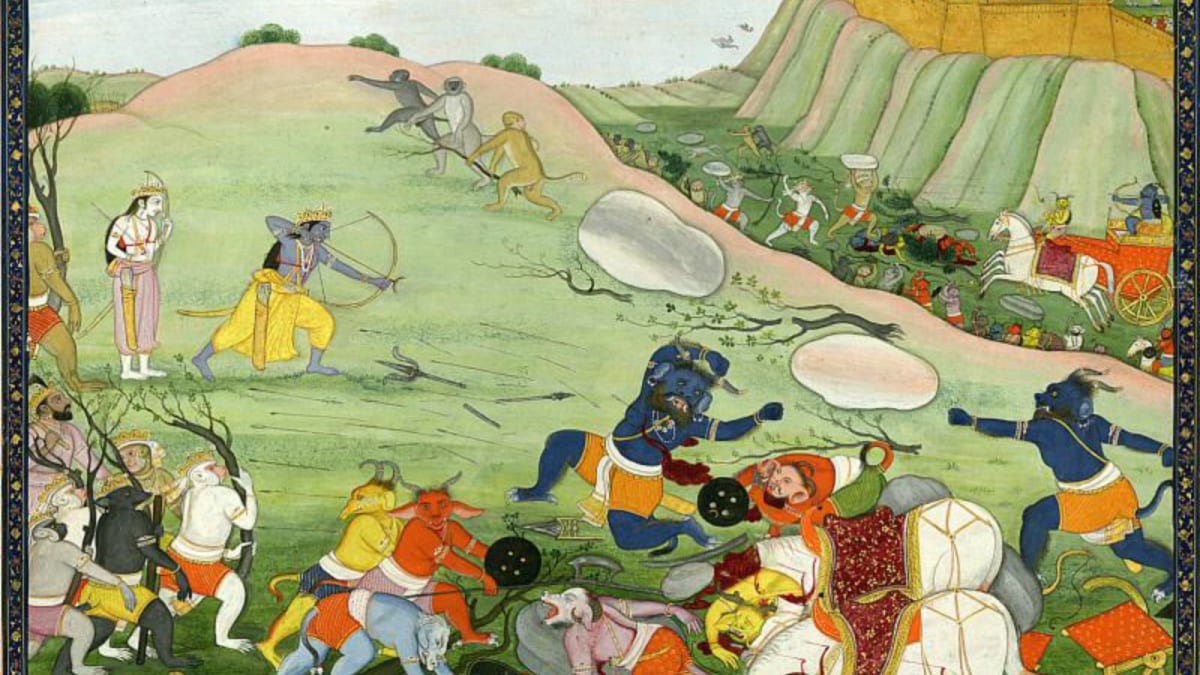
The Ramayana features 14 lesser-known characters whose choices shaped the epic beyond the main figures. While Nitesh Tiwari’s film brings the story to the big screen, these individuals like Jatayu and Manthara deserve attention. Their sacrifices and decisions set major events in motion, changing the fate of many kingdoms.
From Jatayu's sacrifice to Manthara's counsel, meet 14 lesser-known Ramayana characters whose choices shaped the epic and deserve more than a passing mention.
The Ramayana is an epic where every a single character encounter changed the fate of kingdoms from Ayodhya to Lanka. Beyond Ram's journey, Sita's abduction and Ravana's battle with the forces of dharma lies fascinating characters whose stories are just as compelling.
From Jatayu's final act of courage and Manthara's consequential advice, to Shurpanakha's encounter in the forest, these are the lesser-known mythological stories that helped shape the course of the Ramayana.
With Nitesh Tiwari's Ramayana: Part One bringing the epic to the big screen, it is worth looking beyond its central figures at the lesser-known characters whose choices, conflicts and sacrifices shaped this timeless tale.
While Ranbir Kapoor as Ram, Sai Pallavi as Sita and Yash as Ravana take centre stage, the story is shaped by several other characters whose decisions, relationships and sacrifices set its biggest events in motion.
From a bird who risked his life to save Sita to a palace attendant whose counsel changed the fate of Ayodhya, these characters have stories of their own. Here are 14 figures from the wider narrative and film's ensemble whose roles deserve a closer look.
1. Jatayu: The Bird Who Fought Ravana To Save Sita
Jatayu, the vulture king, is remembered for an act of courage that cost him his life. In the Ramayana, he was an old friend of King Dasharatha and encountered Ravana while the latter was carrying Sita away after abducting her. Despite knowing the strength of the Lankan king, Jatayu attempted to stop him and fought fiercely to rescue Sita. Ravana eventually overpowered him, leaving him gravely wounded.
When Ram and Lakshman reached the spot during their search for Sita, they found Jatayu on the verge of death. Before breathing his last, he informed Ram about Ravana's direction and Sita's abduction. His final act is often remembered as an example of courage, loyalty and selfless devotion, showing that the fight against adharma was not limited to warriors or kings.
2. Shurpanakha: The Encounter That Changed Everything
Shurpanakha, Ravana's sister, plays a significant role in the events that lead to Sita's abduction. According to Valmiki's Ramayana, she encountered Ram and Lakshman at Panchavati during their exile and expressed her desire to marry Ram. He directed her towards Lakshman, who also turned her away. When she moved towards Sita in anger, Lakshman disfigured her by cutting off her nose and ears.
Humiliated, Shurpanakha approached her brother Khara and later Ravana, setting off a chain of events that eventually led to Sita's abduction. Her story is often told through this single confrontation, but later sections of the epic also explore her family relationships and personal history. The episode is an important turning point because it brings Ravana's attention to Sita and sets the central conflict in motion.
3. Manthara: The Palace Attendant Behind Ram's Exile
Manthara was Kaikeyi's trusted attendant and one of the most consequential supporting characters in the Ramayana. When she saw Ayodhya preparing for Ram's coronation, she questioned why Kaikeyi was celebrating when her own son, Bharata, would not inherit the throne. She persuaded the queen that Ram's coronation could threaten Bharata's future and influence over the kingdom.
Manthara reminded Kaikeyi of the two boons that King Dasharatha had once promised her. Acting on her advice, Kaikeyi demanded that Bharata be crowned king and Ram be sent into exile for 14 years. Her intervention transformed what should have been a joyous occasion into a family and political crisis. While Manthara is frequently portrayed as manipulative, her role is crucial to understanding how palace conversations and personal ambitions can alter the fate of an entire kingdom.
4. Maricha: The Demon Behind The Golden Deer
Maricha's role in the Ramayana is closely connected to one of its most recognisable episodes: the golden deer. His earlier encounter with Ram took place during the latter's journey with Sage Vishwamitra, when he was struck by Ram's weapon and hurled far away. Having experienced Ram's strength, Maricha later warned Ravana against provoking him.
However, Ravana insisted that Maricha help him abduct Sita. He took the form of an extraordinary golden deer and appeared near Ram and Sita's forest dwelling. Captivated by the animal's appearance, Sita asked Ram to capture it. Ram followed the deer into the forest, leaving Lakshman behind to guard her. When struck by Ram's arrow, Maricha cried out in Ram's voice, calling for Sita and Lakshman. This deception drew Lakshman away too, leaving Sita vulnerable to Ravana's plan.
5. Tataka: The Demoness Who Became Ram's First Major Test
Tataka is among the first formidable opponents Ram encounters during his journey with Sage Vishwamitra. According to the Bala Kanda, she was originally born into a yaksha family and was the daughter of Suketu. After a series of events involving Sage Agastya, she was cursed and transformed into a fearsome rakshasi. She eventually became a source of terror in the forest, disrupting the lives of sages and those who travelled through the region.
When Vishwamitra asked Ram to confront her, the young prince hesitated because Tataka was a woman. The sage, however, explained that protecting the innocent and restoring peace were part of a ruler's duty. Ram eventually killed her, marking an important early moment in his journey as a warrior. Her story raises questions about duty, justice and the difficult choices that accompany the responsibility of protecting others.
6. Subahu: The Demon Who Disrupted Vishwamitra's Yagna
Subahu is remembered for his role in disrupting the sacred rituals performed by Sage Vishwamitra. When Ram and Lakshman accompanied the sage to protect his yagna, they encountered demons who repeatedly disturbed the ceremony by raining blood and other impurities upon the sacrificial fire. Subahu was among those who attacked the ritual.
Ram used his divine weapons to defeat the attackers. He killed Subahu, while Maricha was struck and hurled far away. This episode is significant because it marks Ram's early responsibility as a protector of sages and their religious practices. It also establishes the strength and skill he would demonstrate in later conflicts. Although Subahu is not as widely discussed as Ravana or Maricha, his encounter with Ram is an important part of the prince's early journey and the events that precede his marriage to Sita.
7. Vidyutjihva: Shurpanakha's Husband
Vidyutjihva, also spelt Vidyujjihva, is identified in the Uttara Kanda tradition as Shurpanakha's husband. He was associated with the Kalakeya Danavas, and his story adds another dimension to Ravana's family history. According to this account, Ravana killed Vidyutjihva during a battle, reportedly without realising who he was fighting. Shurpanakha later confronted her brother, grieving that his actions had left her widowed.
The episode is not part of the central Panchavati encounter described in the Aranya Kanda. Instead, it appears in the Uttara Kanda, whose episodes are treated differently across textual and scholarly traditions. This distinction matters because Vidyutjihva's story is often used to explain Shurpanakha's personal circumstances and her relationship with Ravana. It also offers a glimpse into the complicated family dynamics within Lanka's royal household.
8. Kaikeyi: The Queen Who Asked For Ram's Exile
Kaikeyi was one of King Dasharatha's queens and the mother of Bharata. She had once helped the king during a battle, and Dasharatha had promised to grant her two boons in return. Years later, when Ram was preparing for his coronation, Manthara reminded Kaikeyi of this promise and persuaded her to secure the throne for Bharata.
Kaikeyi then demanded that Ram be sent into exile for 14 years and that Bharata be crowned king. Dasharatha was devastated but felt bound by his word. Ram, meanwhile, accepted the decision to uphold his father's promise. Kaikeyi's story is more complex than that of a queen who simply wanted power for her son. It explores maternal attachment, insecurity, influence and the consequences of a decision that changed the lives of Ayodhya's royal family.
9. Urmila: Lakshman's Wife Who Stayed Behind
Urmila was the daughter of King Janaka and the sister of Sita. She married Lakshman, Ram's younger brother, but their life together took an unexpected turn when Lakshman chose to accompany Ram and Sita into exile. While Lakshman spent 14 years away from Ayodhya, Urmila remained behind.
Her story is often discussed through the lens of a sacrifice that receives less attention than Lakshman's decision to leave. She had to accept a prolonged separation from her husband while the rest of the royal family dealt with Ram's exile and Dasharatha's death. Later devotional retellings add other details to her story, including the popular account of her taking on Lakshman's share of sleep. However, this episode is not uniformly narrated across the major Ramayana traditions. Urmila's story remains a way to explore the emotional cost of exile on those who stayed behind.
10. Bharata: The Brother Who Refused The Throne
Bharata's response to Ram's exile is one of the most moving accounts of brotherhood in the Ramayana. He was away from Ayodhya when Kaikeyi demanded that he be crowned king. On returning, he learnt what had happened and was deeply distressed by his mother's actions. He refused to accept a throne that had been secured by sending Ram away.
Bharata travelled to meet Ram and persuaded him to return to Ayodhya. When Ram refused because he had given his word to complete the exile, Bharata accepted his decision. He took Ram's sandals back to Ayodhya and placed them on the throne, ruling as his brother's representative rather than claiming kingship for himself. His story is remembered as an example of loyalty, humility and the belief that rightful duty matters more than personal ambition.
11. Sumitra: The Mother Who Sent Lakshman With Ram
Sumitra was one of King Dasharatha's queens and the mother of Lakshman and Shatrughna. While Kaikeyi's decision sent Ram into exile, Lakshman chose to accompany his elder brother. Sumitra's response to her son's decision is remembered for its emphasis on duty and devotion. Rather than trying to prevent Lakshman from leaving, she encouraged him to serve Ram and Sita during their years in the forest.
Her role is particularly interesting because she represents a different response to separation from the one seen in other members of Ayodhya's royal family. Sumitra understood that Lakshman's loyalty to Ram was central to his decision and supported him in fulfilling it. Her story is often overshadowed by Kaikeyi's actions, but it offers a quieter perspective on motherhood, sacrifice and the values that shaped the royal household.
12. Mandodari: Ravana's Queen Who Opposed His Actions
Mandodari, Ravana's wife and queen of Lanka, is often remembered as a wise and perceptive woman. In several Ramayana traditions, she cautions Ravana against keeping Sita captive and warns him about the consequences of provoking Ram. Her advice reflects an understanding of the danger that his pride and desire for revenge could bring upon Lanka.
Despite being married to one of the epic's most powerful antagonists, Mandodari is not always portrayed as agreeing with his decisions. Her position is particularly difficult because she is both the queen of Lanka and a member of Ravana's family. She cannot easily escape the consequences of his actions, even when she recognises their destructive nature. Her story brings attention to the voices within Ravana's own household that questioned his conduct but could not persuade him to change course.
13. Kaikasi: The Mother Behind Lanka's Royal Family
Kaikasi, also spelt Kaikesi, was the mother of Ravana, Kumbhakarna, Vibhishana and Shurpanakha. She was born into the rakshasa lineage as the daughter of Sumali. Her marriage to the sage Vishrava brought together two different lineages, and her children would eventually occupy significant positions in the Ramayana's narrative.
Kaikasi's story is important because it provides context for Ravana's family background and the origins of Lanka's royal household. Her children are portrayed with contrasting qualities: Ravana is known for his ambition and power, Kumbhakarna for his immense strength, and Vibhishana for his adherence to dharma. Shurpanakha, meanwhile, becomes an important figure in the events leading to Sita's abduction. Although Kaikasi is not at the centre of the epic's main conflict, her place in the family tree makes her an important character in understanding Ravana's lineage.
14. Sumali: The Grandfather Behind Ravana's Ambition
Sumali was a powerful rakshasa and the maternal grandfather of Ravana. His story is connected to the history of Lanka and the family's desire to regain its former influence. According to the Uttara Kanda's account of the rakshasa lineage, Sumali and his relatives had once lived in Lanka before leaving it following a conflict with the gods. He later encouraged his daughter Kaikasi to marry the sage Vishrava, hoping that their children would become powerful enough to restore the family's standing.
Ravana's rise to power is often linked to this larger family ambition. Sumali's role therefore offers a different perspective on the origins of Ravana's rule, showing that his desire for power was connected to a longer history of lineage, displacement and political ambition. His story also helps explain the family background behind Lanka's royal dynasty.
15. Vibhishana: The Brother Who Chose Dharma Over Ravana
Vibhishana was Ravana's younger brother and one of the most significant figures in the later part of the Ramayana. Unlike Ravana, he is portrayed as devoted to dharma and repeatedly advises the Lankan king to return Sita to Ram. He warns Ravana that abducting her and refusing to correct his actions will bring destruction upon Lanka.
When Ravana rejects his counsel and humiliates him, Vibhishana leaves Lanka and seeks refuge with Ram. His decision is often discussed as a conflict between family loyalty and moral responsibility. Although he is Ravana's brother, he refuses to support an action he considers wrong. Ram eventually accepts him, and Vibhishana plays an important role in the battle against Lanka. His story is a reminder that loyalty does not always mean agreeing with one's family, particularly when it comes at the cost of one's principles.