
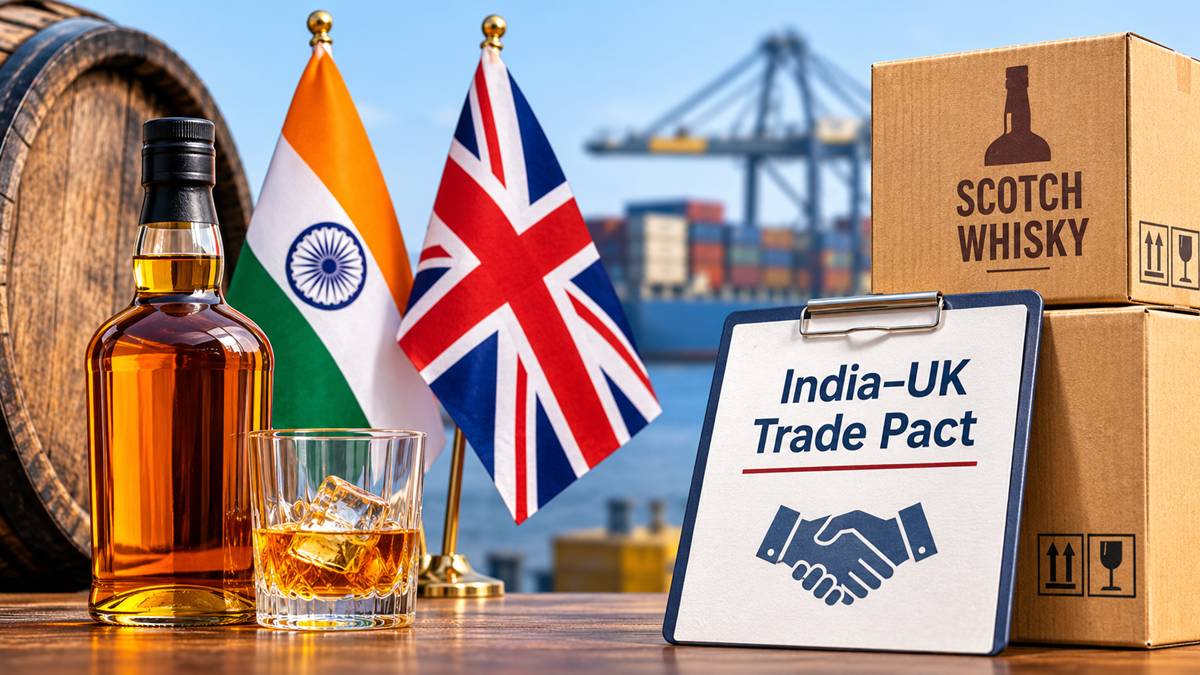
The India-UK trade pact reduced whisky import duty from 150% to 75%, but classification disputes now threaten these benefits. Officials are checking if bulk Scotch imports fall under Heading 2208 for spirits or Heading 2106 for food preparations. This confusion impacts many Indian manufacturers and their ongoing trade commitments today.
The India-UK trade pact reduced whisky import duty from 150% to 75%, but classification disputes over bulk Scotch whisky threaten these benefits, impacting Indian manufacturers and trade commitments.
What is the dispute over bulk Scotch imports?
THE DISPUTE CONCERNS the customs classification of concentrated Scotch whisky imported from the UK by Indian alcoholic beverage manufacturers. The revenue enforcement agency is examining whether such imports should be classified under Heading 2208, which specifically covers spirits and whisky, or Heading 2106, which covers food preparations not elsewhere specified or included.
The argument for the classification under 2106 seems to be that Scotch imported in bulk is not consumed directly as a finished alcoholic beverage. It is used as an input for blending with Indian-made whisky, mixing with other alcoholic beverages or dilution before being bottled and sold. In this interpretation, its use as an ingredient in manufacturing another product could bring it under the category of food preparations rather than finished spirits.
The alcoholic beverage industry has thus sought a clear policy position on the classification of bulk Scotch whisky imports and their eligibility for preferential duty benefits under the India-UK trade pact.
What are the two competing tariff classifications?
HEADING 2208 OF the Customs Tariff covers spirits and spirituous beverages, with subheading 2208.30 specifically covering whisky. Heading 2106, on the other hand, covers food preparations not elsewhere specified or included and is a residual category. The revenue enforcement agency's apparent position is that concentrated Scotch imported in bulk is an input for making other alcoholic beverages through blending with Indian-made whisky, mixing with other spirits or dilution before bottling. On this basis, the imported concentrate could be treated as a preparation under Heading 2106 rather than whisky under Heading 2208. The industry's counter-argument is that the imported material remains Scotch whisky, irrespective of its concentration, packaging or subsequent use. Its use as an input in blending does not change its essential identity as whisky. Since Heading 2208 specifically covers whisky, it should apply rather than the residual Heading 2106.
What makes this classification key for CETA benefits?
REDUCING TARIFFS ON Scotch whisky was one of the key trade concessions negotiated between India and the UK. India's tariff concessions under the Comprehensive Economic and Trade Agreement (CETA) with the UK are specifically linked to whisky tariff lines under Heading 2208.30. The pact, which came into force on July 15, 2026, reduced customs duty on UK whisky from 150% to 75%, with further progressive reductions to 40% by the 10th year. Crucially, the negotiated tariff schedule covers Scotch whisky imported in containers exceeding two litres, thereby recognising bulk imports. If concentrated Scotch is classified under Heading 2106, it could fall outside these preferential tariff commitments. Indian manufacturers importing it as an input would consequently be denied the duty concessions negotiated for whisky under the agreement. The tariff on products under Heading 2106 is 150% along with Integrated Goods and Services Tax.
What is the industry's argument?
INDIAN LIQUOR MANUFACTURERS maintain that bulk Scotch retains its identity irrespective of whether it is imported in retail bottles or large containers. Its use as an ingredient in blending or dilution does not, by itself, change the nature of the imported product. They argue that the specific tariff entry for whisky under Heading 2208 should take precedence over the residual category of Heading 2106.
Why is the issue crucial for Indian manufacturers?
BULK SCOTCH IS an important input for Indian companies producing blended whisky brands. Around 80% of Scotch whisky imports from Scotland by volume comprise bulk shipments. Indian manufacturers blend these imports with domestically produced malt spirits, using proprietary recipes, before bottling and marketing the finished products. The industry argues that denying preferential duties to bulk Scotch while allowing concessions on qualifying finished whisky imports could create an unintended incentive to import finished products rather than manufacture and undertake value addition in India. This could disadvantage domestic blending and bottling operations and affect associated businesses, including packaging, logistics and suppliers of Indian spirits.
What is the way forward?
THE ISSUE HAS acquired urgency because CETA's tariff concessions have only recently become operational. At a meeting on November 2, Commerce Secretary Rajesh Agrawal assured industry representatives that the ambiguity would be resolved amicably and that India's commitments under the trade agreement would be honoured. The commerce ministry is to work with the finance ministry to find a solution within the existing legal framework, while ensuring business continuity for companies.