
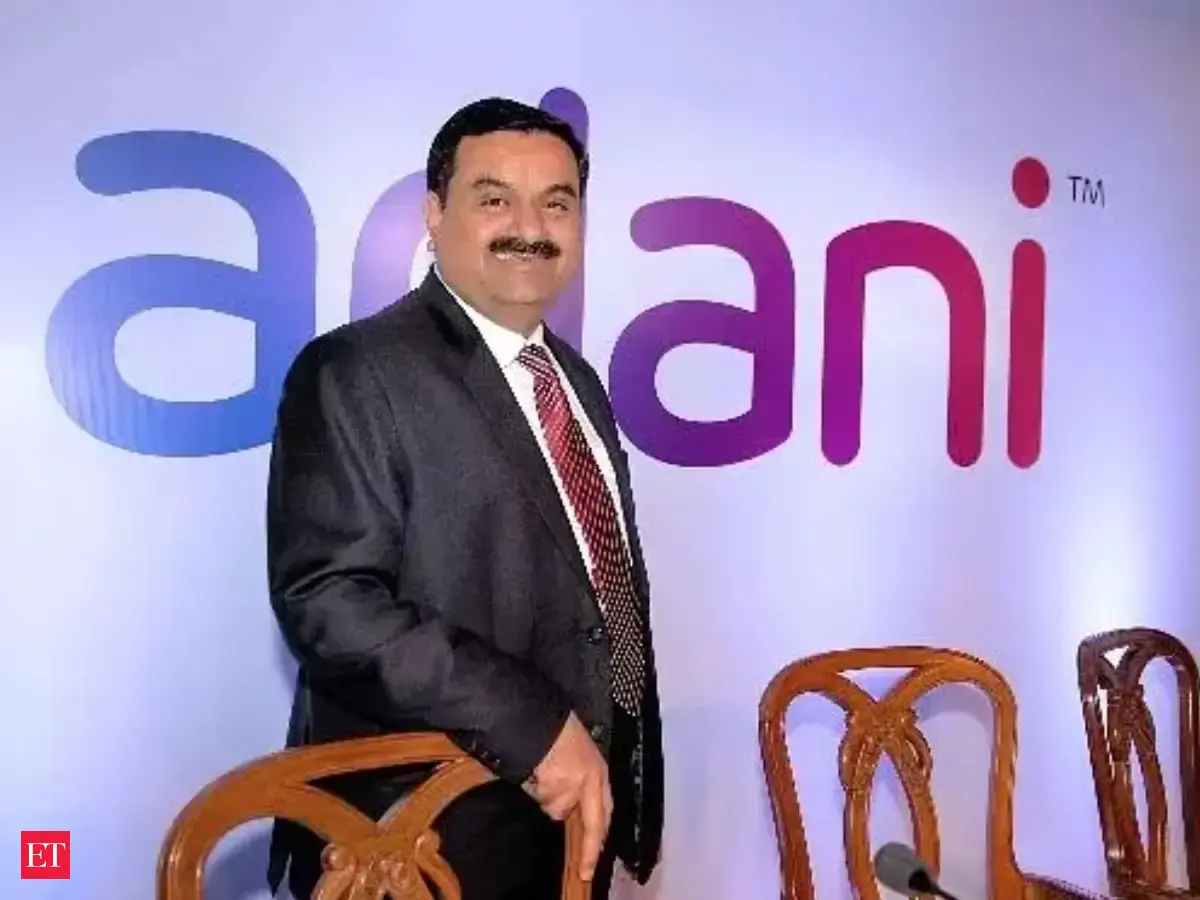
The Adani Group is reportedly eyeing a stake in the global energy infrastructure firm VTTI. This move follows their missed chance to buy into Associated British Ports. By targeting storage terminals across 16 countries, Adani wants to expand its influence across the energy supply chain as global market demand grows.
Synopsis
Soon after the Adani Group missed the chance to likely buy a stake in the UK's Associated British Ports (ABP) as the 64% stake was sold to Australian asset management firm IFM Investors, it is reportedly eyeing another Europe-based asset.
Live Events
You Might Also Like:
Foreign airlines, Adani Airports deadlocked over Mumbai Airport shift
The proposed acquisition would give the conglomerate a foothold in the infrastructure that keeps global energy markets moving such as storage terminals where crude oil, refined fuels and other products can be held before reaching buyers. As supply disruptions make access to storage and trading hubs more valuable, these facilities offer Adani a way to expand its influence across the energy supply chain.
The business behind VTTI’s appeal
VTTI has grown into a global energy infrastructure company with a business that extends beyond storing crude oil and petroleum products. The Rotterdam-headquartered group operates across 16 countries on five continents, with storage capacity of 9.1 million cubic metres, equivalent to roughly 57 million barrels. Its network connects major trading and industrial hubs in Europe, the Middle East, Asia, Africa and the Americas.
The company’s role is more specialised than that of a conventional port operator. Its terminals store, blend and process products before they move onwards by ship, pipeline, rail or road. The portfolio includes crude oil, petrol, diesel, jet fuel, LPG, industrial chemicals and solvents. Several facilities also handle biofuels and other products associated with the energy transition. For customers such as commodity traders, refiners and energy companies, the value lies in having storage close to shipping routes and major consumption markets, with the flexibility to redirect or blend products as commercial conditions change.
The geography is central to the investment case. At Fujairah in the UAE, VTTI reports storage capacity of 1.943 million cubic metres, 66 tanks and 11 jetties. The terminal sits beside a major oil trading and bunkering hub near the Strait of Hormuz, making it relevant to energy flows connecting the Gulf with Asian markets. In Amsterdam, another important part of the network, VTTI reports capacity of 1.1 million cubic metres across 173 tanks. The facility also supports gasoline blending and gasoil trading while expanding its capabilities in biofuel storage.
Europe is also becoming a base for VTTI’s expansion into newer energy infrastructure. In April, the company said its Project Amplifhy Europe was developing ammonia import terminals and cracking facilities in Rotterdam and Antwerp. The aim is to convert imported ammonia into hydrogen for industrial use.
VTTI is also expanding into renewable natural gas and infrastructure for sustainable fuels. Its Amsterdam terminal is the site of a planned renewable-feedstock pretreatment facility with partner Connex, while its Antwerp operations include development of the TyreLoop project to convert end-of-life tyres into secondary raw materials. These initiatives broaden the business beyond conventional fuel storage, although their eventual contribution will depend on project execution and commercial demand.
For Adani, the attraction would be access to an established international network that would take years to assemble organically. Its ports business provides the physical gateways for cargo, while VTTI will add specialised storage and handling infrastructure within global energy markets. That could create opportunities to serve customers across more stages of the supply chain.
VTTI is not simply a collection of oil tanks but a network of strategically located energy terminals, with an expanding portfolio of infrastructure for emerging fuels. This combination offers Adani a potential route into global energy logistics while giving it exposure to the infrastructure required as fuel markets evolve.
VTTI's footprint is particularly relevant when shipping routes are disrupted or geopolitical tensions force buyers to seek alternative supplies. Storage can help traders hold products until prices improve, redirect cargoes to markets offering better returns or maintain deliveries when fresh supplies are delayed.
A natural extension of Adani’s ports empire
The strategic fit becomes clearer when viewed alongside Adani Ports and Special Economic Zone (APSEZ), the group’s principal ports and logistics business. APSEZ operates 15 ports and terminals in India, with four international ports in Israel, Tanzania, Sri Lanka and Australia. Its domestic cargo-handling capacity stands at 653 million metric tonnes, according to the company’s latest operational disclosures.
VTTI would add a different layer to that network. Ports handle cargo moving through a gateway. Storage terminals allow companies to hold, blend and process products before dispatching them by ship, pipeline, rail or road. Combining these capabilities could help Adani offer energy companies a larger package of services, from unloading cargo to storing it and moving it towards end-users.
There is also a geographic rationale. VTTI’s presence in Europe, the Middle East, Asia, Africa and the Americas would give Adani access to established energy hubs beyond its existing port network. That fits APSEZ’s stated ambition to build an integrated global transport platform.
Why storage becomes valuable during supply shocks
Energy storage is often a less visible business than oil production or refining, but it can become strategically important when markets are volatile. A disruption to shipping or supply can change where crude and refined products are available, while differences in regional prices create opportunities for traders to redirect cargoes.
Terminals provide the flexibility needed to exploit those differences. Their owners can earn fees for storage and handling without necessarily taking direct exposure to the price of the commodity itself. The precise risk profile depends on contract structures, utilisation rates and the services offered.
VTTI says its facilities are designed to connect storage with marine, road, rail and pipeline transport. Its Fujairah terminal, for example, has capacity of about 1.94 million cubic metres and 11 jetties. The facility handles products ranging from crude oil and diesel to LPG and chemicals. Its location alongside a major bunkering hub adds to its relevance for regional energy flows.
For Adani, the appeal is therefore not simply that geopolitical instability may push up demand for storage. A global terminal network could also take its earnings beyond cargo throughput at ports, though the extent of any benefit would depend on VTTI’s financial performance and the price paid.
VTTI offers a bridge to the next phase of energy
VTTI's business is not limited to conventional oil storage. Its current portfolio includes infrastructure for biofuels, sustainable aviation fuel and LNG, alongside projects involving renewable natural gas and hydrogen. The company has set a target of generating 50% of its earnings from new and transitional energies by 2028, according to its website.
That transition could make VTTI relevant to Adani’s longer-term energy plans. The group has committed substantial capital to renewable power, electricity transmission and other utilities, while its wider infrastructure portfolio includes conventional energy businesses. Storage infrastructure capable of handling emerging fuels would provide an entry point into new energy supply chains without requiring Adani to build an entirely new international network.
The $3.4 billion question
As per the Bloomberg report, VTTI’s potential valuation could be around €3 billion, or $3.4 billion. That is a substantial commitment even for a conglomerate with ambitions across multiple infrastructure sectors. The actual cost to Adani would depend on the stake acquired, the company's debt and the terms negotiated with existing shareholders.
VTTI is currently owned by IFM Investors and Vitol, each with approximately 45%, while Abu Dhabi National Oil Company (Adnoc) holds the remaining 10%. Adnoc is considering a complete exit, while the other shareholders may also sell down their positions. The presence of multiple owners could allow Adani to negotiate a controlling stake, although no final arrangement has been reported.
Last year, Adani Group planned to raise more than 12.5billioninequityoverfiveyearstosupportaRs5lakhcrorecapitalexpenditureprogramme.ThegroupsubsequentlyreportedrecordcapitalexpenditureofRs1.53lakhcroreinFY2025-26. AdaniEnterprisesLtd.inJulyraised150billionrupees(1.6 billion) from institutional investors to help fund capital expenditures and possible debt repayment.
These numbers show the scale of its investment ambitions, but they do not establish that the group has earmarked funds for VTTI. A deal of this size would require careful allocation of capital, particularly if financed partly through borrowing. The key financial test would be whether VTTI’s recurring cash flows justify the acquisition price and the cost of financing it.
The Associated British Ports setback
The reported VTTI interest follows Adani’s unsuccessful pursuit of Associated British Ports (ABP), which operates 19 ports and handles about a quarter of UK seaborne trade. Bloomberg reported on October 21 that IFM Investors had secured an agreement to acquire the combined stakes of Canada Pension Plan Investment Board and OMERS, valuing ABP at around £10 billion. The transaction remains subject to approvals.
The two opportunities reveal Adani's consistent interest in overseas infrastructure with strategic importance to trade and energy markets. But they are not interchangeable. ABP offered access to a major network of British ports, while VTTI specialises in energy storage and associated handling infrastructure.
VTTI is also a much smaller proposed transaction, potentially giving Adani an international foothold in a specialised business without committing the big amount associated with ABP. Whether that makes it more attractive will depend on its profitability, debt and growth prospects, rather than the headline valuation alone.
If a transaction proceeds, the acquisition would represent Adani's shift from expanding port ownership alone towards controlling more of the infrastructure that supports global energy trade. That's the central strategic case for VTTI, with execution and valuation likely to determine whether the opportunity translates into durable returns.
(You can now subscribe to our Economic Times WhatsApp channel)
(Catch all the Business News, Breaking News and Latest News Updates on The Economic Times.)
Subscribe to The Economic Times Prime and read the ET ePaper online.
...moreless
(You can now subscribe to our Economic Times WhatsApp channel)
(Catch all the Business News, Breaking News and Latest News Updates on The Economic Times.)
Subscribe to The Economic Times Prime and read the ET ePaper online.