
Indian documentaries are winning global acclaim at major festivals like Sundance, Cannes, and IDFA. Filmmakers like Pallavi Paul and Vikram Singh are now capturing international attention with their unique stories. While funding remains a challenge, these nonfiction films have gained more recognition than many fictional movies in recent years.
Synopsis
Indian documentaries have gained international recognition in recent years, winning awards at Sundance, IDFA, Cannes and TIFF. A new generation of filmmakers is bringing distinct styles and perspectives to nonfiction cinema, even as the industry grapples with funding constraints, limited domestic screenings and questions over the international festival circuit's preferences.
Earlier this week, an unfinished Indian documentary set in a Delhi cemetery during the Covid-19 pandemic turned heads at a major pitching platform in Amsterdam.
How Love Moves by Delhi-based filmmaker and visual artist Pallavi Paul was one of 47 projects seeking producers and international partners at the International Documentary Festival Amsterdam (IDFA), the world's largest festival for nonfiction films.
Eight years ago, IDFA presented its highest honour to an Indian nonfiction film-Reason by Anand Patwardhan.
There was another Indian film at IDFA this week-Vikram Singh's Camels of the Sea, about a pastoralist in Kutch, tending to one of the largest remaining herds of swimming camels.
Live Events
How Love Moves, which is in production, and Camels of the Sea, nearing completion, are the latest instances of Indian nonfiction films capturing the global gaze. Paul and Singh are part of a new generation of filmmakers with a different voice, language, aesthetics, artistic sensibilities and practices.
Docu is in
Of late, Indian documentaries have drawn more attention than their fictional counterparts. In the past five years, Indian documentaries have won four awards at the Sundance Film Festival, three at IDFA, two each at the Cannes Film Festival and the Toronto International Film Festival (TIFF), apart from two Oscar nominations.
The remarkable run of Indian nonfiction cinema began in the middle of the pandemic. Writing With Fire (2021), a portrayal of Dalit women reporters, by Rintu Thomas and Sushmit Ghosh, picked up two prizes at the Sundance festival, a Peabody Award and the first-ever Oscar nomination for an Indian documentary feature.
Year 2021 saw another Indian film notching wins: A Night of Knowing Nothing by Payal Kapadia. An abstract philosophical sketch of the state of the nation, it bagged the Golden Eye for the Best Documentary in Cannes and the Amplify Voices Award at TIFF. The same year, Rahul Jain's Invisible Demons, analysing the catastrophic consequences of human-centric development, had its world premiere in Cannes, in a new section dedicated to cinema and climate change.
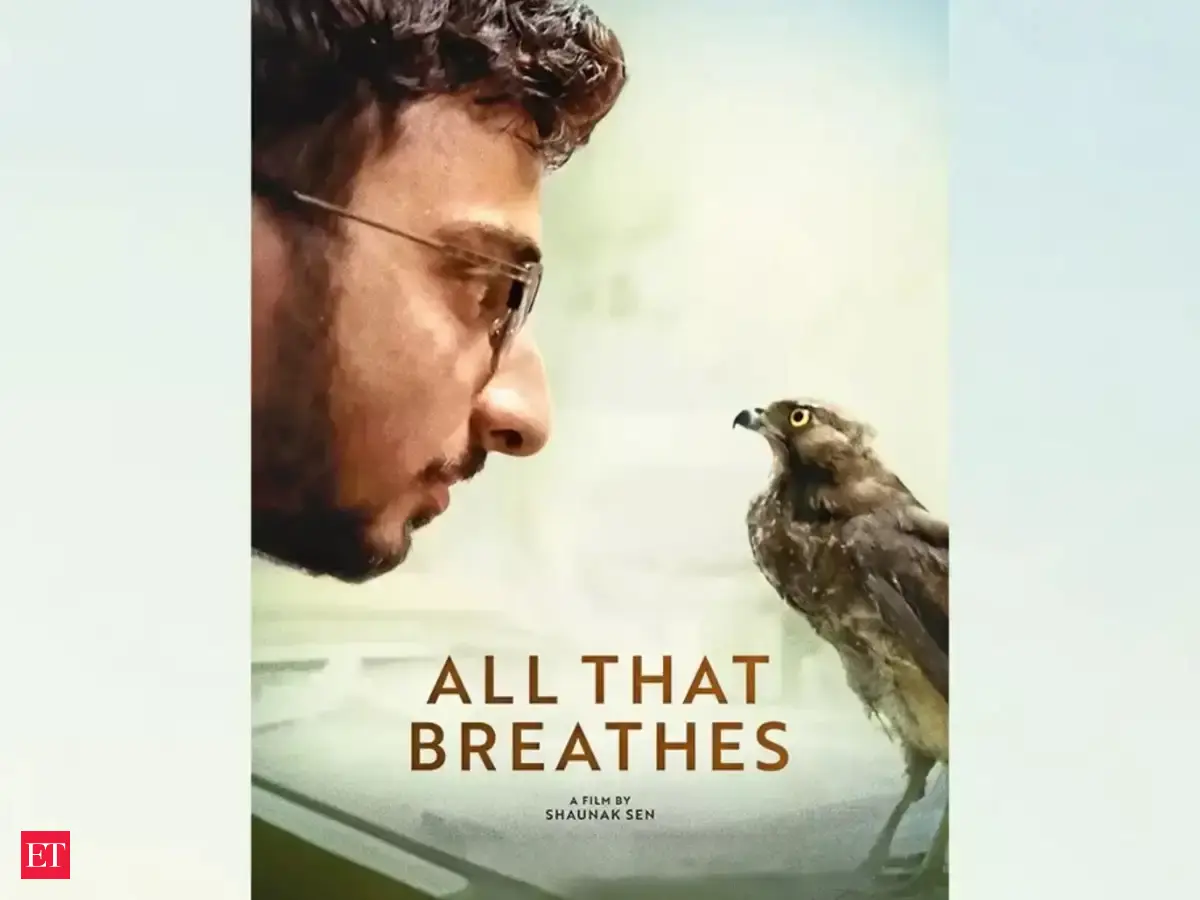
Writing With Fire and A Night of Knowing Nothing opened the floodgates for Indian documentary films. All That Breathes by Shaunak Sen bagged the Grand Jury Prize in World Cinema Documentary Competition at Sundance in 2022, the first by an Indian film. Sen's haunting study of the erosion of freedom and liberty, through black kites falling from polluted skies, also won an Oscar nomination.
That year, While We Watched by Vinay Shukla, a forceful scrutiny of media independence in India, won the Amplify Voices Award.
More and More
In the following years, Sundance would award two more Indian documentaries-Against the Tide by Sarvnik Kaur in 2023 and Nocturnes by Anirban Dutta and Anupama Srinivasan in 2024. Flickering Lights (2023) by Dutta and Srinivasan, The World Is Family (2023) by Patwardhan, and Cycle Mahesh (2024) by Suhel Banerjee would go on to win at IDFA.
"Indian documentary has seen a major wave on the international stage in the past decade or so," says Thom Powers, documentary programmer, TIFF. "When an Indian film team has the experience to interact with global festivals, funders, advisers and distributors, they can be mentors to rising filmmakers. I hope to see this trend flourish." He is also cofounder of DOC NYC, America's largest documentary festival, where Kartiki Gonsalves' The Elephant Whisperers was premiered before it won the Oscar for Best Documentary Short in 2023.
"Indian documentary has been doing significantly better than its fiction counterpart in the past seven-eight years," says Sen, a producer of How Love Moves. He and Paul were batchmates in film studies at Jamia Millia Islamia and JNU.
The New Wave
"This is the new wave of Indian nonfiction films because there are a number of people doing very interesting and very different work," says Srinivasan, an alumnus of FTII, Pune. "The visibility and ambition of films have changed. Since 2021, when Writing With Fire was at Sundance, it has had one Indian documentary every year. And they are all very, very different."
"Indian nonfiction cinema was crying to burst out," says Pan Nalin, whose Faith Connections changed the course of Indian documentary when it premiered at TIFF in 2013, drawing a favourable tweet from Hollywood director Darren Aronofsky.
In 2016, three films-Machines by Jain (screened at IDFA and Sundance), An Insignificant Man by Khushboo Ranka and Vinay Shukla (TIFF) and The Cinema Travellers by Shirley Abraham and Amit Madheshiya (Cannes)-consolidated that change.
"India is a goldmine for nonfiction filmmakers. There is no shortage of subjects and areas where one's passion can be demonstrated cinematically," says Nalin.
Meanwhile, more films are in the wings. Sen is completing his documentary on health and mortality. Metropolis, Dutta and Srinivasan's new film set in New York, is a tribute to Fritz Lang's 1927 film by the same title. Jain, too, is making a new film.
Unkind Cuts
Amid this boom, there are persistent challenges, especially in funding and screening. While international recognition has led to many European co-productions, conditions like foreign post-production reduce artistic freedom and limit use of funds back home. Funding in India is still a struggle.
"Now there are investors who will have a stake to get the principal back plus profit," says Dutta, who gets funding from private equity investors. "PE market has opened for films in India because of the international success for our documentaries," he adds. Last year, Dutta and Srinivasan founded Doc Producing South, a peer-to-peer sharing platform and lab for the nonfiction filmmaking community in South Asia. Eight projects from the lab are in various stages of production.
Filmmakers have also begun to crack the code for exhibiting their films. "There is an audience for documentary films in India," say Dutta and Srinivasan, who tied up with PVR Cinemas to show Nocturnes in the country. Among its viewers were 34,000 students. "We have to make sure that our audience does not lie only in big cities. We have to go to smaller towns."
Patwardhan, whose filmmaking career spans more than five decades, calls for an abundance of caution while looking at the recent global success of Indian films. "I do not think the international festival circuit is particularly interested in politically and socially engaged cinema. They are more dazzled by technical sophistication and artistic claims," he says.
"The fact that on rare occasions films like mine made on next-to-nothing budgets with outdated equipment make a breakthrough in one or two festivals should not give you the impression that this is what the West is looking for," adds Patwardhan. "On the contrary, the prevailing mood is, as [German filmmaker] Werner Herzog says, 'If you have a message, don't make a film, send it by post.'"
(You can now subscribe to our Economic Times WhatsApp channel)
(Catch all the Business News, Breaking News and Latest News Updates on The Economic Times.)
Subscribe to The Economic Times Prime and read the ET ePaper online.
...moreless
(You can now subscribe to our Economic Times WhatsApp channel)
(Catch all the Business News, Breaking News and Latest News Updates on The Economic Times.)
Subscribe to The Economic Times Prime and read the ET ePaper online.