
In the 1890s, a new gold process turned Mercur, Utah, into a boomtown of over 2,500; by 1913, the mine had shut, and the once-busy town was completely abandoned. Cyanide leaching helped extract gold from low-grade ore, but falling profits eventually forced everyone to leave, turning the settlement into history.
In the late 19th century, Mercur, Utah, became an influential mining hub fueled by new gold extraction methods, notably cyanide processing which efficiently mined low-grade ore. However, by the early 1910s, falling profit margins resulted in mine closures, contributing to the town's deterioration. Revival efforts in later decades were unsuccessful, leaving Mercur as a poignant testament to the dual nature of mineral riches.
Mercur, Utah, shows how a technological breakthrough can transform a remote settlement and how quickly that prosperity can disappear. Once a thriving mining town in the Oquirrh Mountains, southwest of Salt Lake City, Mercur attracted workers, businesses and investors after a new method made it possible to extract gold from ore that had previously been difficult to process economically. Its rise reflected the promise of modern mining, but its future remained tied to the fortunes of a single industry.
According to historical accounts of Utah's mining industry, Mercur's population grew to more than 2,500 during its late-19th-century boom. The introduction of the cyanide process helped make gold extraction from low-grade ore commercially viable, turning the settlement into a significant mining centre. By 1913, however, the mine had closed, and the town was abandoned, leaving behind a reminder of the opportunities and risks associated with mineral wealth.
A new process unlocks gold hidden in the rock
Cyanide leaching made it possible to recover gold from very fine particles in crushed ore. Earlier attempts to mine gold at Mercur failed because the particles were too small to separate easily with traditional gravity methods. The Utah Geological Survey records that gold-bearing ore was successfully treated using cyanide in 1891. The resulting rush brought prospectors, miners, and companies back to the region. By 1897, the Golden Gate mill had developed into the biggest cyanide mill in America, with a capacity of treating around 1,000 tons of ore per day. Mercur's development was part of a broader shift in mining, as advances in ore processing made previously uneconomic deposits profitable. The gold deposits in Mercur have been classified as Carlin-type deposits.
Fire, falling profits and the end of the boom
Mercur's prosperity extended beyond the mines. The introduction of electricity, transportation, and milling helped shape Mercur into a major mining community. The merger of mining firms into the Consolidated Mercur Gold Mines Company in 1899 made the Golden Gate Mill even more significant in the economy of Mercur. As a growing community, Mercur also had some commercial activities and was inhabited by people from different places in the USA and other countries.
In 1902, a fire swept across the business section and caused extensive damage to the town. Although Mercur was rebuilt, the mining industry was facing low-grade ore, high costs and difficulty in recovering gold from the processed ore. Geological work published in Economic Geology later examined the characteristics of Mercur's gold deposits, helping explain why the metal had proved so difficult to recover using earlier methods. The ore body contained tiny amounts of gold scattered through sedimentary rocks. That made processing technology crucial to the mine's profitability. Mining profitability had declined by the early 1910s. The ore body was becoming harder and more costly to mine, while the expenses of running the mines and processing facility continued to rise. In March 1913, both the Mercur mine and the Golden Gate mill closed, according to the historical account.
Mercur, Utah, flourished in the late 19th century as advancements in gold extraction technology attracted a vibrant, diverse community and strong businesses, leading to remarkable growth. Image Credits: Wikimedia Commons.
A ghost town gives way to a modern mine
Mercur did not disappear overnight. When mining operations stopped, people moved elsewhere in search of jobs. Businesses lost their customers, companies closed, and buildings fell into ruin. Historical records say that by 1916 only one building remained standing in the townsite. But the history of mining in the region was not over with the year 1913. Mining was revived once again in the 1930s through the reprocessing of mill tailings.
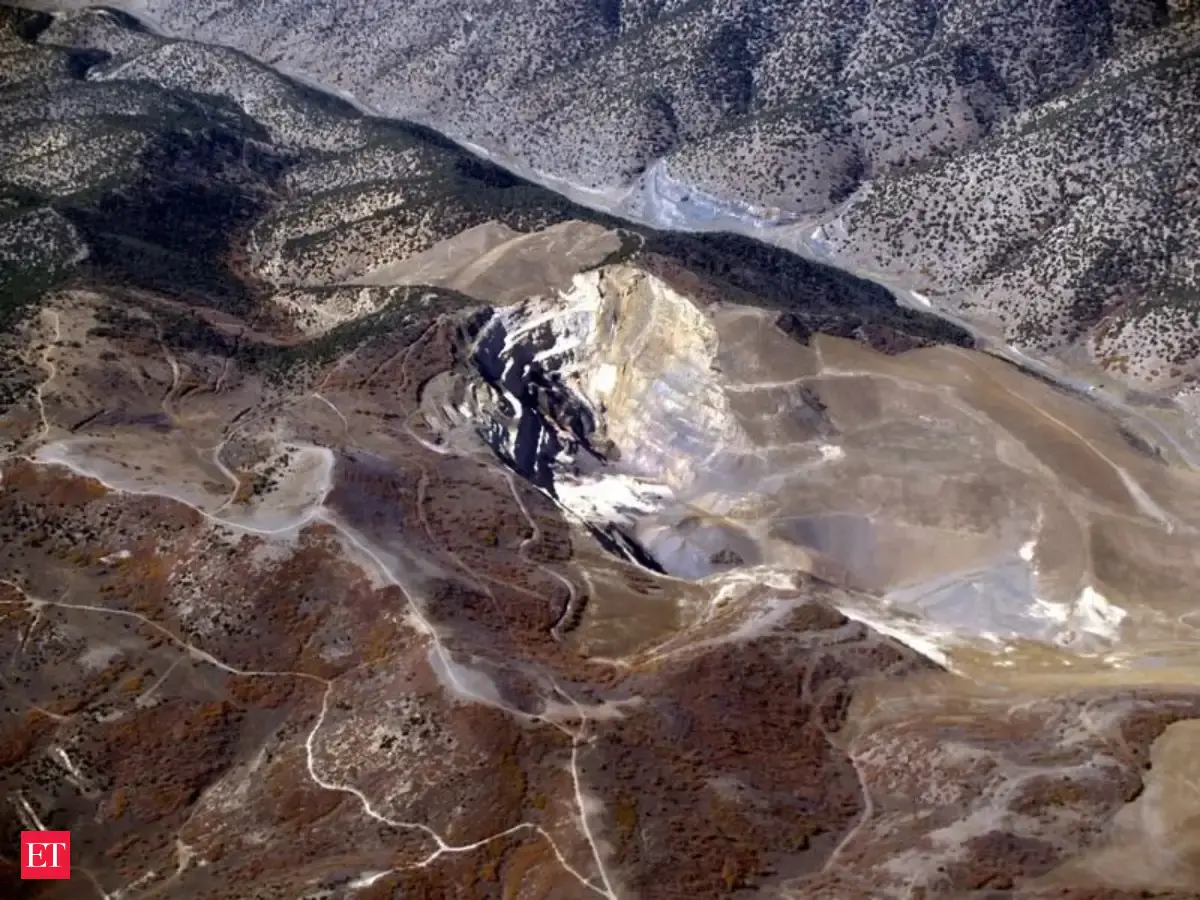
Years later, higher gold prices and improved mining technology renewed interest in the area. In the early 1980s, a huge open-pit mine was opened using cyanide processing once again to recover the gold. The modern mining project covered the old townsite, leaving almost nothing of the original settlement. The mine shut down in 1998 because the economically viable deposits were exhausted. The same technologies that helped establish the town in the 1890s later made it possible to recover gold again, even as modern mining erased most traces of the old settlement.