
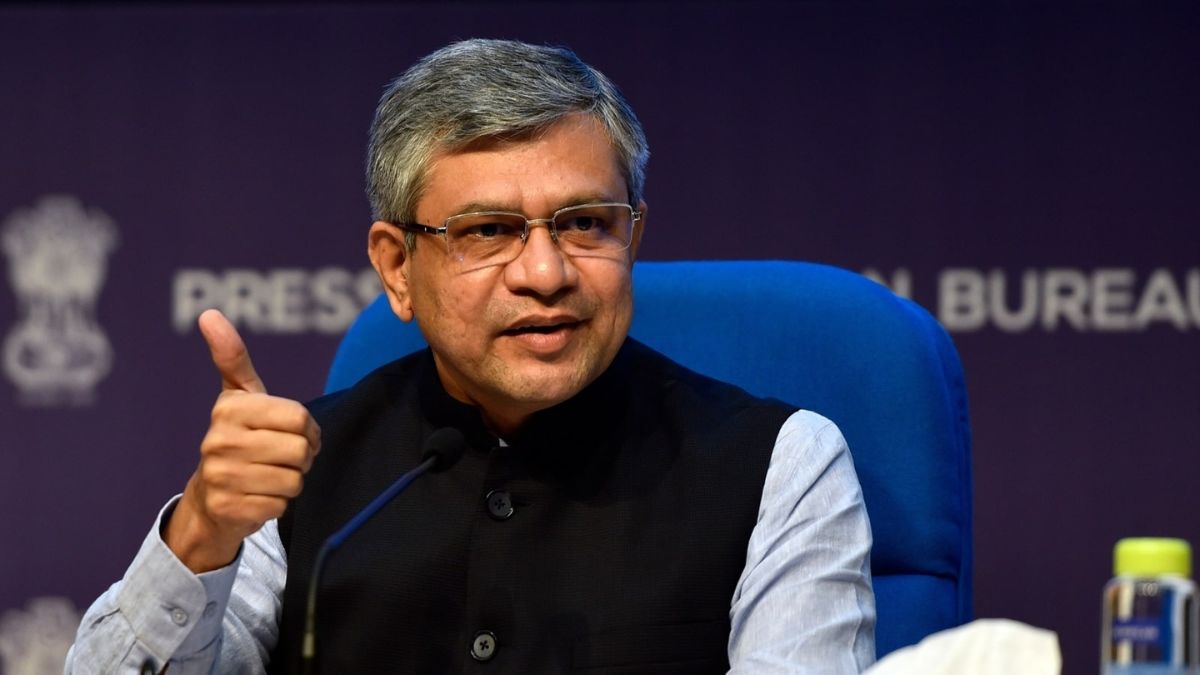
The government collected ₹3.25 lakh crore in taxes from the smartphone sector by FY26, while paying ₹19,000 crore in PLI incentives. Minister Ashwini Vaishnaw said the sector now employs 2.5 million people. Mobile exports grew significantly to ₹2.59 lakh crore in FY2025-26, making India the world’s second-largest mobile phone manufacturer.
The government collected ₹3.25 lakh crore in taxes from the smartphone sector by FY26, with ₹19,000 crore paid as incentives under the PLI scheme, boosting domestic manufacturing and mobile exports.
In a post on X, Vaishnaw said the government had collected ₹25,000 crore in direct taxes and ₹3 lakh crore in goods and services tax (GST) from the sector in the five years. He added that electronics manufacturing employs 2.5 million people, of which 1.2 million work in mobile manufacturing.
The post responded to a video on X that was critical of the country's push to build electronics manufacturing with taxpayer subsidies, contrasting it with China's ecosystem. The video argued that India spends more on imported components than it earns from exporting the subsidised finished phones.
India's mobile phone exports have increased from ₹1,500 crore in FY2014-15 to ₹2.59 lakh crore in FY2025-26, a 165-fold rise, driven by Apple's expanding manufacturing footprint and rising shipments to the US and Europe. This makes India world's second-largest mobile phone manufacturer by volume, with 99.2% of the mobile phones used in India being manufactured domestically. Of course, the import of electronics goods including smartphone parts also rose at a comarable pace in the period, making net exports relatuvely lower.
Meanwhile, electronics production has increased from Rs. 11.32 lakh crores in FY 2024-25 to Rs. 13.11 Lakh crores in FY 2025-26 with a year-on-year growth rate of 15.8%.
According to experts, the government's objective is not to completely decouple India's electronics supply chain from China, but to reduce overdependence on a single source by strengthening domestic manufacturing and diversifying imports from countries such as Taiwan, South Korea, Japan and those in Europe.