
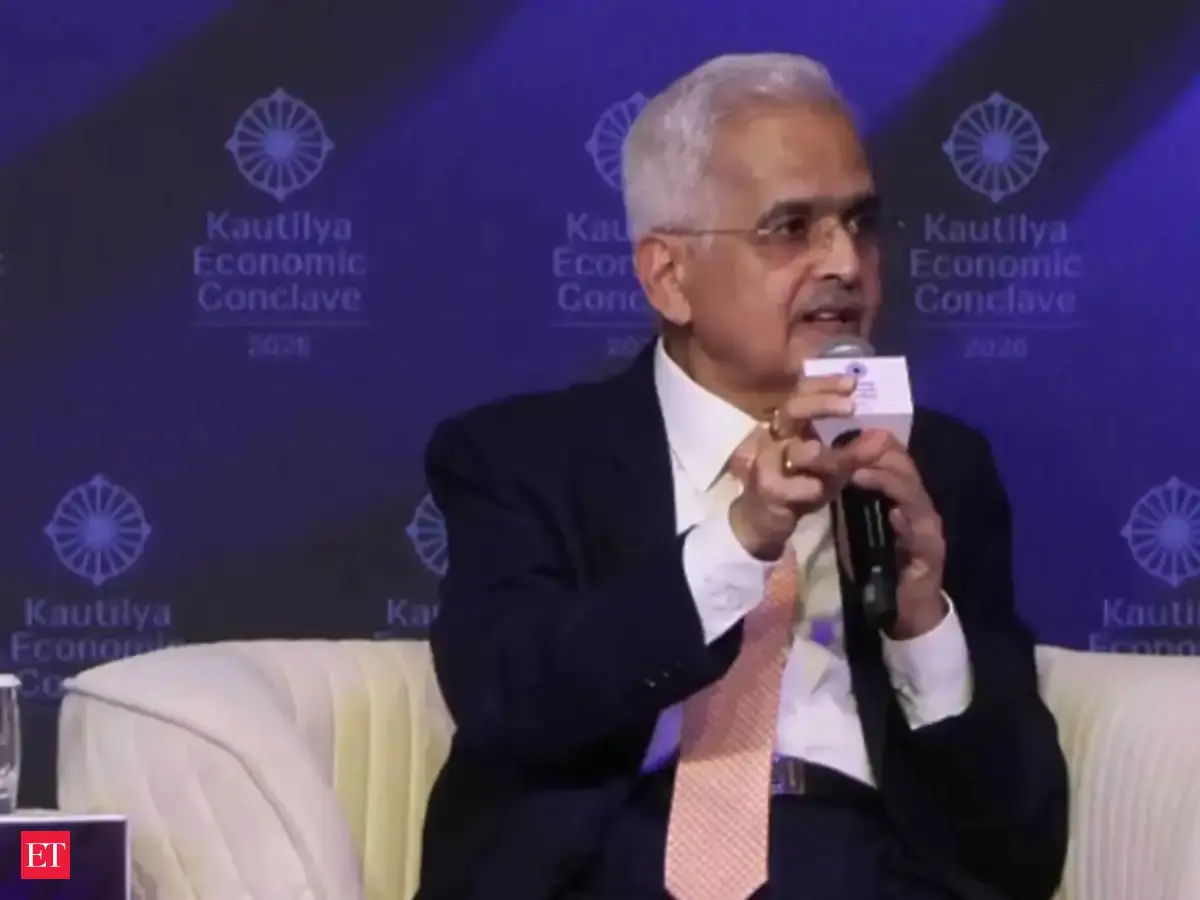
Shaktikanta Das urged the BFSI sector to lead funding for infrastructure and high-tech manufacturing at the Business Standard BFSI Summit. He said, “The BFSI sector must pivot from simple corporate lending to long-term capital formation.” The sector should also support small businesses, farmers, and India’s digital public infrastructure growth.
Synopsis
Shaktikanta Das highlighted the essential role of the BFSI sector in financing infrastructure and new manufacturing. He emphasized the need for funding micro, small and medium enterprises as well as agriculture. Das proposed utilizing digital financial channels for efficient credit underwriting and financial inclusion. The segment must adapt to support next-gen Digital Public Infrastructure and sustainable finance.
Mumbai: India's banking and financial services industries (BFSI) sector has to take the lead in financing large infrastructure and new age manufacturing, support high tech funding and fund credit gaps for small business and farmers, in order to support the aspirations of becoming a developed economy, former RBI governor Shaktikanta Das said at the Business Standard BFSI Summit.
Das said BFSI sector has a crucial role to play in India's journey from a lower-middle-income economy to a high-income economy, through its intermediation in allocation of financial resources. He said the sector would be required to support India’s next-gen Digital Public Infrastructure (DPI), be the frontline of green and transition finance and become the catalyst for democratising financial inclusion to support this journey.
“The BFSI sector must pivot from simple corporate lending to long-term capital formation. This would involve absorbing a significant portion of the financial needs of the National Infrastructure Pipeline (NIP) through structured consortiums and corporate bond expansion. Secondly, the sector needs to engage in strategic sector funding through credit channels to catalyse and fast-track high-tech domestic manufacturing, including semiconductors, advanced electronics, and defence production,” Das who is now principal secretary 2 to Prime Minister said.
The sector has to play an important role in funding the creation of digital carbon markets, issuing sovereign green bonds, and offering competitive financing products for green hydrogen and renewable energy infrastructure. Calling micro, small and medium enterprises and agriculture as the engines of India’s economy, Das said that these sectors will have to be empowered.
“This would call for reliance on alternative digital footprints such as GST records and account aggregation for instant, algorithmic credit underwriting. The full scale roll out of the Unified Lending Interface (ULI) by the RBI would be a game changer in this context,” he said.
Live Events
The sector should also focus on deepening financialisation of savings by increasingly redirecting India's domestic wealth from physical assets (like gold and real estate) into productive financial assets through micro-investment and mutual fund products.
Das said the BFSI sector has to support India’s next-gen DPI which will include globalisation of UPI; expansion of real-time cross-border payment linkages to reduce remittance costs and friction in international trade settlements; and greater deployment of CBDC for wider adoption. “India’s success in its march towards Viksit Bharat, despite the ongoing turbulent global conditions, will depend on a sound, efficient and profitable BFSI sector,” Das said.
(You can now subscribe to our Economic Times WhatsApp channel)
(Catch all the Business News, Breaking News and Latest News Updates on The Economic Times.)
Subscribe to The Economic Times Prime and read the ET ePaper online.
...moreless
(You can now subscribe to our Economic Times WhatsApp channel)
(Catch all the Business News, Breaking News and Latest News Updates on The Economic Times.)
Subscribe to The Economic Times Prime and read the ET ePaper online.