
Starting a cloud kitchen in Kolkata requires specific legal permissions to operate safely. Entrepreneurs must secure a trade licence from the Kolkata Municipal Corporation and FSSAI registration. You also need fire and police permits depending on your premises. Check the FoSCoS portal to see which turnover category fits your business.
From FSSAI registration to trade licences, here is a ready reckoner to the documents and regulatory requirements needed to start a cloud kitchen in Kolkata
Food entrepreneurship is on the rise in Kolkata with cloud kitchens providing a relatively accessible way to enter the food business without investing in a traditional restaurant space. But operating from a home kitchen or a delivery-only unit does not exempt you from regulatory requirements. If you are planning to open your own cloud kitchen, here is a guide to the essential registrations, licences and documents you will need.
What licences do you need?
My Kolkata went through the Food Safety and Standards Authority of India (FSSAI) portal to check the licenses and documents needed to operate a cloud kitchen.
Firstly, secure the necessary permissions to operate. You will need a Certificate of Enlistment (trade licence) from the Kolkata Municipal Corporation (KMC), an FSSAI registration or licence, and other permissions as per the nature of operations and the kind of premises.
Fire 'no-objection certificate' and police permits may be required too, depending on the premises and applicable regulations. One should also check for GST and Professional Tax (PTax) requirements, wherever applicable.
Documents required for registration
Entrepreneurs must submit an application with proof of occupancy to obtain a KMC trade licence. This can be a property tax bill if the premises are owned, a rent bill if it is rented or a lease deed if it is leased. Companies may also need their Memorandum and Articles of Association, while partnership firms must submit their partnership deed.
For the FSSAI registration, you will need to keep proof of address, identity documents of the proprietor or business owner, photographs, business details and the required declaration ready. Depending on the business structure and category, additional documents such as a rental agreement, incorporation certificate or GST registration may be required.
How to apply for an FSSAI licence
Every cloud kitchen, including one operating with seating arrangements, must obtain FSSAI registration or a licence before beginning operations. Applications can be submitted through the Food Safety Compliance System (FoSCoS) portal.
Under the revised FSSAI turnover criteria effective April 1, 2026, food businesses with an annual turnover of up to Rs 1.5 crore fall under Basic Registration. Those earning above Rs 1.5 crore and up to Rs 50 crore require a State Licence, while businesses with turnover exceeding Rs 50 crore need a Central Licence. The appropriate category should be checked against the business activity selected on FoSCoS.
Applicants can visit foscos.fssai.gov, select the appropriate food business category, fill in the application and upload the required documents. You can track the application online.
Maintaining food safety standards
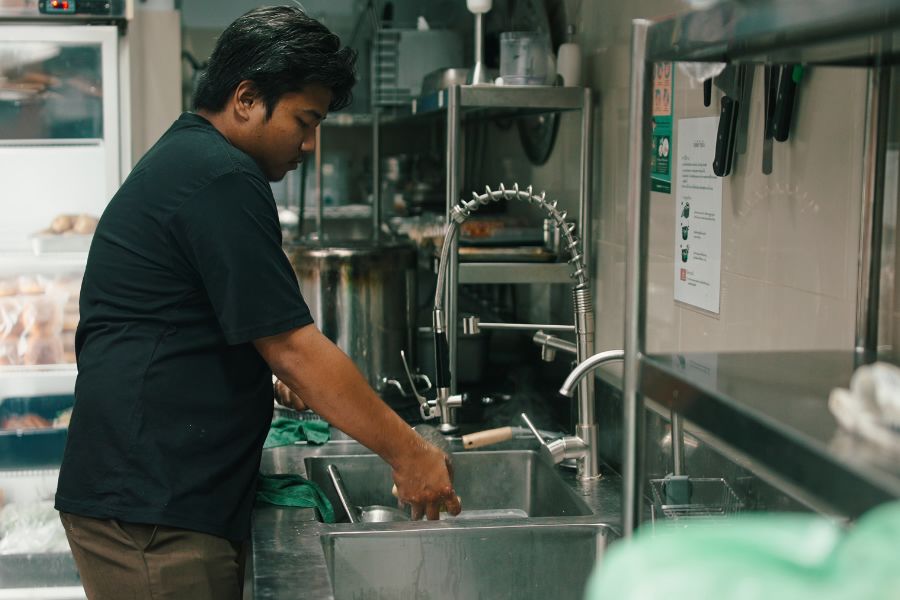
According to FSSAI, beyond paperwork, cloud kitchens must maintain hygienic food preparation areas, adequate ventilation and lighting, clean drinking water and properly sanitised equipment. Staff should follow personal hygiene practices and use appropriate gear.
Piyush Kankaria, chapter head, National Restaurant Association of India (NRAI), Kolkata Chapter, said, "A cloud kitchen may not need a traditional restaurant's front-of-house infrastructure, but it is still a food business and must meet the same basic standards of food safety and regulatory compliance."
He hopes the process in future will be a simplified, transparent and time-bound compliance process. He says that would encourage more organised food businesses in the city.
With the necessary permissions and food safety measures in place, entrepreneurs can begin building their cloud kitchen business and explore delivery partnerships with delivery platforms like Swiggy and Zomato.