
The Defence Acquisition Council approved capital acquisition proposals worth Rs 2.12 lakh crore on October 26. This move aims to boost defence modernisation for the armed forces. The Ministry of Defence said that 82% of these procurements will come from Indian firms, supporting local industry through various new weapons and platforms.
Synopsis
On October 26, the Defence Acquisition Council granted Acceptance of Necessity for various capital acquisition proposals. The total worth of these proposals is approximately Rs 2,12,000 crore for the armed forces. A significant portion, about 82%, will be sourced from the Indian industry to promote domestic procurement. The approved procurements encompass a diverse array of platforms and weapons for all three armed forces.
The Defence Acquisition Council (DAC), chaired by Defence Minister Rajnath Singh, on October 26 accorded Acceptance of Necessity (AoN) to capital acquisition proposals worth about Rs 2,12,000 cr for the armed forces, giving a major push to defence modernisation and domestic procurement.
About 82% of the approved procurements will be sourced from Indian industry, according to the Ministry of Defence.
The approvals cover a wide range of platforms, weapons and surveillance systems for the Indian Army, Indian Navy and Indian Air Force, including helicopters, air-defence systems, drones, artillery systems and naval platforms.
Long-range drones, kamikaze systems join Army’s arsenal
Live Events
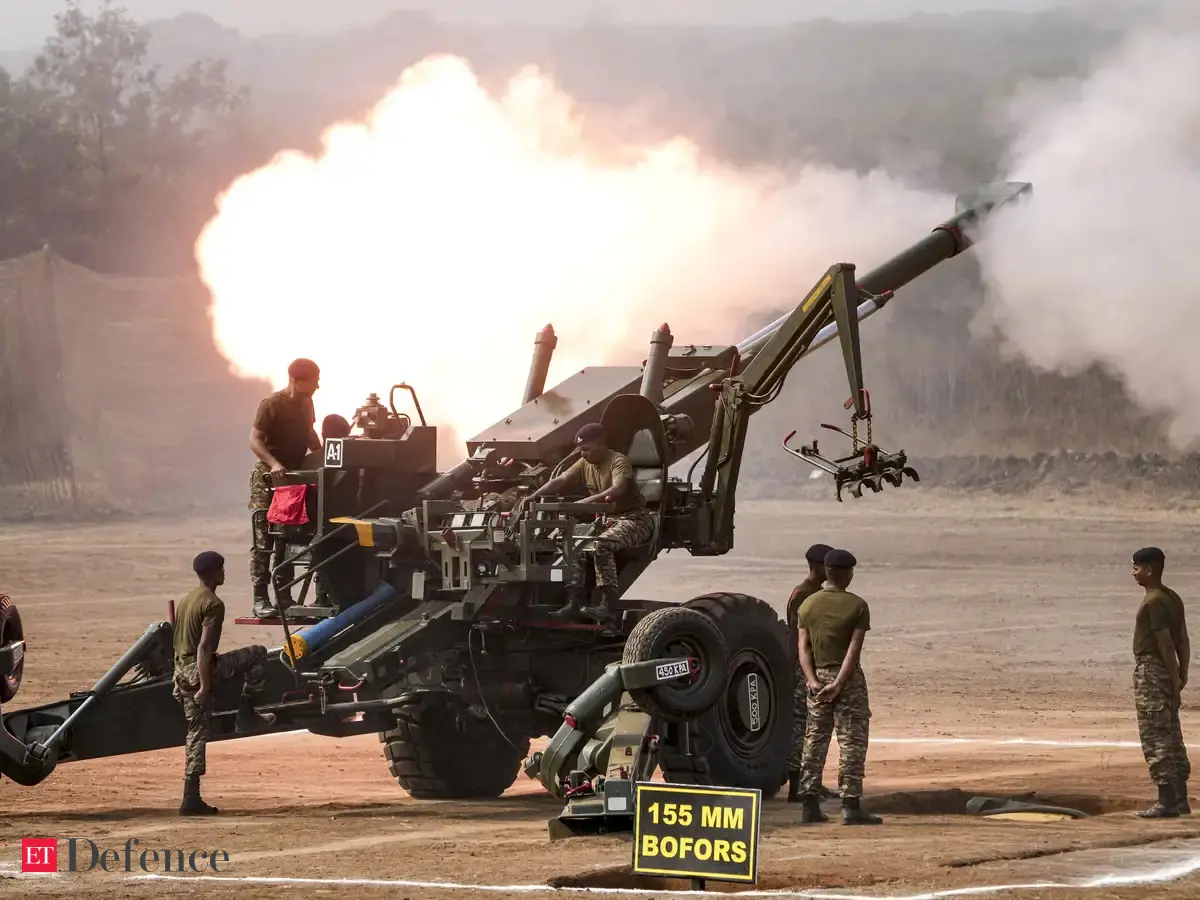
For the Indian Army, the DAC cleared proposals for High Mobility Vehicles (HMVs), Self-Propelled Tracked Gun Systems, Gun Shot Response Systems (GSRS), Light Multi Role Helicopters (LMRH), Very Short-Range Air Defence Systems (VSHORADS) and Platform Based Counter Unmanned Aerial Systems (C-UAS).
The Army will also procure long-range unmanned aerial systems, surveillance UAVs, an Integrated Surveillance and Strike System and Long Range Kamikaze Drone Systems.
The HMVs are intended to improve mobility and logistical support in difficult terrain, while the Self-Propelled Tracked Gun Systems will combine mobility and firepower for mechanised formations.
The GSRS will provide real-time situational awareness, while LMRHs will support reconnaissance, surveillance, combat, search and rescue, and humanitarian assistance and disaster relief operations.
The VSHORADS will be used against small, next-generation aerial threats, while C-UAS systems will strengthen the survivability of tanks against drone threats.
Navy gets anti-missile shield
For the Indian Navy, the DAC approved procurement of Active Offboard Decoy Systems (AODS) and other major naval platforms.
The AODS is expected to strengthen the Navy's anti-missile defence, particularly against modern anti-ship missiles.
The other approved naval platforms, which will be indigenously designed and constructed, are aimed at enhancing the Navy's combat capabilities with modern warfare systems.
Air Force gets helicopters, air defence systems
For the Indian Air Force, the approvals cover helicopters, air-defence systems, weapons and mobile X-Band Doppler Weather Radar Systems.
Special Utility Helicopters will support the IAF's air-transport requirements, while the weather radar systems will provide high-resolution, localised weather surveillance in forward areas.
The approvals get the govt's nod as the armed forces seek to strengthen their capabilities across mobility, surveillance, air defence, precision strike and counter-drone warfare.
(You can now subscribe to our Economic Times WhatsApp channel)
Will oil turn into a lingering problem? Is the world economy, India, or the market prepared?
KYB and KYC: Business behind the wealth creator called ‘Divi’s Lab’ – Part 2, concluding
KYB and KYC: Business behind the wealth creator called “Divi’s Lab” – Part 1
The global business of promising more
One company, 2 words. Bond yield and CDS: Will they decide the fate of global markets?
Business of Odd Things: Inside an industry that farms fish that nobody is meant to eat