
The Union Cabinet on Wednesday approved ₹14,500 crore in viability gap funding to boost energy storage by 92 GWh. Experts warn that subsidies alone cannot ensure commercial viability. Charith Konda said, "Finance or capital is not the real bottleneck in accelerating energy storage deployment in India," citing aggressive bidding risks.
India's ₹14,500-crore viability gap funding aims to boost energy storage capacity by 92 GWh, unlocking nearly ₹1 lakh crore in investments, but challenges remain around financing, utilisation, and commercial sustainability. Experts highlight risks of aggressive bidding, import dependence, and ensuring affordable tariffs for DISCOMs despite competitive storage tariffs.
Energy specialists warn that aggressive bidding, execution risks and inadequate utilisation could undermine the benefits of the subsidy, raising questions over whether public funding will translate into reliable power supply.
"Finance or capital is not the real bottleneck in accelerating energy storage deployment in India," said Charith Konda, lead energy specialist at the Institute for Energy Economics and Financial Analysis (IEEFA), pointing to unsustainable bidding practices, import dependence and price uncertainty as bigger challenges.
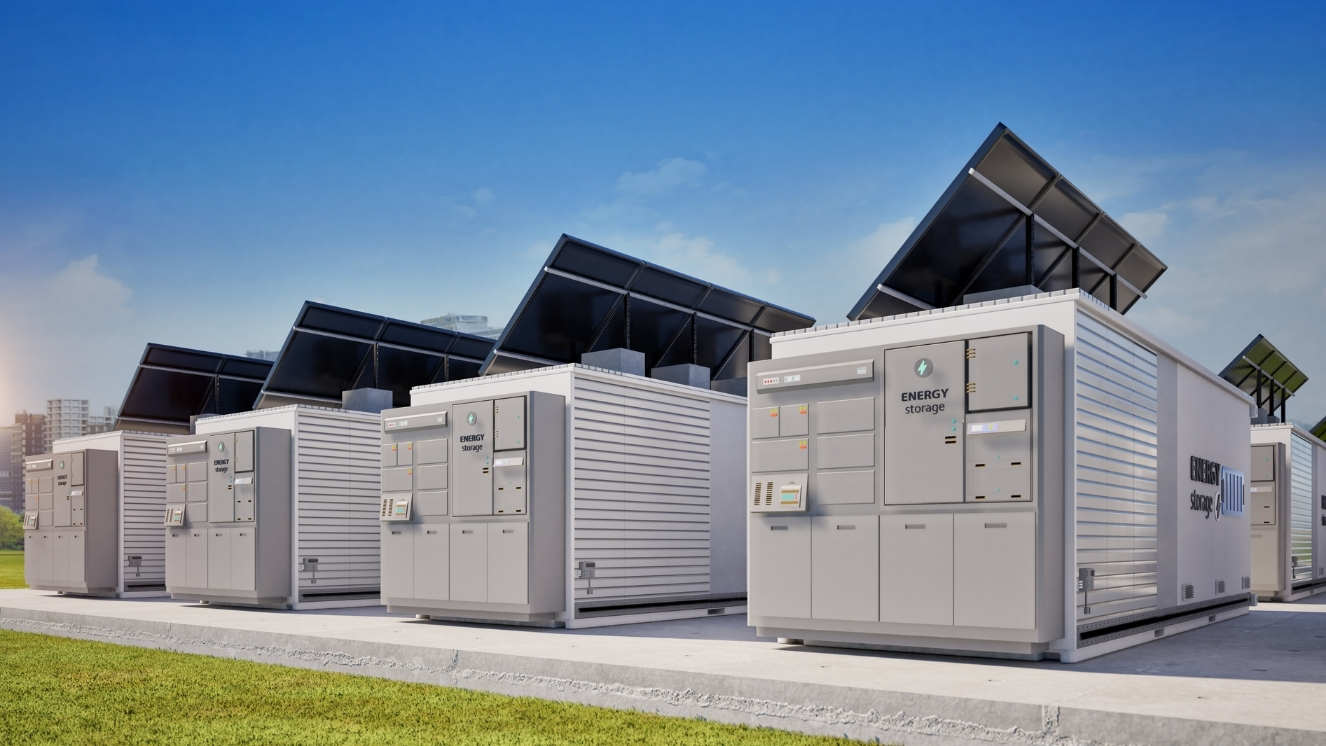
The Union Cabinet on Wednesday approved viability gap funding (VGF) of ₹14,500 crore to support 92 gigawatt-hours (GWh) of storage capacity by FY31, involving an estimated investment of ₹97,600 crore. The scheme covers 60 GWh of pumped hydro, 30 GWh of battery energy storage systems (BESS) and 2 GWh of emerging technologies.
Alekhya Datta, director, Electricity and Renewables Division at TERI, described the scheme as an important intervention in addressing capital costs but cautioned that funding alone would not guarantee sustainable projects. "However, subsidy alone cannot ensure commercial viability or affordable tariffs for DISCOMs," Datta said, adding that project economics would depend on low-cost charging power, utilisation, discharge duration, financing costs and battery lifecycle performance.
The concerns come despite storage tariffs already reaching competitive levels. According to Konda, standalone storage capacity tariffs average around ₹2.6 per unit. Adding ₹2.5-3 per unit for charging and discharging power takes the landed cost of stored electricity to ₹5.5-6 per unit, comparable with firm and dispatchable renewable energy tariffs of ₹5.25-6.
The bigger challenge, he said, was sustaining those tariffs while ensuring timely project execution.
VGF also does not automatically translate into cheaper financing. Konda pointed out that under the earlier arrangement, only 20% of eligible support was released at financial closure, leaving lenders to fund 80% of project costs at that stage. Financing costs, therefore, continue to reflect execution risks and the viability of awarded tariffs. "The real question is whether DISCOMs can utilise the contracted storage capacity efficiently and profitably," Konda said. Distribution companies must arrange charging power and schedule discharging effectively to prevent contracted storage facilities from becoming stranded assets.
Another concern is whether subsidies reward actual performance rather than merely making capacity available. Konda said VGF support ranged between 20% and 30% of capital expenditure under the first two tranches and could decline to 15-20% under the latest scheme. However, tariffs did not increase when assistance was reduced under the second tranche, suggesting a weak relationship between subsidies and discovered prices.
Under the previous design, VGF payments depended on battery availability rather than actual utilisation or value delivered to the grid. The detailed framework for the latest scheme is awaited.
Datta cited an assessment indicating that nearly 75% of standalone two-hour BESS capacity allocated in 2025 was at risk of viability, underscoring concerns over aggressive tariff discovery.
He called for procurement frameworks that account for availability, utilisation, round-trip efficiency, cycling performance and battery degradation, along with provisions for augmentation and replacement. "Greater consideration should also be given to linking VGF support to operational performance," Datta said.
Debmalya Sen, president of the India Energy Storage Alliance, offered a more optimistic assessment, saying subsidies would improve project economics and cushion rising battery costs.
"BESS is already commercially viable," Sen said. He noted that tariffs without VGF had been around ₹3 lakh per MW per month, while fresh support could partly offset tariff increases arising from domestic value-addition requirements.
Meanwhile, brokerage Nomura estimates government funding will cover approximately 15% of total project costs. It expects the mandatory 40% domestic-content requirement for battery projects to encourage local manufacturing and assembly.
Nomura also expects pumped-storage developers to benefit, identifying 11 projects totalling 15,870 MW under construction, including those of Greenko, Tata Power, JSW Energy, Adani Green and Torrent Power.
Earlier battery-storage VGF schemes covered around 43.8 GWh with funding of ₹9,160 crore. The urgency for storage is growing. About 11% of solar power generated during the hottest months this year was lost to grid curtailments despite record electricity demand. India's storage requirement is projected to reach 411 GWh by FY32.