
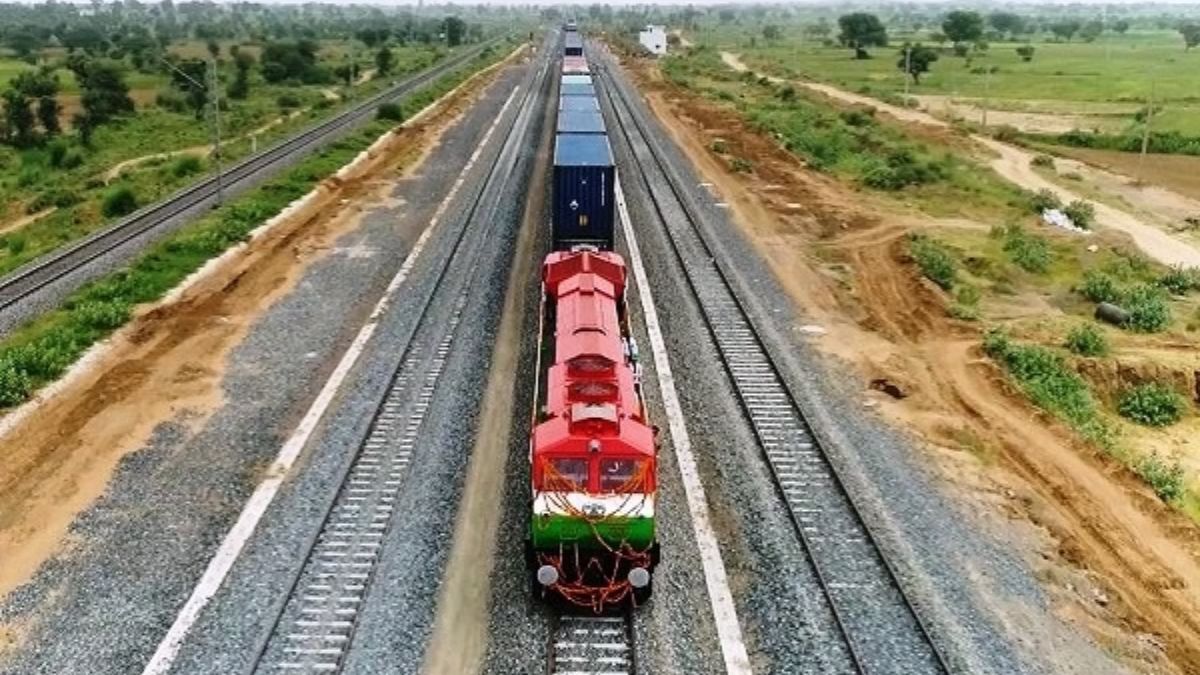
Rail freight traffic rose 4.1% in the first half of FY27 as the transporter moved 833.7 million tonnes of goods. The ministry said, "Freight loading during the first six months of the financial year also registered sustained growth." Food grain loading grew 25%, while coal supplies to power plants also increased.
In the first half of FY27, the transporter moved 833.7 million tonnes of goods, up 4.1% from a year earlier. Revenue from carrying goods grew at a slower pace of 3.7% during the same period, according to the ministry.
Within the commodity basket, food grain loading recorded the strongest growth among major categories by rising 25% year-on-year. Clinker, a key raw material used in cement manufacturing, grew 20% while domestic container traffic increased 10%.
Coal, which accounts for roughly half of the railways' total freight loading, rose 9% year-on-year in September. Daily coal supplies to power plants increased 11.6% to 443 rakes from 397 a year earlier, the ministry said. A rake is a group of goods wagons pulled by a train engine.
"Freight loading during the first six months of the financial year also registered sustained growth, reflecting continued demand for rail transportation across major sectors of the economy," the ministry said.
The monthly trend shows that freight loading growth has fluctuated in recent months. In July, loading rose 9% year-on-year to 141.3 million tonnes, before growth slowed to 5.4% in August, when volumes stood at 137.9 million tonnes. September growth marked a modest recovery in the annual growth rate, although the total volume was lower than in the preceding two months.
The faster growth in September freight revenue compared with loading suggests that earnings increased more quickly than the volume of goods transported. This trend was also visible in August, when freight revenue rose 6.27%, outpacing the 5.4% growth in loading, according to the railways ministry.
Freight earnings remain crucial to railways' finances, helping it cross-subsidise passenger services where fares often fall short of operating costs.
Experts said that the inauguration of the western dedicated freight corridor (WDFC) in September could have helped boost freight traffic by allowing goods trains to move faster, with fewer delays caused by sharing tracks with passenger trains. The 1,506-km WDFC connects key industrial centres in the north with Jawaharlal Nehru Port, improving the movement of goods to export markets.