
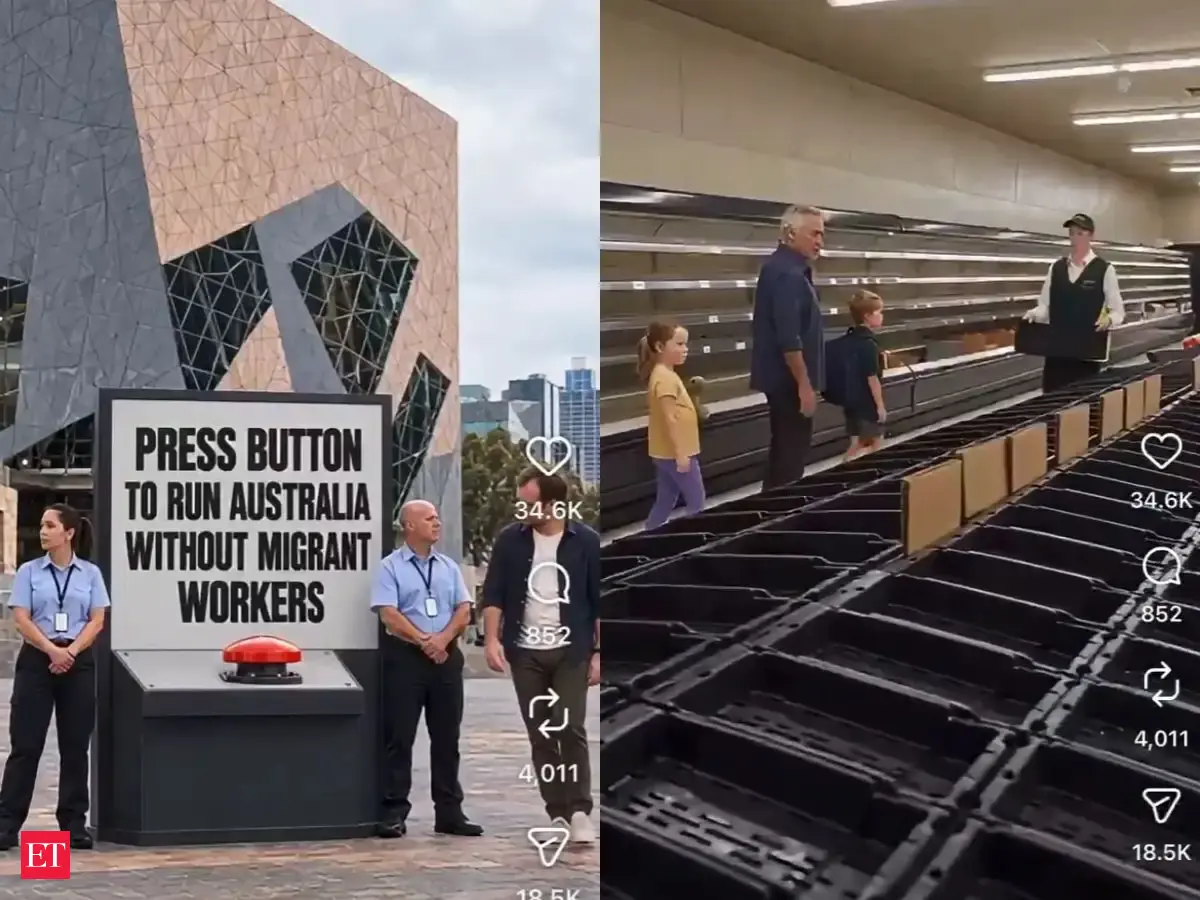
The Australian Hotels Association released a viral video showing how the country looks without migrant workers. It features empty supermarket shelves and closed coffee shops after a button removes foreign staff. The ad highlights the dependence of many industries on these workers as political parties debate reducing current immigration levels.
A viral advertisement by the Australian Hotels Association uses exaggerated scenes to illustrate how the departure of migrant workers could affect everyday life, from coffee shops and supermarkets to restaurants, hotels and elderly care. The video emerges amid a political debate over immigration levels in Australia and proposals to reduce migration.
A recently released advertisement by the Australian Hotels Association (AHA) has drawn attention online for depicting the potential consequences of removing migrant workers from Australia, as the country's major political parties consider reducing immigration levels. The video, which has gone viral on social media, imagines a series of everyday disruptions after a button is pressed to run the country without migrants.
The advertisement opens with a large button carrying the message, "Press button to run Australia without migrants." When a man presses it, wondering what the worst that could happen, a series of scenes unfolds in which workers receive visa cancellation notices and leave their jobs, highlighting the dependence of several industries on migrant labour.
Viral ad shows migrant workers leaving Australian jobsIn one scene, a barista receives a visa cancellation notice, removes her apron and walks away from the coffee shop. A bartender leaves a glass of beer behind and says "Adios", Spanish for goodbye, before departing.
Another sequence shows a nurse caring for an elderly patient saying goodbye and kissing him on the head before leaving. The scenes portray the sudden departure of workers from hospitality and care services following the hypothetical removal of migrants.
The advertisement then turns to the impact on everyday services. A man enters a coffee shop and asks how he can get a coffee. The woman behind the counter, who is grinding coffee beans manually, hands him a pot and a cup, leaving him to prepare the drink himself. When he asks where Finn is, she replies that he and half the kitchen staff have returned home.
Empty supermarket shelves and delayed food deliveriesThe video also imagines disruption to food supplies. A grandfather visiting a supermarket with his grandchildren finds empty shelves in the fresh produce section and asks a staff member where the fruit is. The employee replies that it is "still on the trees".
One of the children spots an apple and asks whether he can have it. The grandfather looks at the rotten fruit, priced at $47.50, and says they might have some at Christmas instead.
In another scene, a man ordering food through a delivery app sees that the estimated delivery time is the following day. He turns to his children and asks whether they would like toast, suggesting that food delivery services could also struggle without migrant workers.
Salon, restaurant and hotel services disruptedThe advertisement extends its scenario to personal care and hospitality. Two middle-aged women sitting in a salon with their feet soaking in water consider doing each other's pedicures, but one stops when she notices the other woman's feet.
At a restaurant, a customer asks whether the kitchen is open. The man he approaches confirms that it is, hands him an apron and directs him towards the kitchen, where other customers are preparing their own food.
A hotel guest encounters a similar situation at reception. Instead of the usual room-cleaning service, the receptionist hands the guest towels and cleaning supplies, explaining that the hotel is short-staffed and the guest will have to clean the room himself.
Through these exaggerated scenarios, the advertisement presents a hypothetical Australia in which businesses and essential services struggle to function after migrant workers leave. It comes amid a wider political debate over immigration levels and the role of overseas workers in the country's economy.