
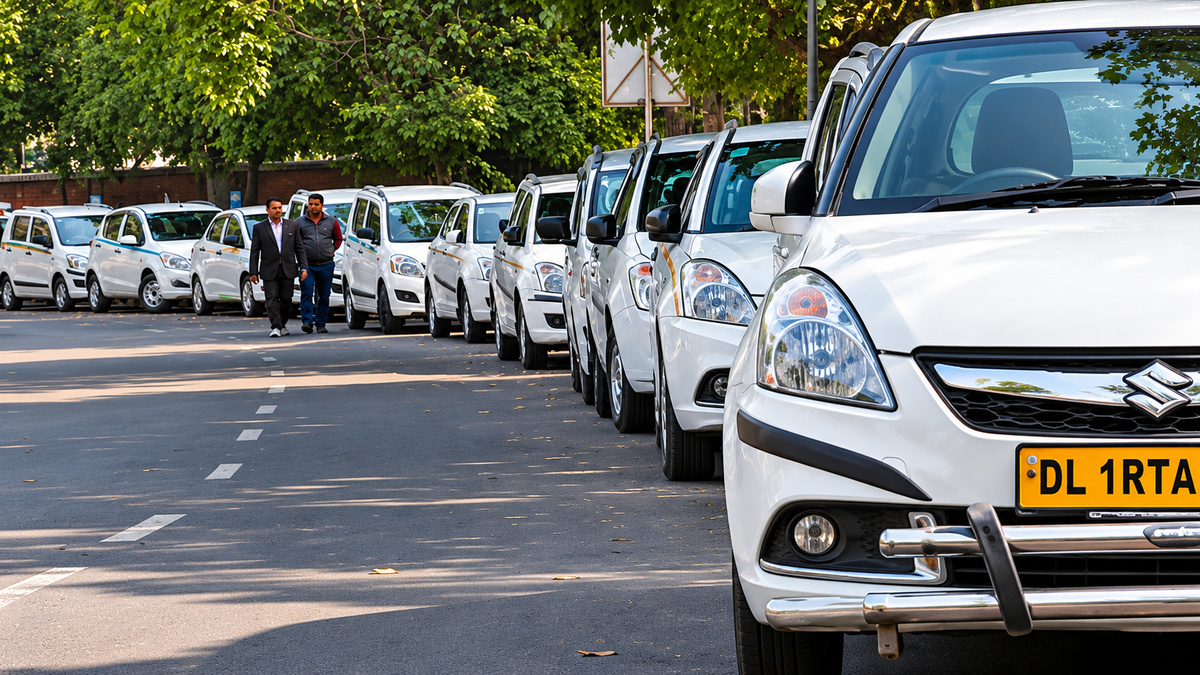
The Ministry of Road Transport and Highways proposed the Rent-A-Cab Scheme 2026 to update the 1989 framework. The plan lowers the entry requirement to five cars and mandates 24-hour customer support. Operators must resolve online complaints within 24 hours. The ministry invited public comments on these changes until December 5.
Renting a car could soon come with clearer promises: someone to answer the phone at any hour, help if the vehicle breaks down and a deadline for resolving online complaints. For those looking to start a rental business, the entry requirement could also become much smaller -- five cars instead of 50.
These are among the changes proposed by the Ministry of Road Transport and Highways (MoRTH) in its draft Rent-A-Cab Scheme, 2026. The plan would replace the 1989 framework and cover rentals with or without drivers.
The changes are still at the proposal stage. The ministry has invited comments until December 5, 2026, through a memorandum dated November 6. While the draft proposes January 1, 2027 as the start date, the final rules are yet to be notified.
Help when a rental goes wrong
Under the draft, rental companies would need at least one customer care centre reachable by telephone throughout the day and night. Its details would have to appear on the company's website, along with contact information for complaints.
There would also be a clock on online grievances. Operators would have to resolve complaints raised on their websites within 24 hours.
For complaints against a driver over violations of the law, rules or scheme, the draft provides a separate seven-day period for an inquiry. The operator must tell the renter what the inquiry found and take appropriate action only after completing it.
The proposal also addresses what happens when a car stops midway through a trip. Operators would need arrangements for repairs and towing, and provide that assistance themselves or through another service provider whenever required during the rental.
More checks on cars and drivers
According to the ministry's draft, rental cars must be less than nine years old from their first registration date. They must have valid fitness and pollution certificates, along with comprehensive insurance covering the renter, driver and other occupants up to the permitted passenger capacity.
Location-tracking devices and first-aid kits would be required. Renters, too, would have a responsibility of keeping the tracker functional and immediately reporting any fault to the operator.
Families travelling with children would have another provision to look for. Cars must allow a child restraint to be fitted in at least one seat and operators must supply one when a renter needs it.
Drivers supplied by the company would need valid licences, no unpaid challans and police verification. Operators must retain verification records and ensure driver welfare under the Code on Social Security, 2020, the draft mentioned.
Five cars and one licence
For smaller businesses, the five-car minimum could reduce the investment needed to get started. Operators would still need at least two cars at every approved operating location.
The ministry's November 12 statement said the requirement to maintain branches in five tourist cities would also go. Approved locations could include airports, railway stations, metro stations, bus terminals and other public places.
The draft requires cars to be registered in the applicant's name, placing businesses that own rental fleets at the centre of the framework.
A single electronic application would cover all proposed locations within a state or Union Territory. The application fee would be Rs 25,000, regardless of the number of cars or locations and the licence would normally last five years.
Faster approvals, with penalties for lapses
Transport authorities would have 60 days to grant or renew licences after checking compliance. Requests to add or remove cars or operating locations would be treated as approved if the authority neither accepts nor rejects them within 30 days. The fleet must still contain at least five cars.
Record-keeping would move further online, but paper registers would stay. The draft requires both an electronic register on VAHAN and a physical register containing vehicle particulars.
Easier entry would come with consequences for violations. Specified offences involving a rental car or a company-provided driver could shorten licence validity by one year, or by the remaining period if less than a year is left.
States would classify breaches and set penalties. Operators would get time to correct breaches classified as non-material, while failures involving specified vehicle documents or safety conditions would trigger automatic suspension. Appeals against specified licensing orders could be filed within 30 days, with electronic hearings allowed.
Existing licences would remain valid until expiry and could be renewed under the new scheme. Businesses and renters can send their suggestions to the ministry until December 5, before the proposed framework is finalised.