
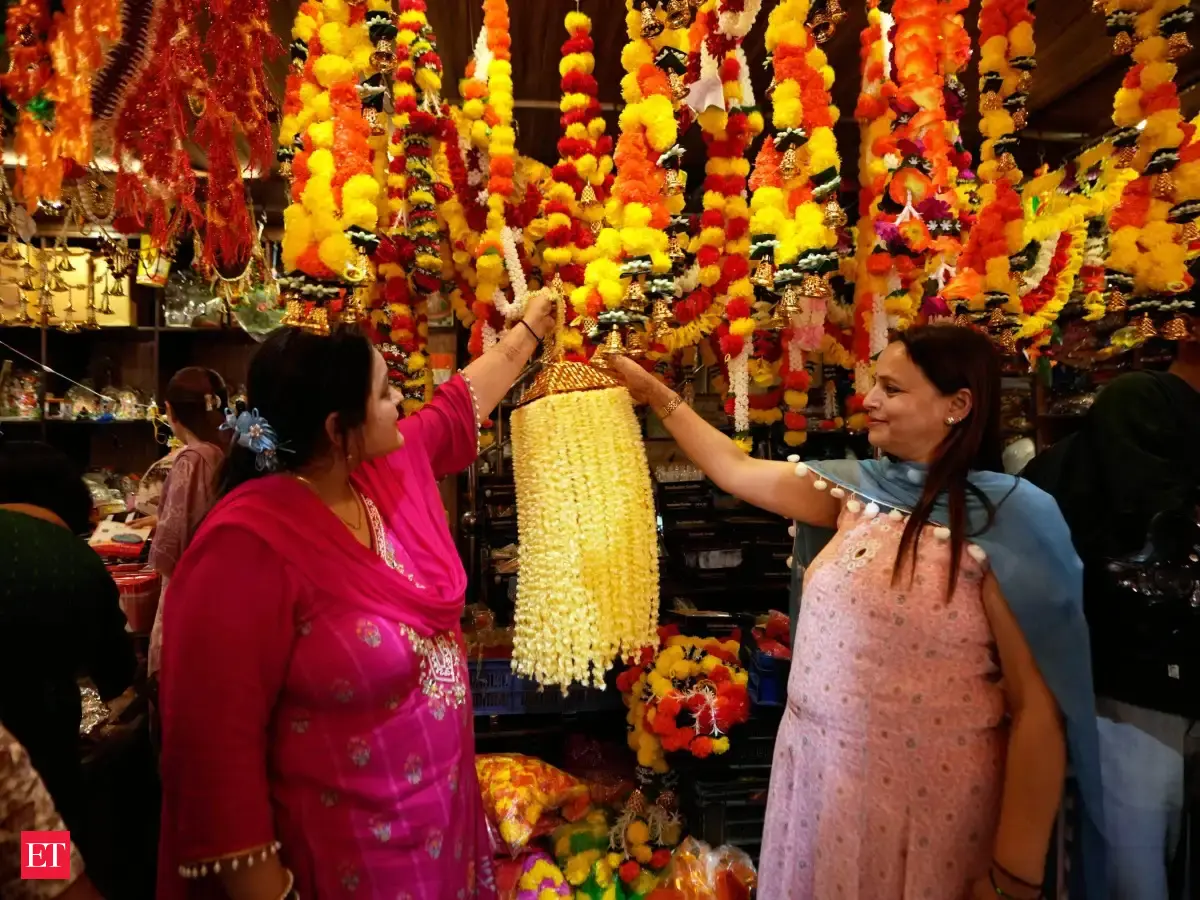
Sales of apparel, footwear, and home appliances increased over 20% during the Navratri-Dussehra period. While car sales grew by 2%, smartphone and television sales fell due to rising chip costs. Kamal Nandi said, "This Navratri has been the best for the home appliances industry in the last five-six years."
Synopsis
Sales of apparel, footwear, and cosnumer durables increased over 20% during the recent Navratri-Dussehra festive period. Car retail sales saw a slight increase of 2% despite last year's GST-driven rush. Appliance sales were particularly strong, with air conditioners experiencing a growth of more than 50%. However, smartphone and television sales faced challenges due to rising prices of memory chips.
Listen to this article in summarized format
Loading...
×
Kolkata | New Delhi: Sales of apparel, footwear, refrigerators, air conditioners and washing machines increased more than 20% year-on-year during the Navratri-Dussehra festive period, alongside a modest uptick in volume or units sold, according to industry estimates. Executives attributed the growth to accessible financing options.
Car retail sales increased 2% despite a high base created by last year's post-goods and services tax (GST) rate-cut buying rush. Around 1.03 million vehicles were sold during Navratri this year, between October 11-19, compared to last year's 1.01 million units, according to dealer estimates.
Federation of Automobile Dealers Associations president Sai Giridhar said that the low growth in vehicle retail sales was not a like-for-like comparison, as last year saw huge pent-up demand following the GST rate cut.
There were virtually no car sales for a month prior to the cut last year.
Live Events
Ashutosh Varma, chief business officer at the India business unit of the country's largest two-wheeler company, Hero MotoCorp, said Navratri retail sales exceeded last year's levels despite the high base. Scooter sales were a standout, he said.
Iyer said average billing had increased 6-7%, while same-store sales accelerated more than 10%. Lifestyle and footwear retailer Woodland reported growth of more than 20% each, as did electronics chain Vijay Sales, with AC sales surging more than 50%.
Electronics companies extended equated monthly instalment (EMI) tenures and expanded financing offers to entry-level products to sustain demand, while delaying the announced price hike from October until after Diwali-which falls on November 8. LG, Godrej Appliances, Haier and Havells-owned Lloyd reported sales growth of more than 20% during Navratri, industry executives said.
Festive frenzy
"This Navratri has been the best for the home appliances industry in the last five-six years, with high growth across categories," said Kamal Nandi, business head (appliances) at Godrej Enterprises Group. "AC sales have surged three-four times in the south, while in the west they have increased over eight times due to higher than normal temperatures. The industry overall has grown by 18-20%, including the mass segment in tier-2 and tier-3 markets. Volume growth will be 10-15%. Consumers made purchases fearing a price hike after Diwali."
Improved affordability following last year's GST rationalisation and special festive EMI schemes supported demand, said Sanjay Chitkara, co-chief sales and marketing officer at LG Electronics India, the country's largest appliance maker.
Lifestyle International chief executive Devarajan Iyer said that money is now being funnelled into retail spending, in contrast to the disproportionately higher spending on experiences such as travel and hospitality over the past four to five years. Suitcase sales have stalled this year, for instance, while consumers are spending more on apparel, handbags and footwear.
Haier India chief executive Satish NS said Navratri buoyancy had laid the foundation for a robust Diwali.
Memory-heavy gadgets buck the festive boom
However, smartphones, laptops and televisions faced volume pressure as repeated price hikes, driven by a two-to-three-fold increase in memory-chip prices, pushed products beyond consumers' budgets, although premium products remained more resilient. Average prices of memory products have risen 15-40% over last year's Diwali levels, according to industry executives.
Counterpoint Research estimates that online smartphone unit sales during Navratri fell 16% year-on-year, while the All India Mobile Retailers Association estimates that brick-and-mortar volumes declined nearly 20%. The association said value sales across India remained almost flat, with Gujarat being an outlier that showed 15% volume growth.
(You can now subscribe to our Economic Times WhatsApp channel)
(Catch all the Business News, Breaking News and Latest News Updates on The Economic Times.)
Subscribe to The Economic Times Prime and read the ET ePaper online.
...moreless
(You can now subscribe to our Economic Times WhatsApp channel)
(Catch all the Business News, Breaking News and Latest News Updates on The Economic Times.)
Subscribe to The Economic Times Prime and read the ET ePaper online.