
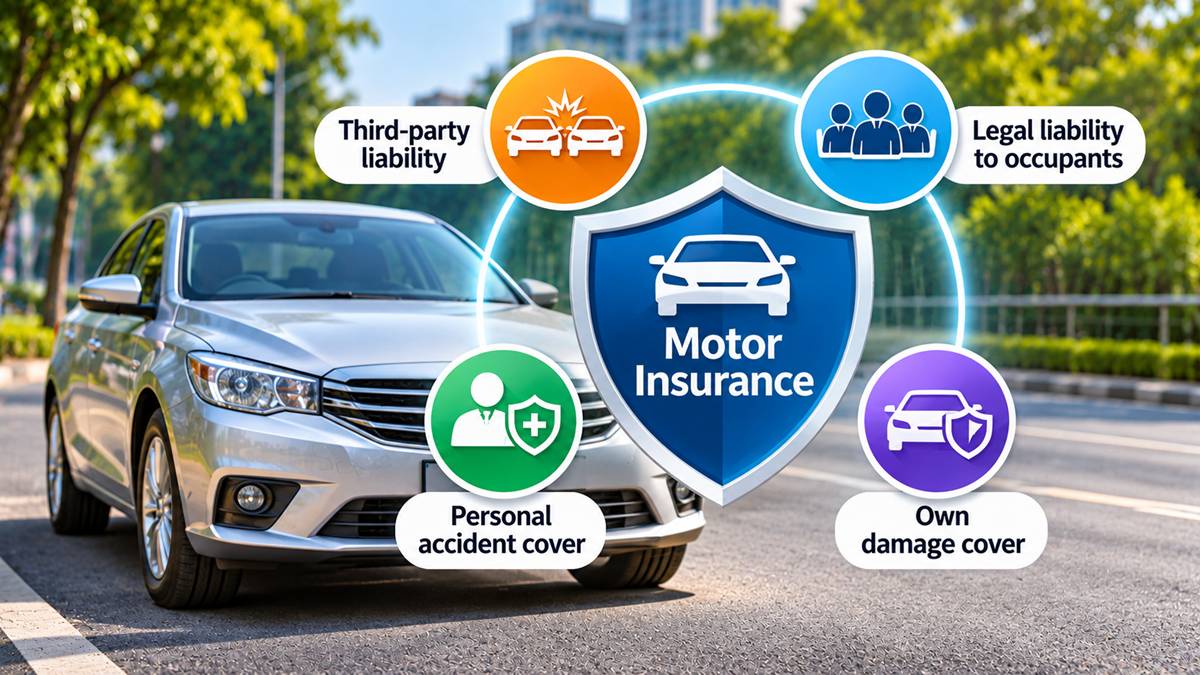
The insurance regulator introduced a four-layer structure for private vehicles starting December 15. Insurers must now show coverage and premiums for each section separately. "The new framework provides customers with wider coverage along with clarity and choice," said Shanai Ghosh. This change helps owners understand exactly what their policy covers.
Buying a motor insurance cover is set to become more transparent as the insurance regulator has introduced a four-layer structure for private vehicles. From December 15, insurers will also have to show the coverage and premium for each section separately -- third-party liability, legal liability to occupants, personal accident and own damage of the vehicle.
This will give customers a clearer picture of what their policy includes, what it does not. The new structure will separate cover for damage caused to others from protection for passengers, personal accident benefits and damage to the vehicle itself.
"The new framework provides customers with wider coverage along with clarity and choice by separating different components of motor insurance, allowing them to better understand and select the protection they need," says Shanai Ghosh, MD & CEO, Zuno General Insurance.
Personal accident cover
The mandatory personal accident cover will be applicable to the owner-insured. It will be triggered if the owner was in the car during the accident. For other occupants, the cover is optional at the time of purchase of the policy. Occupants include pillion riders in two-wheelers and drivers other than the owner-driver. "For passengers and pillion riders, personal accident protection is an optional cover that can be purchased by paying an additional premium," says Atrey Bhardwaj, chief growth officer of Probus, an insurance broking firm.
The premium for personal accident cover can vary basis the cover chosen. The amount paid in a claim in case of an accidental death benefit and a disability benefit will be treated differently under the policy. The sum insured should not be understood as an amount that is paid automatically whenever an accident occurs. Vehicle owners should check these details while choosing the cover, so they know what protection they are actually getting.
If a vehicle owner has a standalone personal accident policy, he must check if it meets the requirements for owner-driver cover under motor insurance. Having a separate policy does not automatically mean the motor insurance requirement is met.
Legal liability cover
This cover is relevant when someone travelling in the insured vehicle is injured and the vehicle owner is found legally liable. It is an optional cover for passengers in private cars and pillion riders on two-wheelers. The insured's employees may also be covered, subject to the policy terms.
For instance, if a car owner gives a colleague a lift and an accident leads to a legal claim from that passenger, this cover may help meet the liability. The number of occupants covered cannot exceed the vehicle's registered seating capacity. The cover does not extend to the owner-insured or their immediate family members, including parents, spouse and children. It is different from personal accident cover, which pays specified benefits to the individuals insured under it.
The regulator has directed the insures to ensure that motor insurance policies under the four-layer structure are available on Bima Sugam. "This will make the new policy structure accessible through the digital insurance platform, while improving transparency and enabling informed customer decisions," says Ghosh.
The motor third-party insurance is mandatory for all vehicles under the Motor Vehicles Act.