
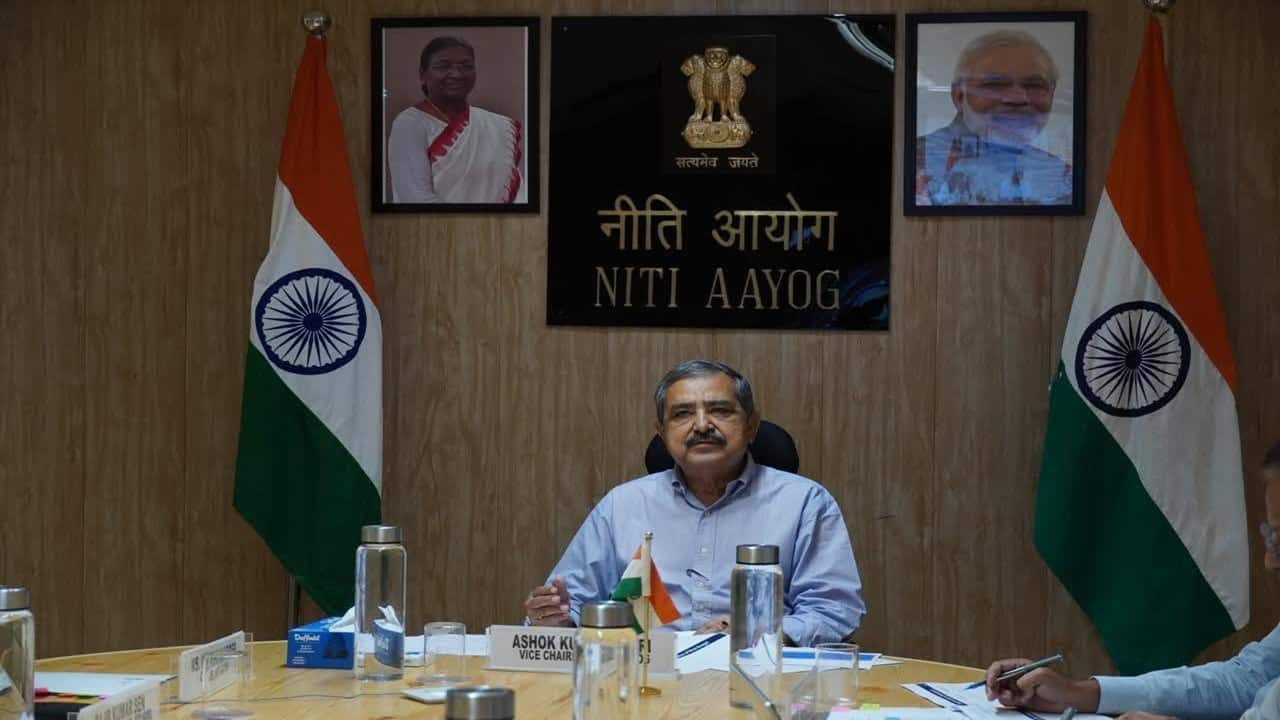
NITI Aayog Vice Chairman Ashok Kumar Lahiri said on Friday that long-term capital gains tax changes must balance equity and efficiency. He did not take a firm position on the tax structure. Lahiri also highlighted that education, healthcare, infrastructure, and entrepreneurship are key drivers for India to reach Viksit Bharat.
NITI Aayog Vice Chairman Ashok Kumar Lahiri on Friday said any changes to long-term capital gains (LTCG) taxation must balance equity and economic efficiency, while declining to take a firm position on possible changes to the tax structure. Speaking to ANI on the sidelines of the Pathways to Viksit Bharat event, Lahiri said the issue needed careful consideration, given the history of changes in capital gains taxation and the introduction of securities transaction tax (STT). "I don't want to give a categorical answer because LTCG, as you know, we had it at one point of time, then we abolished it, and we introduced securities transaction tax," he said. Asked whether changes to LTCG taxation would be a good policy move, Lahiri said, "There are both issues that are involved. One is equity, the other is efficiency." "So both have to be considered. I don't think you should expect a categorical reply from me about that," he added. His remarks come amid discussions around LTCG taxation, which directly affects investors and equity markets. Speaking about India's long-term economic growth and the goal of achieving Viksit Bharat by 2047, Lahiri identified education, healthcare, infrastructure and entrepreneurship as the four key drivers of development. He highlighted the importance of entrepreneurship in generating employment, saying India needed more people to create jobs rather than simply seek them. "Entrepreneurship is very important... if everyone is looking for a job, we also need people who will provide the jobs," he said. Encouraging young people to start businesses, Lahiri added, "So I encourage these young students, become entrepreneurs yourself." On improving productivity, he stressed the importance of investment and technological advancement. He said productivity depended on combining human capital, physical capital and entrepreneurship. "So we need technological dynamism and technology; much of technology is embedded in machines. So we need investment. And when you have investment, you will find productivity will increase," he said. Lahiri also expressed optimism about India's growing startup ecosystem and its achievements in information technology and artificial intelligence. "Very encouraging is entrepreneurship, and we have seen recently how entrepreneurship is flourishing. You have unicorns," he said. On policy measures to achieve the Viksit Bharat 2047 vision, Lahiri pointed to government initiatives such as Atal incubation programmes and Production Linked Incentive (PLI) schemes, saying multiple initiatives would be needed to support the country's development goals. *With ANI Inputs