
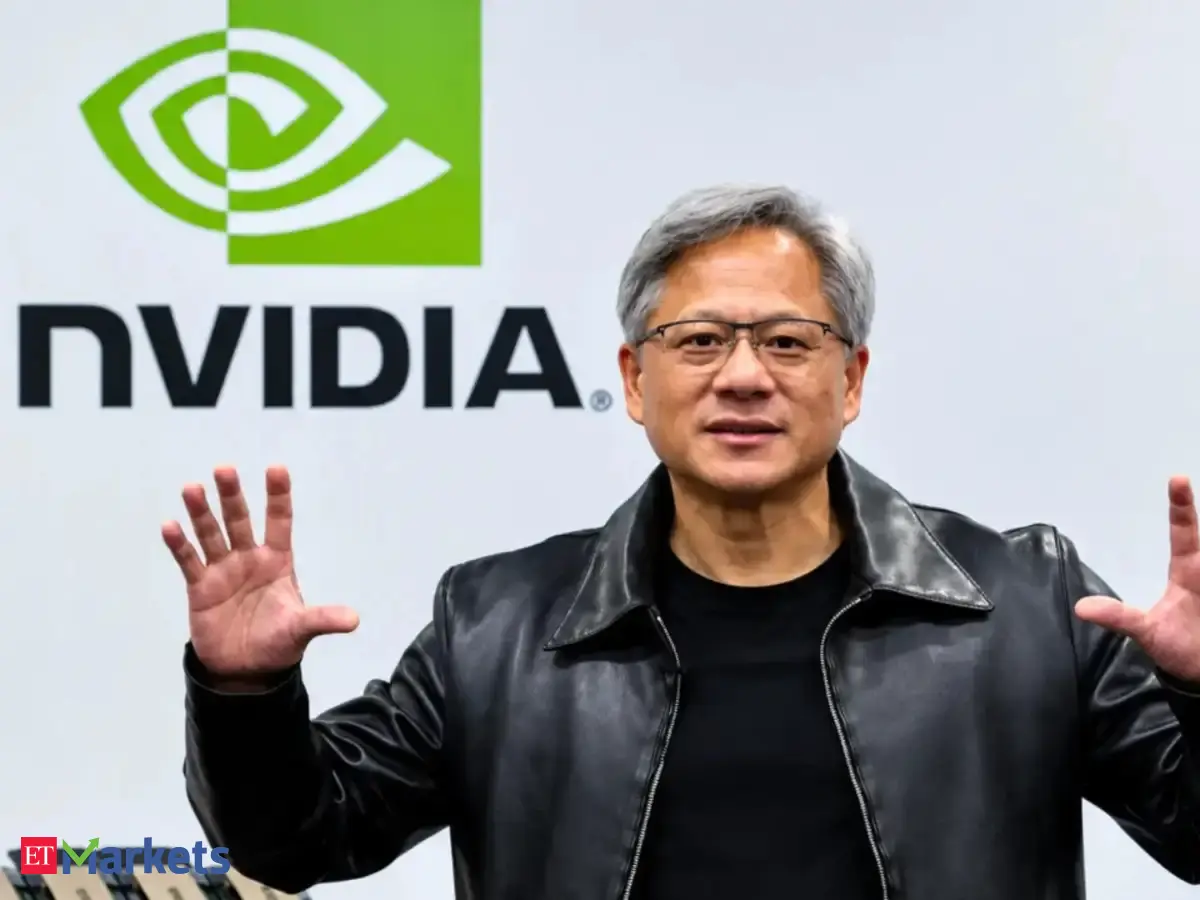
Nvidia CEO Jensen Huang now faces scrutiny over his massive influence on the global AI industry. His control over chip supply and investments has sparked concerns about the company’s dependence on his leadership. Bernstein analyst Stacy Rasgon said these developments brought the stewardship of one of America's most important companies under scrutiny.
Nvidia CEO Jensen Huang's influence extends beyond the chipmaker, shaping AI investment, chip supply and industry sentiment. His central role has also raised questions about succession planning and the risks of relying on one executive, as the company investigates whether he was targeted by a foreign intelligence effort involving China.
Nvidia CEO Jensen Huang has become one of the most influential figures in the global artificial intelligence industry, with the company's dominance in AI chips giving him significant influence over the technology's growth. From fans seeking his autographs in Taipei and Seoul to billionaires competing for access to its processors, Huang's influence extends far beyond the semiconductor industry.
Nvidia's graphics processing units (GPUs) power the training of advanced AI models and services such as ChatGPT. The company has also expanded its role by investing its growing cash reserves in AI cloud-computing providers, suppliers and major laboratories, Reuters reported.
As on 10 Nov 2026, 02:30 AM IST
S&P 500 Top Gainers
Monolithic Power Systems1,388(16.60%)
Trade Desk14.93(15.47%)
Teradyne246.00(12.73%)
Gainers"
S&P 500 Top Losers
Coterra Energy32.56(-8.62%)
First Solar191.61(-4.74%)
NVIDIA178.67(-4.27%)
Equity Residential63.66(-3.50%)
Losers"
However, Huang's growing influence has raised questions about the industry's dependence on his leadership, particularly as Nvidia investigates whether he was targeted by foreign intelligence following reports involving a Chinese businesswoman alleged to have passed information to Beijing.
Bernstein analyst Stacy Rasgon said the developments had brought the stewardship of one of America's most important companies and the direction of the US AI industry under scrutiny, Reuters reported.
Huang's influence extends beyond NvidiaHuang's public appearances and endorsements have demonstrated his ability to move markets. A dinner in Seoul last year with the CEOs of Samsung and Hyundai helped lift shares of two South Korean food companies, while his endorsement of Marvell Technology as a potential trillion-dollar company sent the chipmaker's shares to record highs.
He has also emerged as one of AI's strongest advocates, dismissing concerns about a technology bubble and challenging warnings about AI's potential existential risks.
Nvidia's powerful chip allocatorHuang's influence stems largely from Nvidia's control over the supply of advanced processors needed by companies investing billions of dollars in AI infrastructure.
Oracle co-founder Larry Ellison highlighted this dependence in September 2024 when he described how he and Elon Musk had sought additional GPU supplies from Huang during a dinner in Palo Alto, Reuters reported.
Huang also exercises considerable control over Nvidia's operations, with more than 60 executives reporting directly to him. He owns approximately 3.6% of the company and is its fifth-largest shareholder. However, he does not have special voting shares that would give him majority control.
His family members also hold senior positions at Nvidia. His son-in-law Nico Caprez oversees relationships with neocloud and data centre operators, while his daughter Madison leads marketing for physical AI products and his son Spencer works in robotics.
No clear successorHuang, who co-founded Nvidia in 1993, has no publicly identified successor, raising questions about the company's succession planning. Nvidia has not disclosed a formal succession plan but has said its board continues to support him, Reuters reported.
Technology analyst Dan Ives has said Huang would be extremely difficult to replace, with no other executive seemingly positioned to take over seamlessly.
Nvidia's other senior executives include finance chief Colette Kress, worldwide field operations head Nick Parker, operations chief Debora Shoquist and general counsel Tim Teter.
The concentration of strategic decision-making and industry influence around Huang highlights Nvidia's strength but also exposes the potential risks of the global AI industry's dependence on a single executive, Reuters reported.