
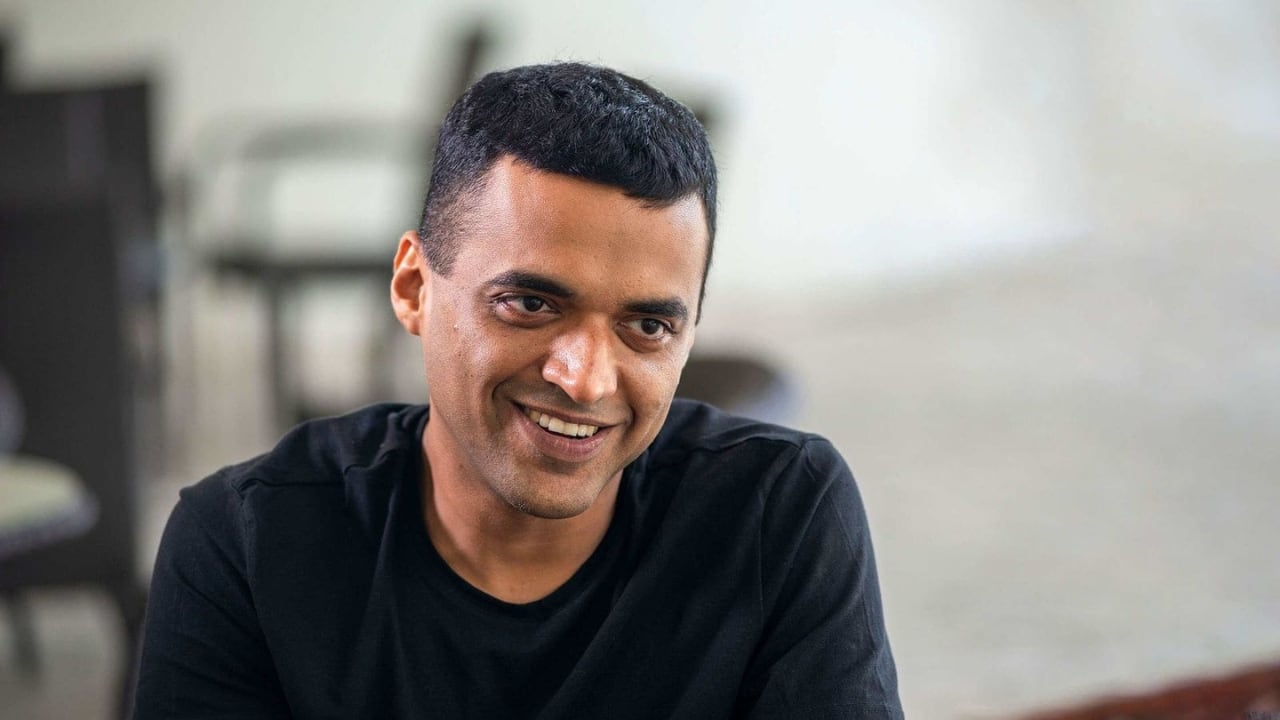
Deepinder Goyal addressed criticism regarding the high price of his new AI-powered wellness device, Temple. He said, "Temple is not made for India. It's made for the world." Goyal clarified that the product is for global consumers and not a medical tool, urging people to wait for user reviews.
Deepinder Goyal, founder of Eternal, has responded to criticism surrounding the pricing and claims of the company's newly launched AI-powered wellness device, Temple, saying the product is primarily aimed at global consumers and not the Indian market.
In a lengthy post on X following a wave of online debate, Goyal defended Temple's pricing, scientific approach and positioning, while clarifying that the device is not intended to replace medical care.
"Temple is not made for India. It's made for the world," Goyal wrote. "We don't expect any more than 1 percent of Temples being sold in India."
The statement comes after social media users questioned the device's steep price tag and scrutinised claims around its brain-monitoring features.
'We priced it at what we think it's worth'
"If you are upset that the pricing is too high, I am sorry. There's a lot of work that went into Temple, and we priced it at what we think it's worth," he said.
He added that sceptical consumers could wait for user reviews before deciding whether the device justifies its cost. Goyal also pushed back against suggestions that Indians should support the product simply because it was built by a domestic startup.
"Please do not support us because we are an Indian startup. We want to compete globally. We don't need/want nationalist support," he wrote, adding that the company wants backing from people who believe in early-stage innovation rather than patriotic sentiment.
Founder responds to scientific scrutiny
Temple has also attracted criticism over the scientific evidence behind some of its features, particularly a metric called "Brain Flow".
Goyal said consumers were free to remain unconvinced until more evidence emerges and stressed that the company was not forcing anyone to buy the product.
"There are different audiences which buy products at various levels of proof. Proof goes from whitepaper -> pre-print -> peer reviewed," he wrote.
He added that Temple's makers would continue publishing research and that regulatory authorities, not social media, would decide whether any claims meet required standards.
'Temple is strictly a fitness + AI device'
Responding to concerns raised by doctors and healthcare professionals, Goyal said the company has made no medical claims about the device.
"Temple is strictly a fitness + AI device, and we've made no medical claims," he said.
According to Goyal, the product has not been proven to diagnose, prevent or treat any disease and should not be viewed as a substitute for consulting a doctor. He argued that some medical professionals were evaluating the product through a healthcare lens even though it was designed as a consumer wellness device.
Entropy, not Brain Flow, is the bigger focus
Goyal also suggested that online discussions have focused heavily on Brain Flow, even though he views another metric, called "Entropy", as Temple's core proposition.
"The main point of Temple is NOT Brain Flow," he wrote. "The main point of Temple is Entropy."
According to the founder, communications sent to waitlisted customers have largely centred on Entropy, with more information about the feature expected in the future.
He also dismissed suggestions that "Roomdeaf AI", another part of Temple's vision, represents a strategic pivot, saying it is simply an expansion of the device's capabilities.