
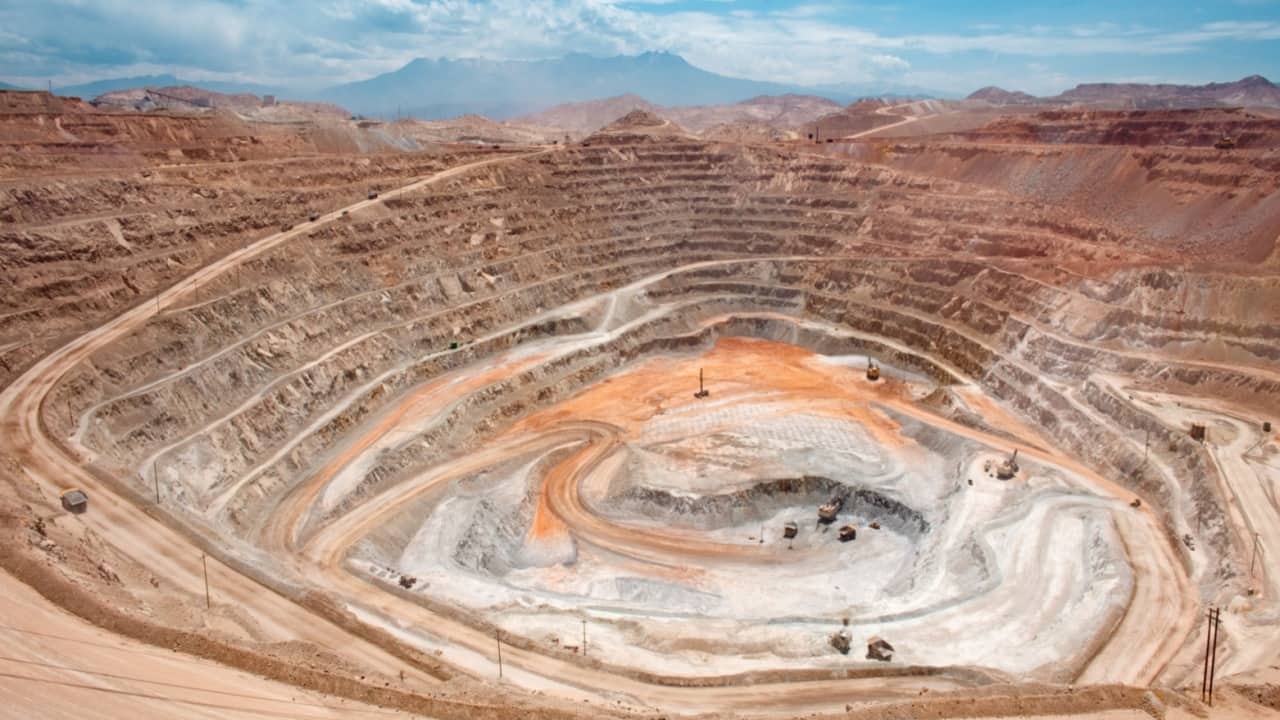
Vedanta Group Chairman Anil Agarwal warned of a global copper shortage on October 14. He said, "Is copper the next oil? In terms of demand, yes." India’s copper usage rose to 1.88 million tonnes in FY25. Growing needs for AI and electric vehicles mean India must boost its domestic production.
Vedanta Group Chairman Anil Agarwal has warned of a structural global copper shortage over the next five to 10 years, driven by rising demand from artificial intelligence (AI), data centres and electrification. For India, which relies heavily on imported copper concentrate, the looming supply crunch could deepen concerns over its ability to meet growing domestic demand. "Is copper the next oil? In terms of demand, yes," Agarwal said in a post on X on October 14, adding that India had significant untapped exploration potential and needed policy changes to boost domestic production. India's apparent copper usage rose to 1.88 million tonnes (MT) in FY25 from 1.72 MT in FY24, according to the International Copper Association India. The Ministry of Mines projects demand to reach 3-3.3 MT by 2030 and 8.8-9.8 MT by 2047. Why is copper demand rising? Copper is essential for power transmission, renewable energy infrastructure and electric vehicles (EVs). An EV requires roughly three to four times as much copper as a conventional internal combustion engine car. The rapid expansion of data centres and AI infrastructure is adding to demand alongside the transition to clean energy. How dependent is India on imports? India's core vulnerability lies in copper ore and concentrates, the raw materials required to run smelters. With limited domestic mineral resources, the country's Copper Vision Document projects that domestic mine output will meet just 4.6 per cent of concentrate requirements by 2047. This raw-material gap exposes the country to international price volatility. NITI Aayog data show that imports of copper and copper products rose from $3.3 billion in 2015 to $11.8 billion in 2025. Dependence on imported concentrate, however, remains a key bottleneck for domestic production. What is India's current production capacity, and why is it not enough? India has an installed refined copper production capacity of 1.285 MT per annum. Hindalco Industries and Adani Group's Kutch Copper each account for 0.5 MT (500,000 tonnes), while Vedanta operates 0.216 MT (216,000 tonnes) and state-owned Hindustan Copper has a capacity of 0.0685 MT (68,500 tonnes). However, high refining capacity does not translate into self-sufficiency in raw materials. Domestic refined copper supply met only 35% of apparent consumption in FY25, with the remainder met through imports and secondary copper recovery. Refining imported concentrate allows plants to operate but does not eliminate dependence on foreign sources of ore. Will planned capacity additions be enough? Adani's Kutch Copper project has commissioned its first-phase capacity of 0.5 MT and plans to add another 0.5 MT in the second phase. Hindalco has also announced a 0.3 MT (300,000-tonne) smelter expansion at Dahej, Gujarat, targeted for completion by FY29. While these expansions will increase refined copper output, they will require a substantial and secure supply of raw concentrate to operate at full capacity. Industry estimates indicate that India needs to add roughly 0.5 MT of refining capacity every five years to keep pace with demand. What is the government doing? The government aims to add 5 MT per annum of smelting and refining capacity by 2030, alongside accelerated exploration, recycling initiatives and overseas mineral acquisitions. Initiatives such as the National Critical Mineral Mission and amended exploration-licence provisions are intended to strengthen supply-chain security. "To tackle import vulnerability, the government is pursuing multiple measures, including faster regulatory approvals for critical-mineral exploration, a Rs 1,500-crore incentive scheme to promote critical-mineral recycling, and financial and institutional support for overseas mineral-asset acquisitions by Indian companies," a senior government official from the Ministry of Mines said. However, industry experts argue that current policy support remains broad-based rather than tailored to specific high-value segments. "For instance, while schemes like the Advanced Chemistry Cell (ACC) PLI drive downstream demand for electric vehicle batteries, India still lacks a dedicated Production-Linked Incentive (PLI) scheme for copper foil. Domestic production capacity for specialized copper foil is virtually non-existent," a senior executive at a leading ACC battery manufacturer said. Copper foil is an ultra-thin material used in lithium-ion batteries and printed circuit boards (PCBs). Manufacturers remain heavily reliant on imports from China, South Korea and Japan, underscoring how India's policy gaps extend beyond raw ore to high-end downstream processing.