
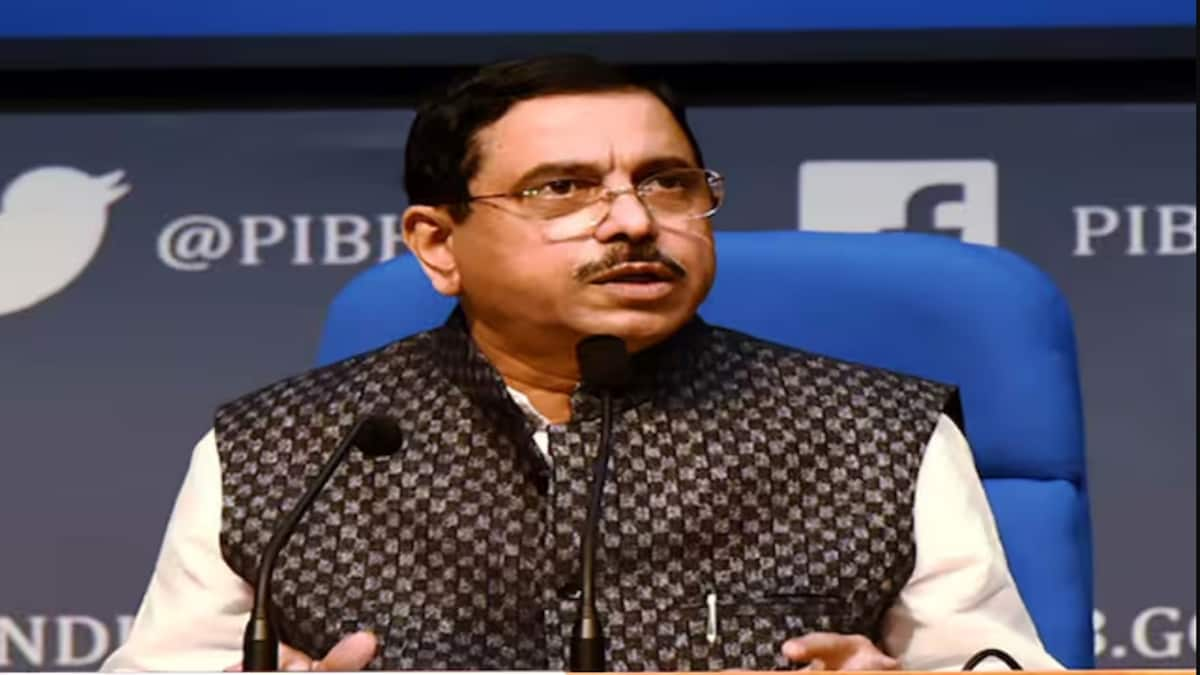
Union Minister Pralhad Joshi on Thursday said investments will exceed $220 billion to add 190 GW of non-fossil fuel capacity by 2030. India has already crossed 310 GW of clean energy capacity. Joshi said, "Brand India is not a bubble that will burst," as the sector grows at a fast pace.
At the BRE Summit 2026, the Renewable Energy Minister declared that "Brand India is not a bubble," revealing that clean energy capacity has already crossed a critical milestone. The latest 100 GW addition shows an exponential shift in momentum that could alter the global climate timeline.
Union Minister Pralhad Joshi on Thursday said investments will exceed the $220 billion needed to add the remaining 190 GW of non-fossil fuel-based capacity by 2030.
Of the 500 GW capacity targeted by 2030, the country has crossed 310 GW of non-fossil fuel-based installed electricity generation capacity, the Minister for New and Renewable Energy (MNRE) told reporters on the sidelines of the Bharat Renewable Energy (BRE) Summit & Expo 2026 here.
"Brand India is not a bubble that will burst. We are confident that we will get enough investments surpassing the required $220 billion by 2030 to achieve another 190 GW," Joshi said.
Noting that the sector is growing fast in India, the minister said that in the last two years, investment has come in at ₹7 lakh crore, including domestic and FDI (foreign direct investment).
Joshi said the installation of first 100 GW clean energy capacity took 10 years, while another 100 GW was installed in 7 years. However, the latest addition of 100 GW was done in two years' time.
The minister said that the pace of clean energy installations will continue to grow and India will meet the 500 GW target in time. Strategies will also be drawn up to add another 300 GW as mandated by Prime Minister Narendra Modi.
Joshi also said India has learnt from supply chain disruptions and is working to stay prepared for such situations. He said Bharat Mandapam brought together global policymakers, investors, industry leaders, and innovators from across the world.
With participation from more than 135 countries, the Summit emerged as one of India's largest global platforms for renewable energy.
He noted that this was the first time that three important events in the renewable energy sector had been held together, with overwhelming participation from domestic and international stakeholders demonstrating global confidence in India's renewable energy growth story.