
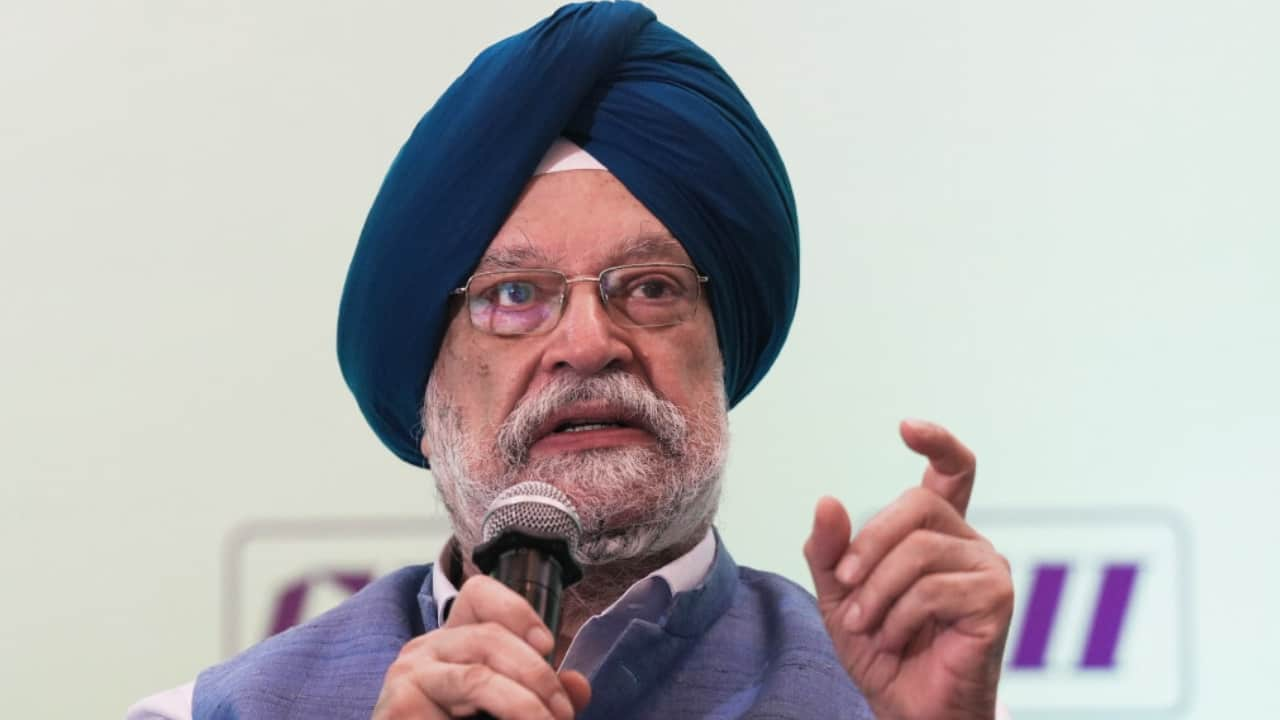
India’s petrochemical demand will reach 120 million tonnes by 2047, Union Minister Hardeep Singh Puri said on Thursday. He noted that India must expand its manufacturing capacity to meet this growth. "Our petrochemical consumption is one-third of the global average," Puri said, while highlighting plans to boost domestic refining infrastructure.
India's petrochemical demand could rise to 55 million tonnes by 2030 and 120 million tonnes by 2047, Union Petroleum and Natural Gas Minister Hardeep Singh Puri said on Thursday, highlighting the need to expand the country's downstream manufacturing capacity alongside its growing refining infrastructure. "Our petrochemical consumption is one-third of the global average, while our consumption of other fuels is three times the global average," Puri said at FICCI's Annual General Meeting and Annual Convention. India's current petrochemical capacity stands at around 36.4 million tonnes, according to figures cited by the minister.
He said the country's expanding economy and rising energy needs would drive demand for petrochemicals, making it important to build capacity ahead of the expected growth. Refining capacity to rise India's refining capacity is currently around 267 million tonnes per annum (mtpa), and is expected to increase to 290 mtpa over the next two years, Puri said. The country has a longer-term roadmap to raise it to 320 mtpa, while the government has also spoken of an ambition to reach 450 mtpa. He said India was expanding refining capacity even as parts of Europe and China were seeing capacity decline. India could emerge as one of the major global refining hubs, he added.
West Asia crisis exposed supply risks Puri said the closure of the Strait of Hormuz on February 28 had tested India's energy supply management, given that around 40% of global energy flows through the route. India's dependence on the region was estimated at 40-50% for crude oil and natural gas and close to 90% for LPG, he said. Domestic LPG production was increased from around 35,000 tonnes a day to 55,000 tonnes a day during the disruption. Daily cylinder bookings, meanwhile, surged from 52 lakh to 92 lakh, partly due to panic buying and rumours, he said. "We sat with the OMCs and calculated a worst-case scenario.
If even our domestic production also were to stop, how many days' supply do we have? We reached the conclusion that even in the most difficult circumstances, we had 60 days' supply of crude and 60 days' supply of natural gas," he said. Puri cautioned that the situation was not entirely over, citing continuing military activity in the Red Sea. SAF, alternative fuels in focus Puri also spoke about India's potential to become a supplier of sustainable aviation fuel (SAF), citing the country's biomass availability. He backed the adoption of SAF blending in aviation turbine fuel (ATF), against the backdrop of existing targets for international flights of 1% from 2027, 2% in 2028 and 5% by 2030.
He also cited progress in green hydrogen, saying its price had fallen from around $5.40 per kg to about $3 per kg, and could become commercially competitive at $2.50 per kg. Ethanol blending in petrol, he said, had risen to 20% from 1.5% in 2014. Push to revive exploration On exploration, Puri said nearly one million sq km of India's 3.5 million sq km sedimentary basins had earlier been classified as no-go areas on security grounds. The government has opened these areas for exploration and is supporting drilling of 150 wells over three years. He said exploration companies could receive risk-sharing support of up to Rs 650 crore if drilling did not result in a discovery.
If oil or gas was found, the amount would have to be repaid. "I have often said that India has many Guyanas waiting to be discovered. I just need one of them," Puri said.