
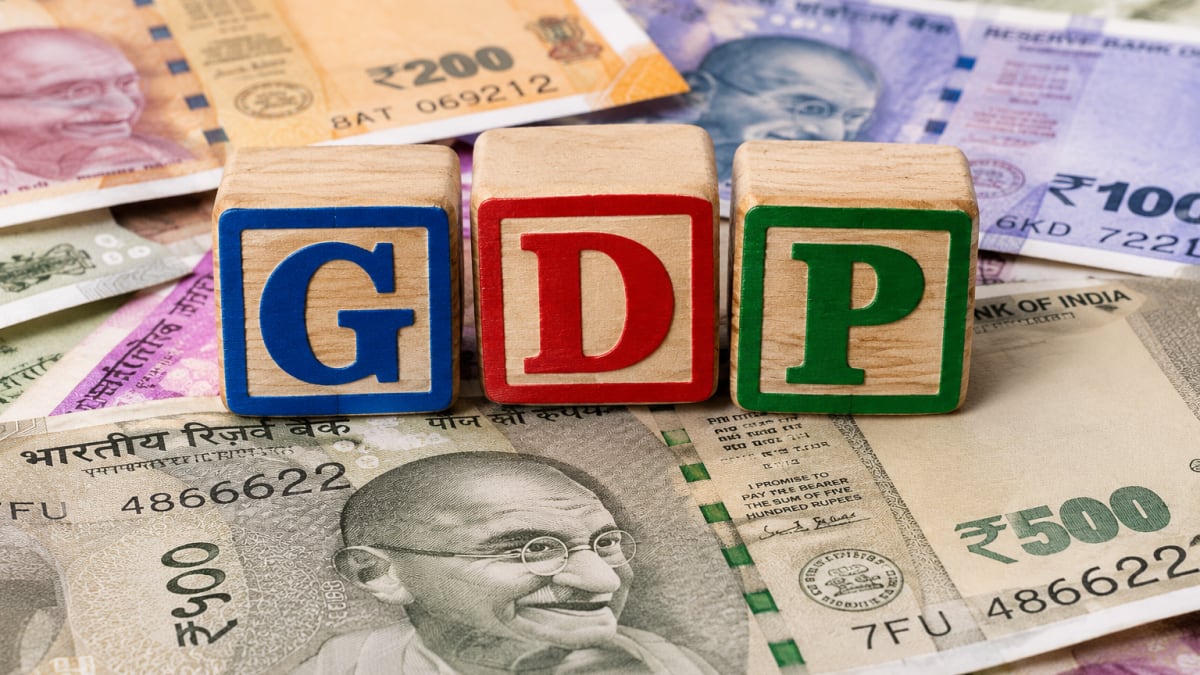
India’s GDP is likely to grow 7.6 per cent in the second quarter of the 2026-27 financial year. Strong consumer demand and investment activity helped the economy stay resilient. Madhavankutty G said, "Inflation is going up, but that is not impacting growth because consumption is still going strong." Official data arrives November 30.
India's economic growth is expected to have remained strong in the July-September quarter, with robust consumer demand and improving investment activity helping the world's fastest-growing major economy withstand inflationary pressures and geopolitical uncertainties.
According to the median forecast in a Reuters poll of 43 economists conducted between November 13 and 18, India's gross domestic product (GDP) is likely to have expanded 7.6 per cent year-on-year in the second quarter of the financial year 2026-27.
If realised, this would mark the fastest pace of growth among major economies. Economists' forecasts ranged between 6.6 per cent and 8.2 per cent. The official GDP data is scheduled to be released on November 30.
India's economy expanded 7.8 per cent in the April-June quarter, indicating that growth momentum has remained resilient despite mounting external and domestic challenges.
Gross value added (GVA), which economists consider a more stable indicator of underlying economic activity, is forecast to have grown 7.7 per cent in the July-September quarter, compared with 8.2 per cent in the previous quarter.
What is driving India's economic growth?
Resilient consumption has emerged as a key pillar of India's economic performance. Strong passenger vehicle sales and sustained bank credit growth suggest that household spending has remained healthy despite rising inflation and pressure on purchasing power.
Earlier tax measures have also helped support consumption, while increased household borrowing has provided an additional cushion to spending.
Elevated crude oil prices, partly driven by the war involving Iran, and a deficient monsoon have pushed inflation higher. However, these pressures have not significantly derailed economic activity so far.
"The geopolitical scenario has not affected us much. Inflation is going up, but that is not impacting growth because consumption is still going strong," Madhavankutty G, chief economist at Canara Bank, said.
He noted that 7.5 per cent had increasingly become a default growth rate for India, although the agriculture sector remained a key weak spot. Agriculture employs nearly half of India's workforce.
Private investment shows signs of recovery
Investment activity, which has remained relatively subdued during India's economic recovery, is also showing signs of improvement.
Stronger corporate earnings and sustained government capital expenditure are supporting business investment, suggesting that growth is becoming more broad-based.
"Growth is very broad-based, with almost all the engines firing simultaneously," said Abhishek Upadhyay, co-head of economics and fixed income research at ICICI Securities Primary Dealership.
He added that capital expenditure appeared to have remained on a stronger footing.
RBI rate hike expectations
Despite strong economic momentum, economists expect the Reserve Bank of India (RBI) to tighten monetary policy in December.
Most economists surveyed expect the central bank to raise interest rates by at least 25 basis points to 5.75 per cent.
They also anticipate India's economic growth to moderate in the second half of the current financial year as the impact of earlier tax cuts gradually fades and higher borrowing costs weigh on household spending and corporate profit margins.
The Reuters poll forecasts India's GDP growth at 7.2 per cent for the financial year ending March 2027, followed by an expansion of 7 per cent in each of the subsequent two years.
Sajjid Chinoy, chief India economist at J.P. Morgan, said the benefits of GST cuts would progressively fade, while the impact of El Niño could begin weighing on economic activity.
Tighter monetary conditions and a slower fiscal spending impulse could further moderate growth.
Despite these headwinds, India's ability to sustain growth above 7 per cent highlights the resilience of domestic demand and investment activity.