
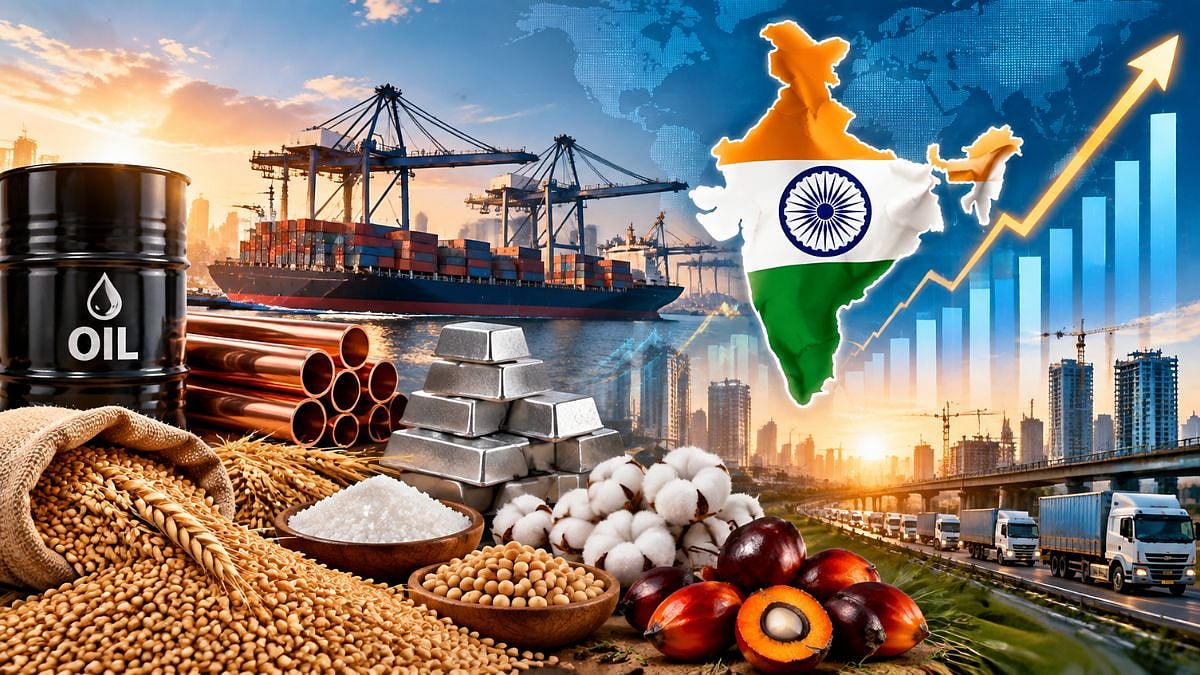
India will lead global energy demand growth over the next decade, according to the IEA’s World Energy Outlook 2026. Ongoing conflicts in the Strait of Hormuz threaten oil and gas supplies, causing price spikes. India must now diversify its energy sources and secure affordable supplies to maintain its economic growth.
The IEA's World Energy Outlook 2026 warns that prolonged disruptions in the Strait of Hormuz threaten global oil and gas supplies, particularly across Asia. India is projected to lead global energy demand growth over the next decade, highlighting the need for diversified energy sources, secure imports and affordable domestic supplies
The ongoing West Asia conflict has intensified concerns over global energy security, exposing weaknesses in oil and gas supply networks and disrupting critical maritime trade routes.
The International Energy Agency (IEA), in its World Energy Outlook 2026, has highlighted how the duration of the crisis could influence international energy markets, commodity prices and long-term investment strategies.
India faces a particularly significant challenge as the agency expects the country to account for more energy demand growth than any other nation or region over the next decade.
According to the IEA, the conflict has resulted in cumulative supply losses of 2.8 billion barrels of oil and 60 billion cubic metres of natural gas from the Gulf.
Disruptions to energy shipments through the Strait of Hormuz continued in November 2026, with declining supply buffers increasingly exposing consumers to higher fuel prices.
Asian economies have been particularly vulnerable, having accounted for approximately 80% of oil and nearly 90% of liquefied natural gas (LNG) shipments through the strategic waterway before the crisis.
Diesel markets have also experienced considerable pressure, with prices exceeding $200 per barrel.
Gulf oil producers are exploring alternative export infrastructure to reduce their dependence on Hormuz.
Pipeline projects under construction or consideration could provide additional transportation capacity of around 7 million barrels per day, requiring estimated investments of $40 billion.
These alternative routes could increase export costs by approximately $2 per barrel.
The IEA expects prolonged disruptions to reshape global energy trade, encouraging countries to diversify suppliers, transportation networks and fuel sources.
The changing energy landscape could accelerate investments in solar and nuclear power, while increased electrification could reduce dependence on volatile fossil fuel markets.
For India, one of the world's largest energy consumers and importers, these developments carry important implications for economic growth and energy security.
The country must balance rapidly expanding domestic consumption with the need to maintain reliable and affordable supplies.
Diversifying its energy mix could help India reduce exposure to geopolitical disruptions while meeting its growing energy requirements.