
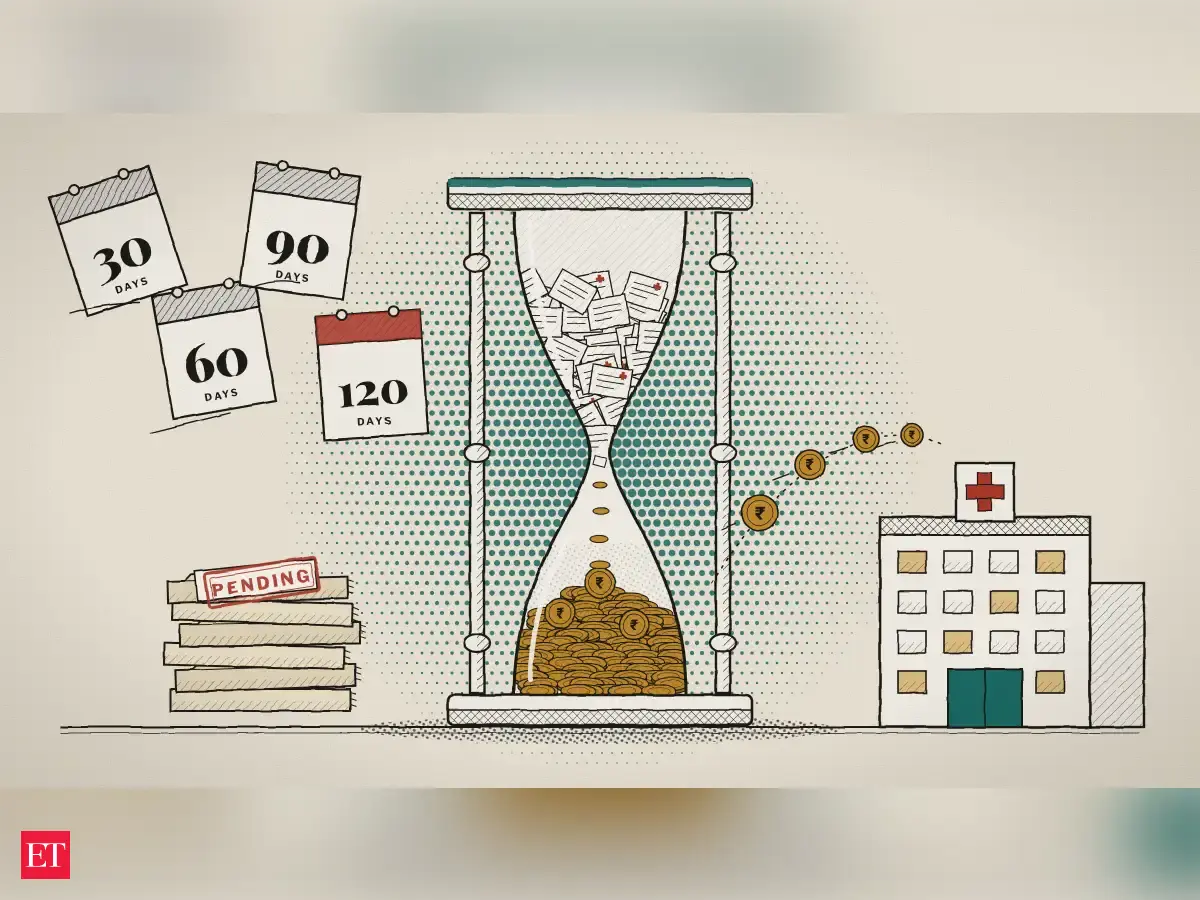
HealthRail is helping Indian hospitals turn unpaid insurance and government claims into quick cash. By cutting wait times for receivables from four months to just two days, the platform helps hospitals manage daily costs. This new system from Plunes Healthcare ensures that growing hospitals get their earned money much faster.
Synopsis
In a strategic move to streamline hospital cash flow, HealthRail is offering expedited access to accrued revenues. This initiative specifically addresses the payment delays that hospitals experience with insurance providers and public funding programs. By lowering days sales outstanding for qualifying receivables, this system aims to substantially bolster hospitals' liquidity.
Listen to this article in summarized format
Loading...
×
Hospitals can be busy, growing and still short of cash. Insurance claims and government-scheme payments often arrive well after treatment, leaving funds tied up in receivables even as hospitals continue to meet expenses such as staff salaries, medicines, equipment and day-to-day operations.
This gap between delivering care and receiving payment can put pressure on working capital, making it harder for hospitals to manage immediate costs while planning for growth. Access to timely financing can help bridge this gap and improve cash flow management. HealthRail aims to help hospitals put their earned revenue to work sooner.
For growing hospital groups, the challenge is not always demand. Revenue can take time to reach hospital accounts while salaries, suppliers and expansion costs must be paid on schedule.
That gap between delivering care and receiving payment can limit the cash available for new beds, equipment and facilities.
HealthRail, developed by Plunes Healthcare, is building healthcare-fintech infrastructure to help hospitals turn eligible insurance and government-scheme receivables into a more predictable source of working capital.
Live Events
The balance-sheet problem hospitals live with
The scale of insured care in India is now enormous. In FY2024–25, general and health insurers settled 3.26 crore health insurance claims and paid about ₹94,248 crore, according to IRDAI. Around 66% of the total amount was paid through the cashless route, meaning hospitals delivered care first and then waited to receive payment1.
Government-sponsored health coverage is another major part of this landscape. Under Ayushman Bharat-Pradhan Mantri Jan Arogya Yojana (AB PM-JAY), 8.59 crore hospital admissions had been recorded by 31 December 2024, with an authorised value of approximately ₹1.19 lakh crore2.
For hospitals, the challenge is not limited to private insurance. Government-scheme receivables also tie up working capital, with scheme-specific empanelment, documentation, validation and settlement processes adding to the operational burden. HealthRail estimates that DSO (days sales outstanding) on government-scheme receivables can be around four months; it proposes to reduce this to as little as two days for eligible receivables.
Regulation has made the patient's side of the insurance journey much faster. IRDAI's 2024 master circular requires insurers to decide cashless requests within one hour and approve discharge within three hours. The hospital's side has not sped up in the same way: approving a claim and receiving the money remain two separate events.
Claims are also getting smaller and more numerous. The average amount paid per health claim fell to ₹28,910 in FY2024–25 from ₹31,086 a year earlier3. For hospitals, that means more claims to track, more payers to follow up with, and more working capital tied up across thousands of insurance and government-scheme receivables.
Why it matters more than ever
Health insurance covered about 58 crore lives in FY2024-25, including more than 24 crore under government schemes4. As coverage expands, hospitals must manage a growing flow of claims and payments.
For every additional insured or government-scheme patient, hospitals may need to fund the period between treatment and settlement.
This pressure is sharpest for hospital groups expanding into new cities and smaller towns. New facilities take time to break even, and slow collections across insurance and government schemes stretch that runway further. Freeing up receivables is often the quickest way to fund growth from money the hospital has already earned.
What HealthRail changes for hospitals
Plunes Healthcare is building digital claims-and-payments infrastructure designed to connect hospitals, insurers, government-scheme payers and banks. By bringing eligible receivables into structured financing and payment workflows, HealthRail aims to provide quicker access to working capital and clearer cash-flow visibility.
The company has partnered with Punjab National Bank (PNB) and Axis Bank5, along with other public-sector banks, and is working across insurers, TPAs and hospital networks. That institutional backing means hospital liquidity is supported by mainstream banking, rather than stop-gap credit.
Just as important is what HealthRail does not ask of hospitals. It is designed as shared infrastructure for the sector, so the focus stays on improving how money reaches the hospital rather than adding new work for clinical or billing teams.
Five ways hospitals gain
Working capital released. Revenue already earned through insurance and government schemes starts funding operations sooner, easing pressure on day-to-day cash.
A lower cost of waiting. Liquidity linked to eligible receivables can reduce the need for costly overdrafts and short-term credit taken only to bridge the claims and settlement gap.
Expansion on schedule. With more predictable inflows, hospital groups can commit to new beds, equipment and centres without building in delays for slow collections.
Stronger supplier relationships. Steadier cash flow helps hospitals pay vendors on time and negotiate better terms on drugs, consumables and equipment.
A more resilient balance sheet. Fewer idle insurance and government-scheme receivables and clearer visibility of cash flows make hospitals better prepared for growth, audits and investor scrutiny.
Why the ecosystem is lining up behind it
HealthRail's approach addresses a challenge shared by hospitals, banks, insurers and other participants in the healthcare payment system.
For hospitals, it addresses the gap between how fast they deliver care and how fast they get paid, across private insurance and government-sponsored schemes.
For banks, it opens access to a large, granular pool of healthcare receivables owed by regulated insurers and other payers. That is a financing opportunity that has historically been hard to serve at scale.
For insurers, TPAs and government-scheme stakeholders, better-funded hospital networks can support smoother patient experiences and fewer friction points in relationships with providers.
The timing also fits the policy direction. Regulators have pushed for faster, fully cashless claims, and India's digital health infrastructure is steadily moving claims exchange online. HealthRail extends that digital push from claims to cash.
As insured and government-scheme patient volumes grow, hospitals need more predictable access to revenue they have already earned.
HealthRail aims to help meet that need by reducing the wait between claims and cash. For eligible government-scheme receivables, the company targets a reduction in days sales outstanding (DSO) from roughly four months to as little as two days. Its next priority is to bring leading hospital groups onto the platform and make hospital receivables a more reliable source of growth capital.
References:
Link 1
Link 2
Link 3
Link 4
Link 5
Disclaimer - The above content is non-editorial, and TIL hereby disclaims any and all warranties, expressed or implied, relating to it, and does not guarantee, vouch for or necessarily endorse any of the content.
(You can now subscribe to our Economic Times WhatsApp channel)
(Catch all the Business News, Breaking News and Latest News Updates on The Economic Times.)
Subscribe to The Economic Times Prime and read the ET ePaper online.
...moreless
(You can now subscribe to our Economic Times WhatsApp channel)
(Catch all the Business News, Breaking News and Latest News Updates on The Economic Times.)
Subscribe to The Economic Times Prime and read the ET ePaper online.