
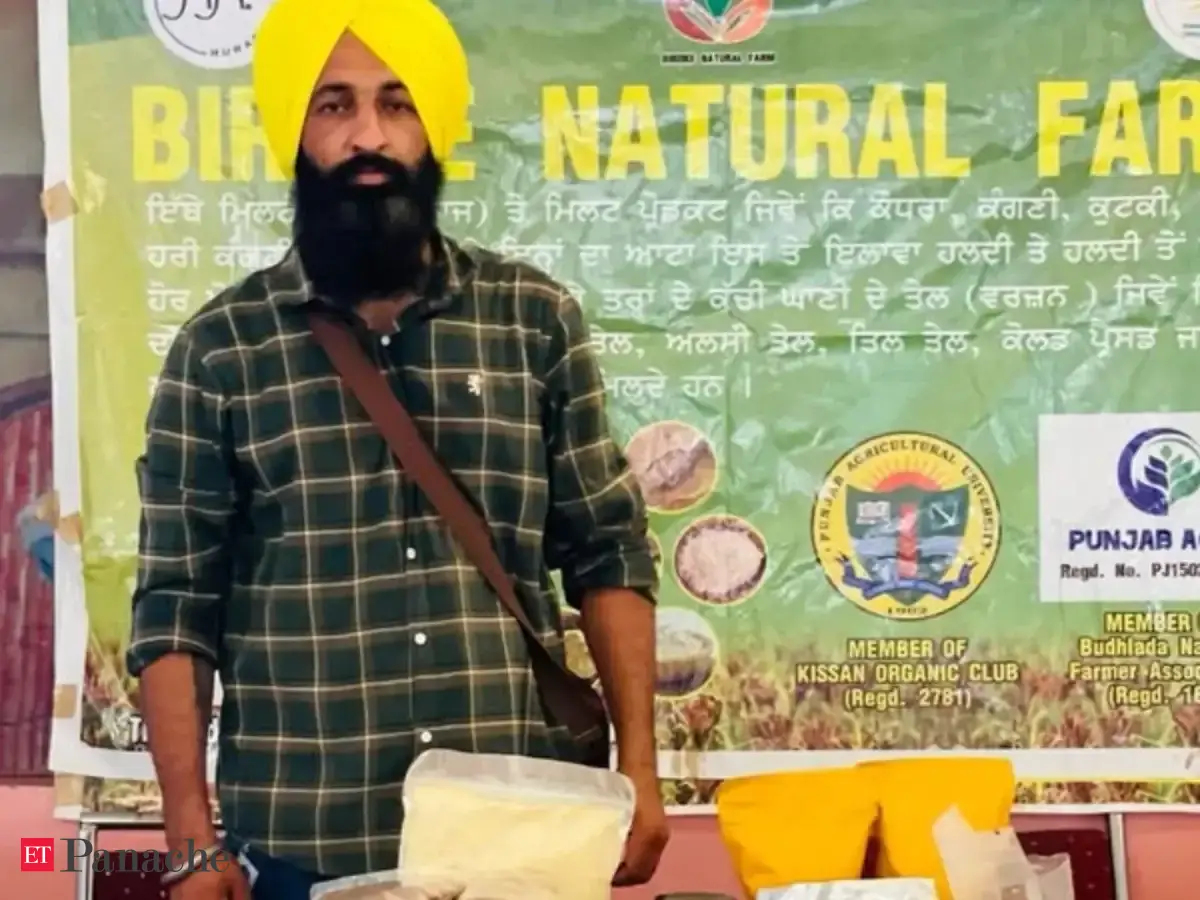
Sukhjit Singh left his IT job to start organic farming in Punjab. He began this shift in 2012 after a family health crisis. Today, his brand Biroke sells 70 millet products to eight countries. Singh said, "After my nephew's birth, doctors told us how the chemical-laden food was affecting health."
Sukhjit Singh made a bold career shift from a steady IT job to farming, driven by health concerns regarding food quality. His 10-acre family farm underwent a transformation focused on organic millet cultivation after he delved into sustainable agricultural practices. Launching his brand, Biroke, he offers nearly 70 millet-based products and has successfully reached international markets across eight countries.
A career in technology offered Sukhjit Singh a stable professional future, but a family health crisis made him rethink what he wanted to do with his life. The Cisco-certified networking professional eventually left the IT sector to return to farming in Punjab. More than a decade later, his decision has grown into an agricultural business selling around 70 millet-based and other food products, with customers in eight countries. Based in Biroke Kalan village in Punjab's Mansa district, Singh has found a way to earn more from farming by turning traditional grains into everyday food items such as pasta, noodles, biscuits and snacks.
Why Sukhjit Singh left his IT career for farmingSingh's decision to change careers was influenced by the premature birth of his brother's son. According to his conversation with 30Stades, doctors raised concerns about the possible impact of contaminated water and chemical-intensive food on health. "After my nephew's birth, doctors told us how the chemical-laden food and contaminated water were affecting health, especially in Punjab," Singh told the publication.
He began transitioning his family's 10-acre farm away from conventional wheat and paddy cultivation towards organic farming in 2012. He also approached Punjab Agricultural University in Ludhiana to understand cultivation methods and biofertilisers. His early years were not easy. Attempts to grow crops without conventional fertilisers resulted in poor yields and financial losses in 2013 and 2014. Over time, he adopted practices such as mulching, traditional seed varieties and preparations including jeevamrut and beejamrut.
Singh also travelled across states to collect native seeds and learn from farmers. He visited the
ICAR-Indian Institute of Millets Research in Hyderabad to understand millet cultivation and processing.
How millet pasta and cookies became his businessGrowing chemical-free crops was only one part of the challenge. Finding buyers willing to pay for them proved equally difficult. Singh began exploring
food processing in 2018, developing products that could reach consumers who might not purchase raw millets. His brand, Biroke, now offers around 70 products, including millet pasta, noodles, cookies, snacks, turmeric powder and jaggery. The pricing reflects the difference value addition can make: millet pasta sells for around Rs 600 per kg, while wheat biscuits are priced at Rs 800 per kg.
His wife, Sukhpal Kaur, helps with processing and marketing, including participation in exhibitions. Singh also avoids investing in every stage of manufacturing, using an existing bakery for some products instead of setting up an expensive production facility.
Products reach customers in eight countriesExhibitions became an important part of Singh's sales strategy. His participation in events such as the India International Trade Fair in New Delhi helped him connect with retailers, business buyers and consumers. He says demand improved after millets received greater attention during the International Year of Millets in 2023.
According to his account to 30Stades, Biroke products now reach eight countries, including the US, Canada, the UK, Germany and Malaysia, with orders from non-resident Indians. The broader industry is also seeing greater emphasis on processing. In March 2026, the Ministry of Food Processing Industries told Parliament that sales of millet-based products by beneficiaries under its production-linked incentive scheme had increased from Rs 35 crore in 2020-21 to Rs 814 crore in 2024-25.