
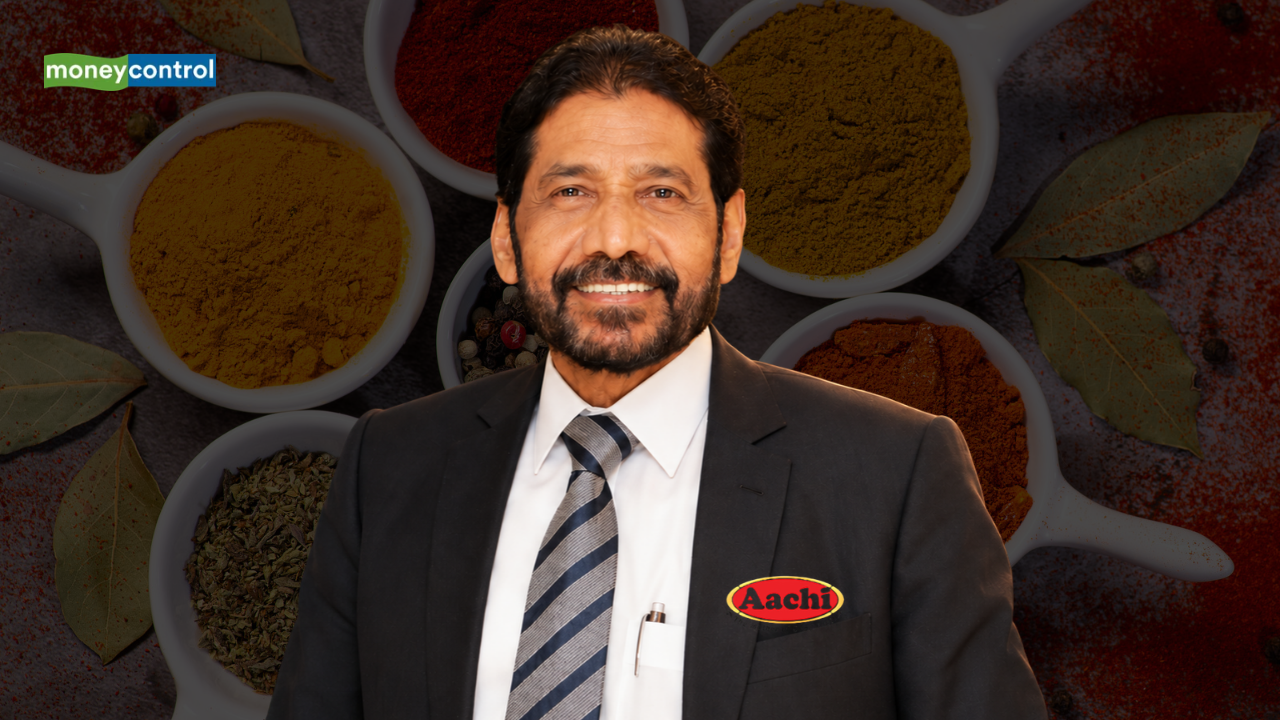
A D Padmasingh Isaac started Aachi Masala in Chennai in 1995, growing it into a massive brand. The company reported consolidated revenue of Rs 2,173 crore in FY25. Isaac used his early sales experience to turn his wife’s spice recipe into a household name that many families use every day.
Long before Aachi Masala became a household name in South Indian kitchens, its founder, A D Padmasingh Isaac, was experimenting with small businesses in his hometown of Nazareth in Tamil Nadu. As a schoolboy, he spent his summer holidays selling sweets and trinkets from a makeshift neighbourhood shop. During college, he tried his hand at making phenyl and supplying it to hospitals. These early ventures did not immediately point towards a career in packaged foods. But they offered Isaac an introduction to selling products, understanding customers and identifying opportunities, skills that would later shape his entrepreneurial journey. Today, the business he established in Chennai in 1995 has grown beyond its original spice blends into a broader consumer products portfolio. Its principal operating company, Aachi Masala Foods Private Limited, reported consolidated revenue of Rs 2,173 crore in FY25, according to financial data from Tracxn. Before starting Aachi, Isaac spent a decade working at Godrej, where he gained experience in sales, distribution and brand building. His responsibilities also gave him opportunities to experiment with unconventional marketing methods. In an interview with The Hindu, Isaac recalled an incident from his time promoting Godrej's powder hair dye. At a village fair featuring Kangeyam bulls, he applied the dye to a bull's tail to demonstrate the product. The animal attracted attention, and the experiment helped him sell several boxes of hair dye. The episode showed his willingness to take products directly to potential customers and find ways to make them stand out. After 10 years in the corporate sector, Isaac decided to establish his own business. He founded Aachi Group in 1995, drawing on his experience in the fast-moving consumer goods (FMCG) industry. Rather than beginning with an extensive product portfolio, the company started with a single offering: kuzhambu milagai thool, a spice blend used to prepare traditional South Indian gravies. The initial product was based on a recipe developed by Isaac's wife, Thelma. The idea was to make traditional flavours more accessible to households without requiring consumers to prepare and grind their own spice mixtures. At the time, many spice powders were sold as unbranded commodities. Aachi's approach was to offer a packaged product with a recognisable brand identity, making it easier for consumers to identify and purchase the same product repeatedly. The first curry masala powder was priced at Rs 2, an entry point that helped position it as an affordable kitchen essential. As the initial offering gained traction, Aachi expanded its range to include more spice blends and other food products. The business was built around a recurring consumer need rather than a product that households would purchase only occasionally. Over time, the Aachi Group developed a presence across several categories beyond its original spice business. Its associated brands and products include Ponnii edible oils, Rani honey, Twin Birds pickles, Sabash herbal personal care products, Twinkle home care products, Frispoo snacks, Tanjus energy drinks and Aachi packaged drinking water. The expansion reflects an attempt to build a broader consumer goods business around products used in households, rather than relying exclusively on spice powders. The group's operations are spread across related entities, including Aachi Masala Foods Private Limited, Aachi Spices & Foods Private Limited and Aachi Special Foods Private Limited. Financial data from Tracxn shows that Aachi Masala Foods' consolidated revenue increased from approximately Rs 1,189 crore in FY19 to Rs 1,315 crore in FY20 and Rs 1,669 crore in FY21. Revenue subsequently eased to around Rs 1,642 crore in FY22 before rising to Rs 2,037 crore in FY23 and reaching Rs 2,309 crore in FY24. The company recorded revenue of Rs 2,173 crore in FY25, marking a decline of around 5.9 percent from the previous year's level. Profitability has followed a more uneven trajectory. According to Tracxn, net profit stood at approximately Rs 17 crore in FY19 and Rs 25 crore in FY20. It fell sharply to around Rs 1.8 crore in FY21 before recovering to Rs 8.8 crore in FY22. Net profit subsequently increased to approximately Rs 22 crore in FY23 and Rs 26 crore in FY24, before rising to Rs 49.38 crore in FY25. From selling small goods as a schoolboy to marketing hair dye during his years at Godrej, Isaac's early experiences were rooted in understanding how products reach consumers. Aachi's subsequent expansion brought that experience into a different category, one shaped by regional tastes and everyday household demand.