
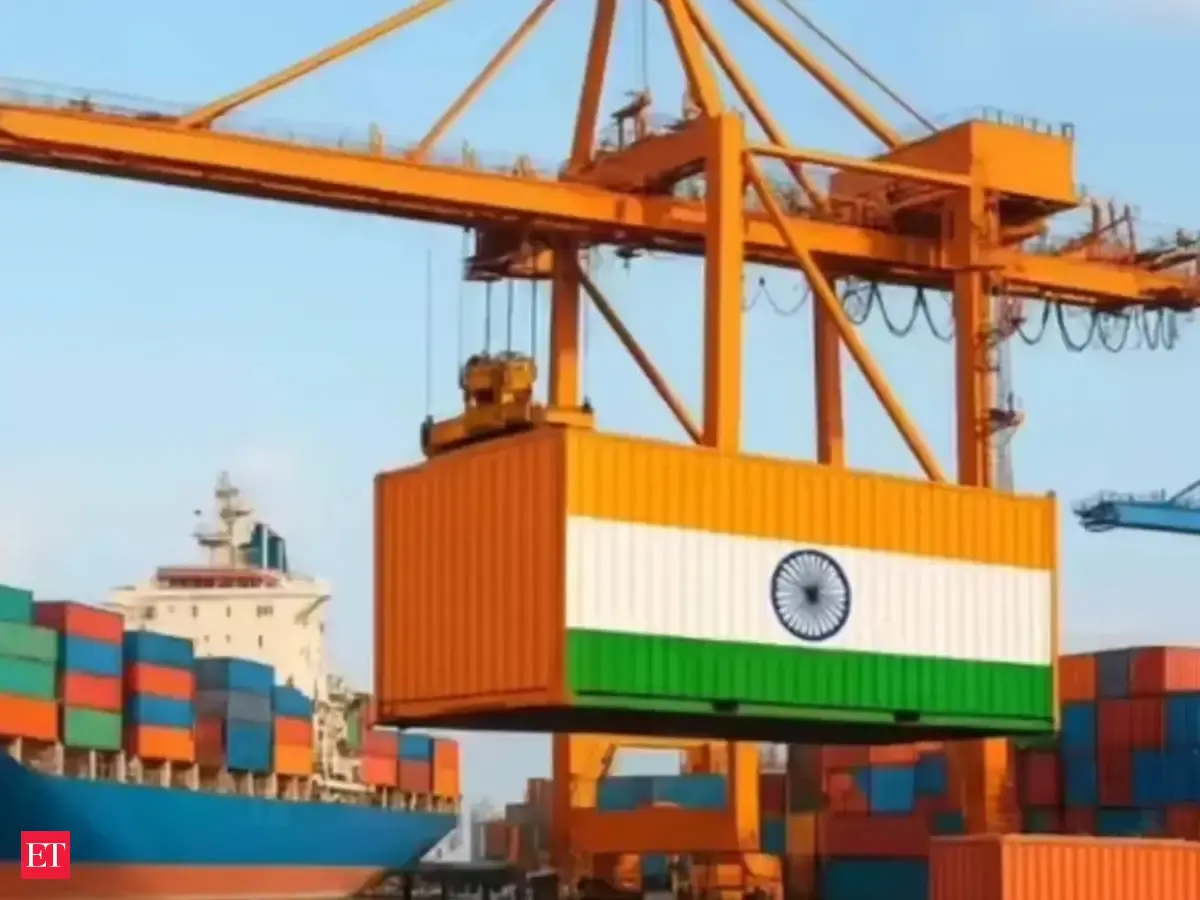
The Foundation for Economic Development said on Wednesday that India needs lower tariffs to boost exports and create 80 lakh jobs yearly. Rahul Ahluwalia said, “A simpler, lower tariff regime is the most direct lever we have to create the 80 lakh jobs India needs every year.”
Synopsis
In its report released on Wednesday, FED said India needs to grow at over 8% and create 80 lakh additional jobs every year to achieve the goal of Viksit Bharat and domestic demand alone is not enough to achieve this. “We require manufacturing exports to grow at more than 10% a year, nearly double today’s rate (5.4%),” it said, adding this would add $1.8 trillion in extra exports over ten years, and create the jobs needed,” it said, suggesting the need for reduction and rationalization of tariffs along with regulatory reforms in the sector.
A simpler, lower tariff regime is needed to make Indian manufacturing globally competitive and help create the jobs required for a Viksit Bharat, the Foundation for Economic Development (FED) said on Wednesday, proposing reduction and rationalization of tariffs and regulatory reforms to enhance export competitiveness.
According to the FED report, India’s average effective import duty on non-agricultural sectors is 10.8% - nearly three times that of China (3.7%) and Vietnam (3.5%).
“This raises costs for Indian factories and holds back the export growth the country needs to create jobs,” it said in its report on industrial tariff policy of India.
As per the report, India needs to grow at over 8% and create 80 lakh additional jobs every year to achieve the goal of Viksit Bharat and domestic demand alone is not enough to achieve this.
“We require manufacturing exports to grow at more than 10% a year, nearly double today’s rate (5.4%),” it said, adding this would add $1.8 trillion in extra exports over ten years, and create the jobs we need,” it said in its report, titled ‘Cheaper Inputs, More Jobs: The case for low and simple import tariffs,’.
Live Events
Citing evidence from countries with low average tariffs, it said they export 13 times more per capita than those with high tariffs. “Yet, India continues to tax the raw materials, parts, and machines its factories import more heavily than its competitors do,” it said.
“Every tariff on an input is an added cost and barrier for an Indian factory trying to sell to the world. A simpler, lower tariff regime is the most direct lever we have to create the 80 lakh jobs India needs every year,” Rahul Ahluwalia, founder and managing partner, FED, said.
All these input barriers add up to very real and harmful costs for Indian industry. In electronics, engineering goods, and apparel, which together account for USD 10.5 trillion of global trade, Indian goods cost 5 to 15% more to make than those from China and Vietnam, and input costs alone account for 60 to 77% of that gap. If India matched Vietnam's export share in just these three sectors, it could create about 53 lakh additional direct jobs.
FED’s report recommends reducing and rationalizing tariffs with low and stable rates, and as many inputs at the zero-tariff rate as possible, to enable export competitiveness.
“Second, simplicity should be a key regulatory objective, with fewer rates and less variation within closely related product categories,” it suggested.
As per the report, India’s average tariff on manufacturing inputs is 6.8%, twice China’s 3.3% and nearly four times Vietnam’s 1.8%.
Only 25% of India's imports enter at a duty of 2.5% or less, against 79% for China and 81% for Vietnam, it said, adding India’s tariff regime is also very complex, with 44 different effective rates, resulting in disputes, delays, and uncertainties.
(You can now subscribe to our Economic Times WhatsApp channel)
Why IndiGo could land a sharp rebound in profit despite a sluggish aviation market
KYC and KYB: Pidilite’s business has more tailwinds than headwinds, but a continuous test called raw material prices – Concluding part
Gold still rules, but with a difference: How young India is redefining wedding jewellery
Tariffs, supply snags and a war: 6 sectors that pulled it off through all of the trouble