
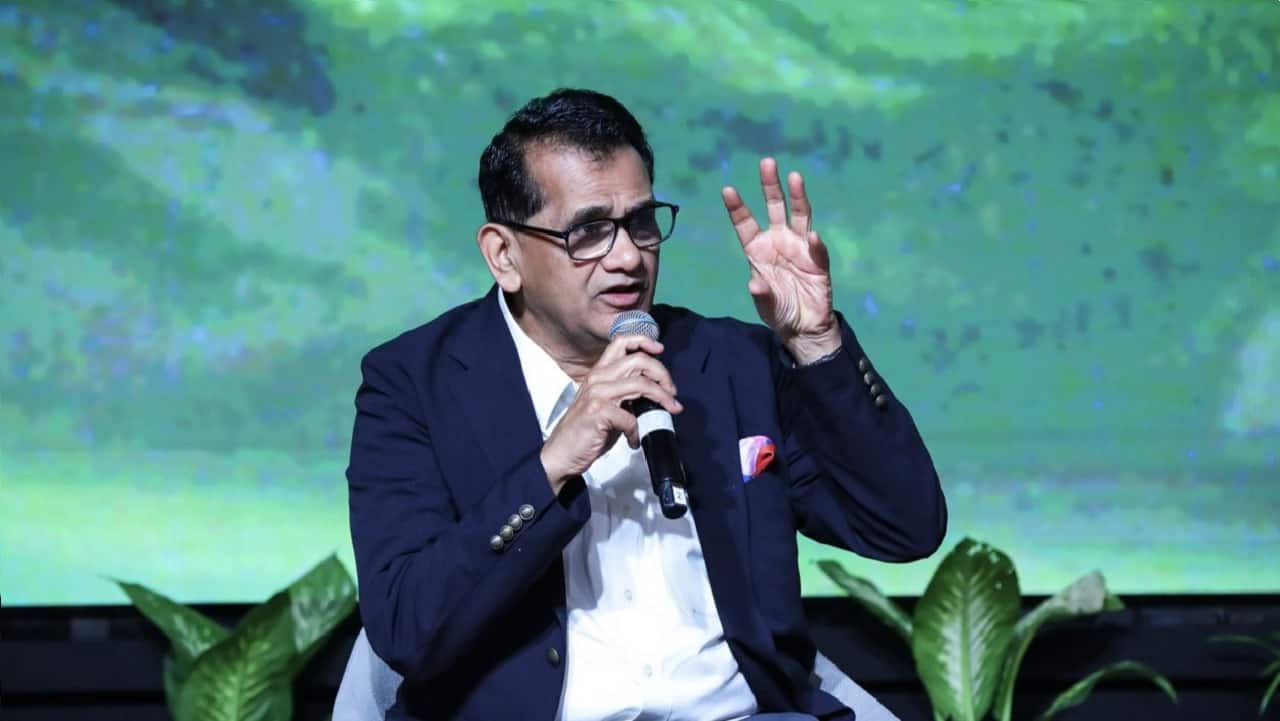
Former NITI Aayog CEO Amitabh Kant said golf could create 10 jobs for every golfer in India. Speaking at the DP World India Championship 2026 in New Delhi, he noted that Tier-II and III cities are driving this boom. He urged the private sector to help build more golf infrastructure.
Golf has the potential to become a major employment generator in India, creating as many as 10 jobs for every golfer, former NITI Aayog CEO Amitabh Kant said, as the sport gains popularity beyond metropolitan cities. Speaking during an interaction at the DP World India Championship 2026 in New Delhi, Kant, who is also a member of the Professional Golf Tour of India's (PGTI) governing body, said golf could generate significantly more employment than several other sports. "For every golfer you create 10 jobs," Kant said, highlighting what he described as the sport's substantial multiplier effect on employment. "There is no other sector which creates so many jobs. It creates more jobs than kabaddi, it creates more jobs than cricket, it creates more jobs than hockey," he told reporters on the sidelines of the DP World India Championship 2026. Tier-II and III cities driving growth Kant, former G20 sherpa, said the response to golf tournaments in smaller cities had been phenomenal, with emerging talent increasingly coming from outside traditional golfing centres. "The response has been phenomenal from Chhattisgarh to Jharkhand to Pune to Kerala to Tamil Nadu," he said. Kant highlighted Chhattisgarh, where he said the state government was encouraging golf and developing infrastructure to enable more youngsters to participate. He expressed confidence that smaller cities would produce some of India's best golfers over the next decade, with the potential to compete successfully at international tournaments. Private investment needed for golf infrastructure Kant called for greater participation from Indian businesses in developing golf infrastructure rather than relying entirely on government support. "Don't make yourself too dependent on the government all the time for everything. I think a lot of private sector entrepreneurship has to come in," he said. He predicted that more state governments and municipalities would develop golf courses in the coming years as the sport becomes increasingly popular. Kant also argued that golf had considerable potential to facilitate economic relationships, diplomacy and investment. "You want to do a trade deal, it will happen on the golf course," he said, pointing to the opportunities for building relationships during a round of golf. Calls for 25% college admissions on sporting merit Kant also proposed reserving 25 percent of college and university admissions for students who demonstrate excellence in sports. "I have always believed that 25% of the admissions in colleges and universities must be given on the basis of sports," he said. He suggested that eligibility should be linked to sporting achievement at the state level to ensure admissions were determined by merit rather than recommendations. Kant argued that encouraging sporting excellence at the university level would help India develop more international champions. He also said golf was gradually shedding its image as an elitist sport, drawing comparisons with cricket's transformation into a mass-participation game. "It is becoming a common man's game, like cricket once was seen as elitist," he said. With India's young population and expanding golfing opportunities, Kant expressed confidence that Indian players would increasingly challenge the world's leading golfers, with women golfers potentially achieving a major international breakthrough sooner. "We have traditionally been a very studious nation. We produce the best doctors, engineers, scientists... But I think the government has started focusing on sport. Khelo India is a huge campaign started by the Prime Minister," said Amandeep Johl, CEO of the Professional Golf Tour of India (PGTI).