
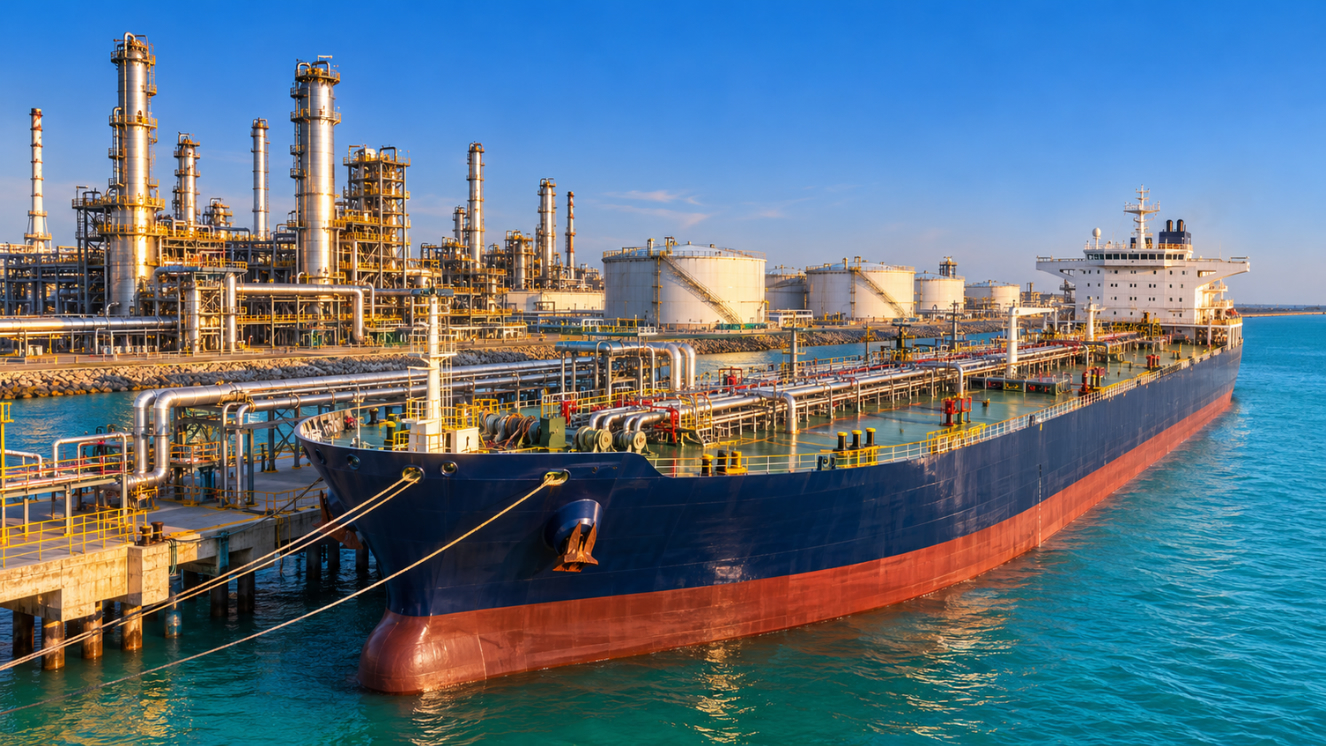
The EU flagged 10 petroleum shipments from India’s Jamnagar refinery as high-risk in October. These cargoes arrived amid tighter rules on Russian oil. CREA said, "Enforcement agencies in Member States must investigate shipments of oil products imported from refineries processing Russian crude." Reliance Industries did not respond to queries about these shipments.
Ten petroleum shipments from India's Jamnagar refinery were flagged as "high-risk" by the EU in October amid increased Russian crude imports, highlighting scrutiny over fossil fuel trade under sanctions.
The shipments originated from the Jamnagar refining complex operated by Reliance Industries, where Russian crude accounted for 30% of total oil imports during August-October. The complex regained its position as the largest importer of seaborne Russian crude in October, according to CREA's monthly assessment released on Thursday.
Queries sent to Reliance Industries remained unanswered until press time.
The 10 shipments accounted for most of the 12 cargoes unloaded at EU ports from refineries processing Russian crude during October, up from seven in September. The remaining two originated from Turkiye's STAR refinery.
The EU's ban on petroleum products made from Russian crude came into effect on January 21, 2026.
Significantly, CREA's classification of these shipments as high-risk does not establish that the cargoes violated the restrictions. However, if the EU Customs discover Russian crude in a fuel shipment, the originating refiner faces immediate commercial and regulatory fallout. When a shipment fails inspection, Customs might immediately reject or confiscate the cargo. Because modern supply contracts include strict sanctions warranties, European buyers could reject the fuel and sue the refiner to recover freight, storage, and demurrage costs.
Italy and Romania received three shipments each, while the remaining cargoes reached Greece, the Netherlands, Spain, Belgium, France and Germany.
"Enforcement agencies in Member States must investigate shipments of oil products imported from refineries processing Russian crude," CREA said, calling for checks to prevent Russian-origin products from entering the bloc.
Meanwhile, India's Russian crude imports increased 10% month-on-month in October, with purchases rising across its three largest importing refineries.
Imports increased 28% at Paradip, 22% at Jamnagar and 12% at Vadinar, reflecting higher Russian crude purchases across the refining sector.
Refineries in India, Turkiye and Brunei processing Russian crude exported petroleum products worth €1.6 billion to countries imposing sanctions on Moscow during October, with shipment volumes increasing 21% from September.
The EU accounted for €1.2 billion of these exports, followed by Australia at €271 million, the US at €94 million and New Zealand at €23 million. CREA estimated that products worth €389 million were refined from Russian crude.
Export volumes destined for EU ports increased 41% month-on-month, while shipments to Australia rose 18%. Petroleum product exports worth €94 million headed to the US originated from Jamnagar.
Separately, India's diesel exports averaged around 705,000 barrels per day in October, the highest level in 13 months, compared with 590,000 barrels per day in September, according to preliminary Kpler vessel-tracking data published towards the end of October.
India remained the second-largest buyer of Russian fossil fuels after China, with purchases reaching €6.4 billion in October, the highest monthly level in CREA's data since January 2022.
Crude oil accounted for €5.8 billion, or 91%, of India's purchases, followed by coal worth €333 million and petroleum products valued at €232 million.
The increase coincided with higher Russian oil prices. Urals crude averaged $101.7 per barrel in October, up 13% from September, while its discount to Brent narrowed to $23 per barrel from $24 in the preceding month. Shipping and insurance risks also remained significant in Russian oil trade. Sanctioned shadow tankers transported 69% of Russia's seaborne crude exports during October, while G7+ owned or insured vessels carried 29%.
Across crude and petroleum products combined, sanctioned shadow tankers accounted for 60% of Russian seaborne oil volumes. Of the 294 Russian oil cargoes delivered globally during October, 159 were transported by shadow tankers. Half of these shipments involved vessels at least 20 years old.
CREA warned that ageing vessels, poor maintenance and inadequate protection and indemnity insurance posed environmental and financial risks, particularly in the event of oil spills.
However, G7+ tankers continued to transport 68% of Russia's seaborne petroleum product exports during October.
Russia's overall fossil fuel export revenues increased 14% month-on-month to €754 million per day, their highest level since December 2022, despite broadly unchanged export volumes.