
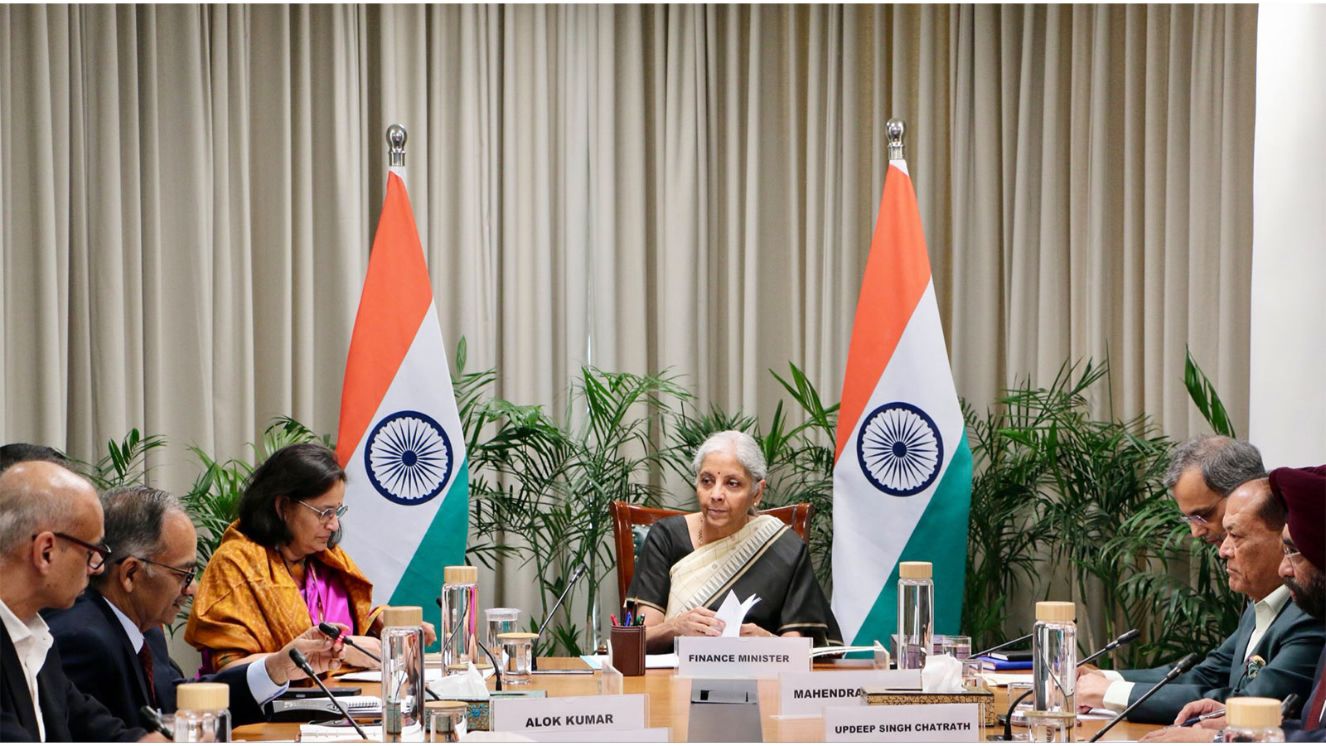
Energy sector stakeholders sought tax relief and funding support during a pre-Budget meeting chaired by Finance Minister Nirmala Sitharaman on Thursday. They asked for lower GST on battery projects and better grid infrastructure. These steps aim to help India scale up renewable power and improve the viability of storage systems.
The demands were raised during a pre-Budget meeting chaired by Finance Minister Nirmala Sitharaman on Thursday, with stakeholders seeking financial assistance for capacity building and modernisation of distribution networks, said a person aware of the discussions.
The proposals come amid growing requirements for energy storage and grid infrastructure as India scales up renewable power capacity, with higher solar and wind penetration necessitating additional investments in distribution networks.
The finance ministry, in a post on X, said Sitharaman chaired the seventh pre-Budget consultation “with the experts from the infrastructure, energy, and sustainability sectors in connection with the forthcoming Union Budget 2027-28”.
The proposed GST reduction is aimed at lowering upfront investment costs and improving the viability of battery storage projects, which are increasingly critical for integrating intermittent renewable energy into the electricity grid.
The industry may also seek easier access to long-term financing, tax incentives for domestic battery manufacturing, greater support for transmission infrastructure and measures to improve the financial viability of renewable energy projects, another person familiar with the discussions said.
The demands follow the Centre’s November 4 approval of a ₹14,500-crore viability gap funding scheme to support 92 gigawatt-hours (GWh) of energy storage capacity, involving an estimated investment of ₹97,600 crore through FY31.
The scheme envisages 60 GWh of pumped storage capacity, 30 GWh of BESS and 2 GWh of alternative storage technologies.
Separately, the industry has proposed allowing 40% depreciation on BESS, against 15% applicable to general plant and machinery, by recognising battery storage systems as renewable energy devices under income-tax rules.
In its pre-Budget recommendations to the ministry of new and renewable energy, the NSEFI Sustainable Energy Federation of Industry also sought correction of the inverted customs duty structure for graphite anodes used in battery manufacturing.
Currently, key raw materials attract basic customs duty (BCD) of up to 10%, compared with 2.5% on finished graphite anodes. The industry body proposed either raising BCD on finished graphite anodes to 10% or reducing duty on key raw materials to 2.5%, arguing that the existing structure makes imported finished products cheaper than domestic manufacturing.