
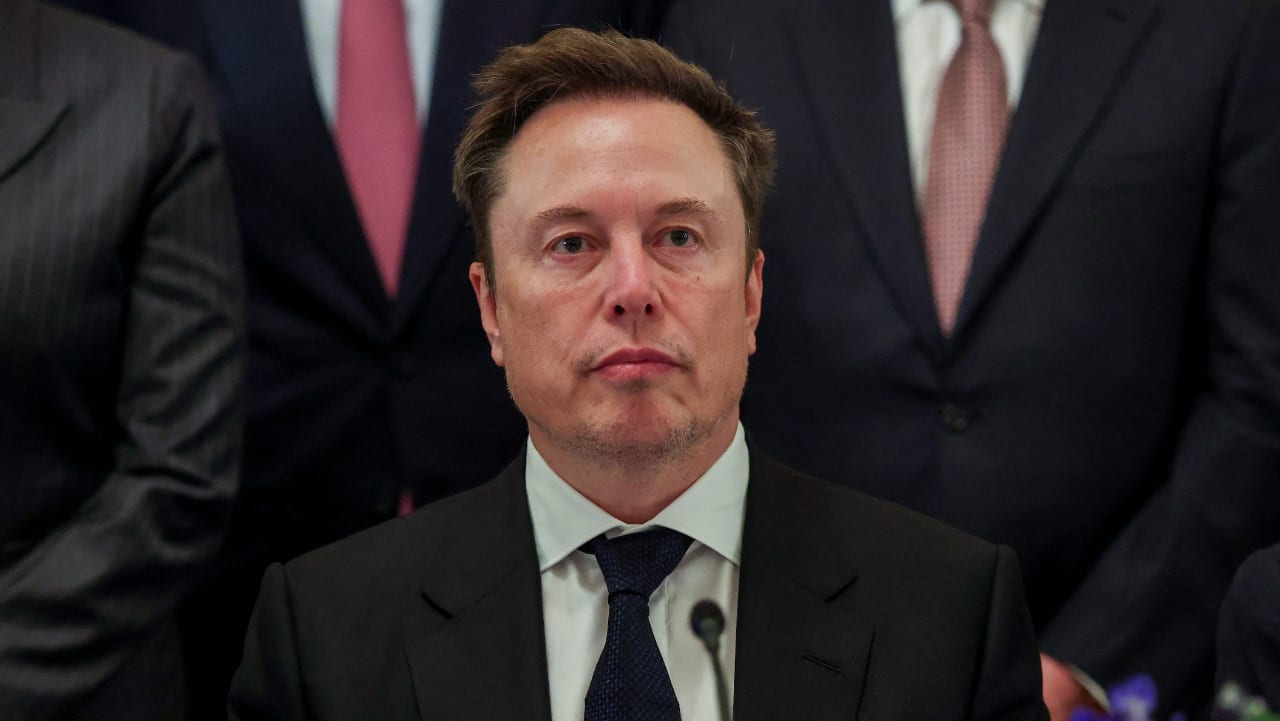
Elon Musk announced on Sunday that SpaceX closed $40 billion in debt financing to purchase AI chips. Musk said, "This is primarily callable debt for GPU purchases that will arrive in Q1 and Q2." The company saw revenue jump as it invests heavily in computing infrastructure for future growth.
Elon Musk announced on Sunday that SpaceX had closed $40 billion in debt financing to purchase graphics processing units (GPUs), marking another major investment in artificial intelligence as technology companies race to expand their computing infrastructure. In a post on X, Musk attributed the successful fundraising to SpaceX's investment-grade status and its established revenue streams from Starlink satellite internet services and rocket launches. "This is primarily callable debt for GPU purchases that will arrive in Q1 and Q2. Not a major factor this quarter," Musk said. However, it remains unclear whether the financing has been fully finalised or if investors have agreed to the debt's pricing. Reuters earlier reported that SpaceX was negotiating with banks and asset managers to raise $40 billion for purchasing Nvidia AI chips. SpaceX ramps up AI investment The financing comes as artificial intelligence takes on a larger role in SpaceX's business. The company's revenue surged 161% year-on-year to $14.58 billion in the quarter ended September 30, while AI revenue jumped nearly tenfold to $7.56 billion. The expansion also comes with substantial spending commitments. Chief Financial Officer Bret Johnsen expects fourth-quarter capital expenditure to reach between $35 billion and $40 billion. Ahead of its blockbuster initial public offering, SpaceX had identified manufacturing its own GPUs as a major investment priority in its regulatory filing. Musk warns of trouble for AI cloud firms While outlining SpaceX's financing plans, Musk warned that companies relying heavily on AI infrastructure revenue could face mounting financial pressure. He said debt markets "have almost entirely shut off access to money for any company that doesn't have substantial revenue independent of AI data centers." Musk predicted consolidation and potential failures among neocloud operators, which provide specialised computing infrastructure for AI workloads. Companies such as CoreWeave and Nebius have faced growing investor scrutiny over concerns that debt-funded AI expansion could become financially unsustainable. Musk also ruled out SpaceX acquiring neocloud businesses, describing such a move as "pointless." SpaceX and Tesla deepen chip ambitions Beyond purchasing Nvidia processors, Musk is pursuing domestic chip manufacturing through Terafab, a joint venture between SpaceX and Tesla in Austin, Texas. The project aims to produce its first test chip around May or June 2027, with large-scale production targeted for the third quarter of 2028. Musk also recently told investors that merging SpaceX and Tesla would be "a good idea", citing increasing technological overlap between the two companies. The developments highlight Musk's broader push into AI computing and semiconductor manufacturing, even as rising infrastructure costs and tightening financing conditions raise questions about the sustainability of the industry's rapid expansion.