
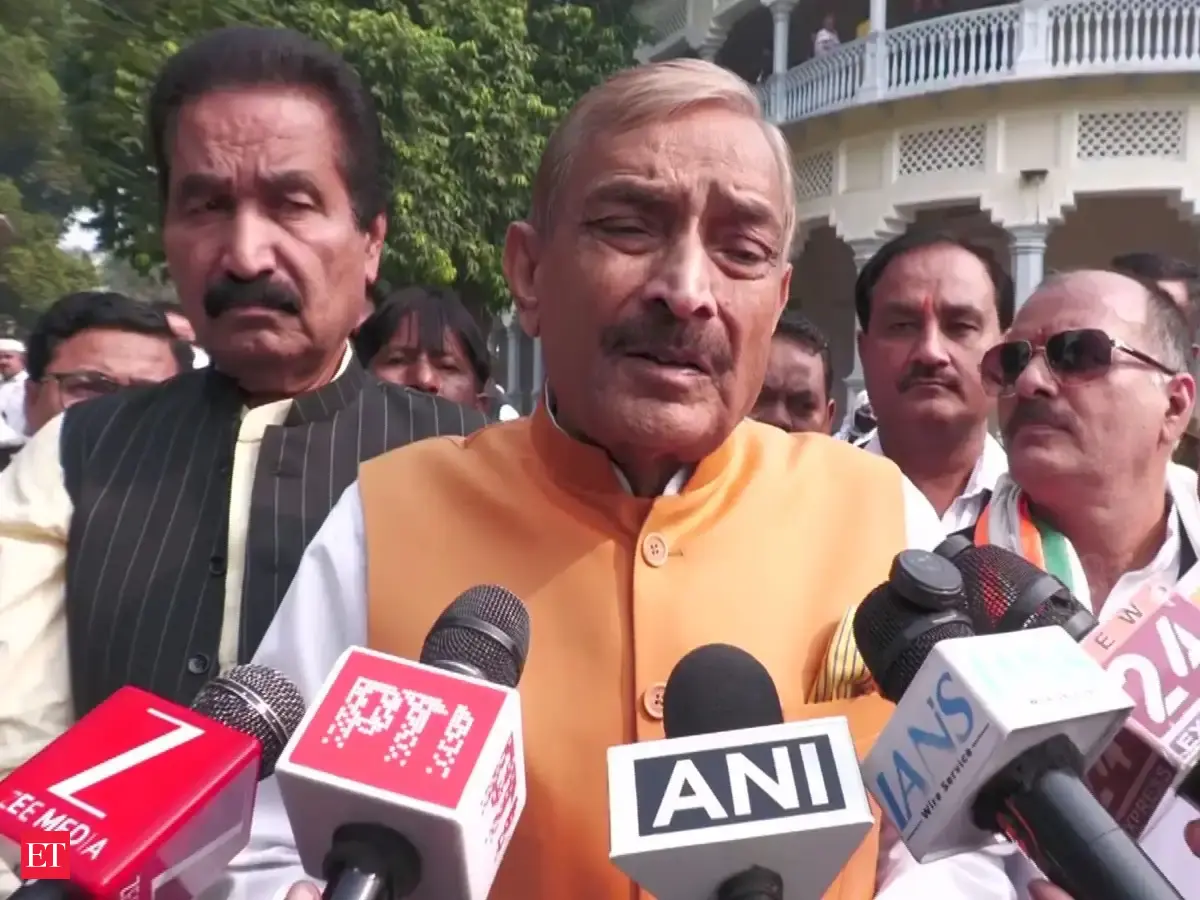
Congress MP Pramod Tiwari on Saturday slammed the Modi government after Donald Trump discussed India’s 7% GDP growth. Tiwari said, "the Modi government's flawed policies have brought the nation's economy to the brink of ruin." He urged the Prime Minister to act as Trump’s new tariffs threaten many Indian industrialists.
Synopsis
Congress MP Pramod Tiwari responded to Donald Trump's remarks about India's economic performance and growth rate. Tiwari attributed the country's economic challenges to the Modi government's flawed policies and urged action against imposed tariffs. Trump highlighted India's low interest rates and suggested that similar U.S. policies could significantly boost economic growth. He criticized the American Federal Reserve's approach of raising interest rates during strong economic periods.
New Delhi: Congress MP Pramod Tiwari on Saturday reacted to US President Donald Trump's remarks on India's 7% GDP growth, blaming the Modi government's policies for the state of the economy.
"As an Indian, I must state that the Modi government's flawed policies have brought the nation's economy to the brink of ruin and catastrophe," Tiwari said while speaking to ANI.
He urged Prime Minister Narendra Modi to make every effort to have the tariffs imposed by Trump withdrawn.
"Otherwise, Indian industrialists will face significant disadvantages when trying to sell their goods in the American market compared to competitors from nations not subject to these tariffs; this is an act of unfairness toward India," he added.
Earlier on Friday, citing India's 7 per cent GDP growth rate and low interest rates by the central bank (RBI), US President Donald Trump on Friday (local time) criticised the American central bank for keeping borrowing costs high, arguing that the US economy could achieve growth of 15 to 20 per cent if interest rates were lowered.
Live Events
You Might Also Like:
'India is growing at 7%': Trump takes aim at US Fed over high interest rates, pushes for rate cuts
Speaking to reporters at the White House, Trump accused the US Federal Reserve of being "very political" and alleged that it raised interest rates whenever America announced strong economic figures, instead of lowering them to support further economic growth.
"Interest rates are too high because we have a very political Fed. I'm not blaming the chairman, but the fact that we have a very political Fed. Whenever we announce good numbers, they raise the interest rates. They do that for a reason. It should be the opposite," Trump said.
He argued that strong economic performance should allow the US to lower interest rates, as better financial figures indicated improved creditworthiness. However, he alleged that the Federal Reserve was following the opposite approach, thereby restricting the country's economic potential.
"We do just the opposite. We do it to destroy the country. When we have these great numbers, you shouldn't keep raising the rates. You should lower rates because we're a better credit. We would have a GDP of 15 or 20 per cent, not 4 per cent. We'd pay off the debt very rapidly. That's the way it should work. But we do it in reverse," he said.
You Might Also Like:
Cultural connect is strongest path to peace: PM Modi at SCO Civilisational Dialogue
Drawing a comparison with India, Trump pointed to the country's low interest rates and 7 per cent GDP growth, suggesting that the US could achieve significantly higher growth if it followed a similar approach.
"If you look at India, they have low interest rates, and they have a 7 per cent GDP. We'd have a 14%, 15%, maybe even a 20% GDP. It's really a sad thing when you do so great and then they (Fed) raise the interest rate. The fact is, we've blown through it," the US President said.
Trump further argued that the US should have the lowest interest rates, citing its position in the global economy and its contribution to the economic success of other countries.
(You can now subscribe to our Economic Times WhatsApp channel)
What would it take for the world to stop needing the Strait of Hormuz?
Hidden export winners: The unlikely products finding real buyers abroad
India’s USD25 bn copper drive moves from building smelters to securing mines
Why IndiGo could land a sharp rebound in profit despite a sluggish aviation market
Gold still rules, but with a difference: How young India is redefining wedding jewellery
KYC and KYB: Pidilite’s business has more tailwinds than headwinds, but a continuous test called raw material prices – Concluding part