
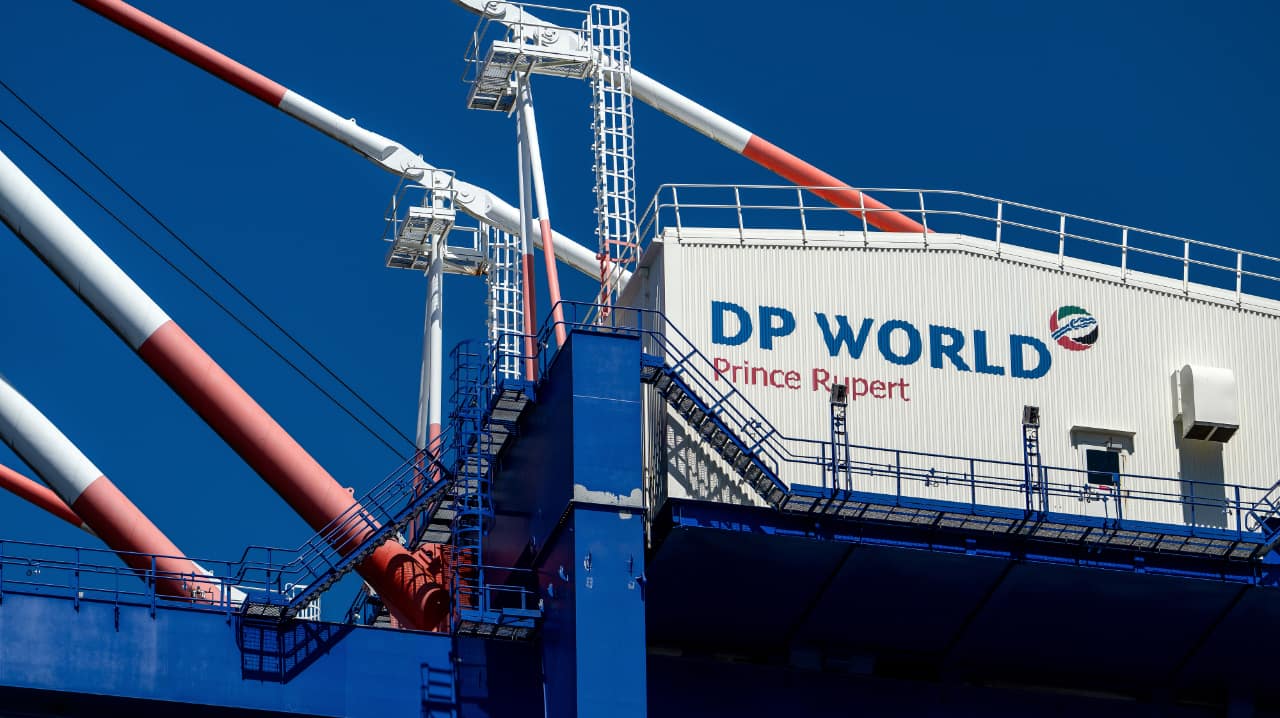
DP World Group CEO Yuvraj Narayan urged India to rethink its port concession model to attract long-term investment. He suggested joint ventures instead of time-bound contracts. "Why not JVs? Become a landlord," he said. The company already invested $3 billion and plans to spend $5 billion more on Indian infrastructure.
DP World Group CEO Yuvraj Narayan has called for a fundamental rethink of India's port development model, arguing that traditional time-bound concessions discourage long-term investment and that joint ventures between governments and private operators could deliver more sustained infrastructure development.
"A 30-year concession means what? Just look at the life cycle," Narayan said, contending that it can take years to build a port and stabilise operations, leaving operators with a relatively short period of high utilisation in which to recover their investments and modernise facilities.
"Why not JVs? Become a landlord. You have an operator, you agree on KPIs. It's forever, till I break your trust. What's the problem?" he said.
Under the model he advocates, the government would retain ownership of the underlying port infrastructure while partnering with private operators through longer-term joint ventures, with performance measured against agreed targets.
Narayan argued that such arrangements could encourage operators to invest in capacity upgrades and technology without the uncertainty of repeated tenders and contract renewals.
His comments come as DP World seeks to expand its presence in India, where it has pledged an additional $5 billion in investment to strengthen its ports, rail and logistics network. The company has already invested about $3 billion in the country over three decades.
Dubai-based DP World's Indian operations span five container terminals with a combined annual capacity of 6 million TEUs, warehousing, freight forwarding, container freight stations, free trade warehousing zones and inland rail terminals.
The company is also expanding its integrated logistics network, including through the second phase of Nhava Sheva Business Park in Maharashtra, backed by an investment of about ₹500 crore, and is exploring further opportunities in port infrastructure, including Vadhavan.
The investments are aimed at improving connectivity between ports and inland markets, facilitating trade and strengthening India's role in global supply chains.
Narayan said the company was prepared to invest a further $3 billion to $5 billion as opportunities emerged, but called for faster project execution and more predictable frameworks for private participation.
He criticised arrangements in which operators invest in infrastructure while facing revenue-sharing demands, tariff controls and the prospect of competing facilities being developed nearby.
"If you have your own stake, would you do that? You are destroying value immediately," he said.
India also needed a clearer assessment of existing port capacity and utilisation before committing to further expansion, Narayan said, adding that DP World's own ports were operating at full capacity, unlike parts of the wider Indian port industry.
He said India should focus on becoming a gateway for its own exports and imports rather than pursuing transshipment volumes as an end in themselves.
"India should only wish to be a gateway. To be a transshipment is a bad investment," he said, arguing that the economic benefits of transshipment - the transfer of cargo between ships - largely accrue to shipping lines rather than flowing into the wider domestic economy.
A gateway strategy, by contrast, would connect Indian manufacturers and consumers to international markets while generating demand for inland transport, warehousing and other logistics services.
The distinction is significant as India invests in large port projects intended to accommodate bigger vessels and improve direct connectivity to global shipping routes.
The government approved the Vadhavan port project in Maharashtra in June 2024 at an estimated cost of ₹76,220 crore, with planned container-handling capacity of about 23.2 million twenty-foot equivalent units (TEUs). The project is designed to strengthen India's maritime capacity and reduce dependence on overseas transshipment hubs.
Narayan said DP World would pursue opportunities in India's port sector, including Vadhavan, while expanding its rail and inland logistics network.
He estimated that the Vadhavan project could entail about $10 billion in investment over 10 to 15 years, depending on its development phases.
Narayan's call for a more durable infrastructure model comes as disruptions in West Asia expose vulnerabilities of global supply chains and increase the cost of moving goods.
He pointed out that restrictions on access to DP World's Jebel Ali port in Dubai had disrupted a key logistics hub linking Asia with the Middle East, Africa and Europe. The consequences extended well beyond the Gulf, affecting cargo flows and creating congestion across other parts of the company's network.
The disruption has reinforced the need for alternative shipping routes, additional capacity and more resilient supply chains, Narayan said, but warned that such measures would be expensive and could take years to implement.
Businesses that once prioritised lean inventories and just-in-time delivery are increasingly being forced to maintain alternative suppliers and routes, raising working-capital requirements and operating costs.
"Who do you think pays for all this disruption? You - as a consumer," he said.
Narayan highlighted that globalisation had generated substantial wealth but distributed its benefits unevenly, contributing to political tensions and a broader breakdown in the international order.
He said the world was moving towards a more fragmented trading system without a clear replacement for the structures that had underpinned decades of global commerce.
He nevertheless expressed optimism that a political settlement would eventually emerge, saying DP World was willing to contribute to rebuilding damaged infrastructure and supply chains but was not positioned to drive international diplomacy.
Narayan also backed efforts to rebuild India's domestic shipbuilding capabilities, describing a degree of self-sufficiency in strategically important industries as necessary.
Tie ups
DP World has signed a memorandum of understanding with Cochin Shipyard to help develop maritime capabilities in India, he said.
The company is not itself a shipbuilder, but has expertise in ship repair, dry docks and engineering, procurement and construction services that could support the development of a broader maritime ecosystem.
On competition from Indian conglomerates investing in ports and logistics, Narayan said DP World's international network offered a different proposition from businesses focused primarily on the domestic market.
"What is my offering to a business in India? ... I can sell their hair extensions in Nigeria," he said, illustrating how the company's global connectivity could help Indian producers reach overseas customers.
For Narayan, the opportunity in India extends beyond building ports. It lies in linking domestic producers to international markets through an integrated network of maritime, rail and logistics assets - and in creating an investment framework that encourages private operators to keep improving those assets over the long term.