
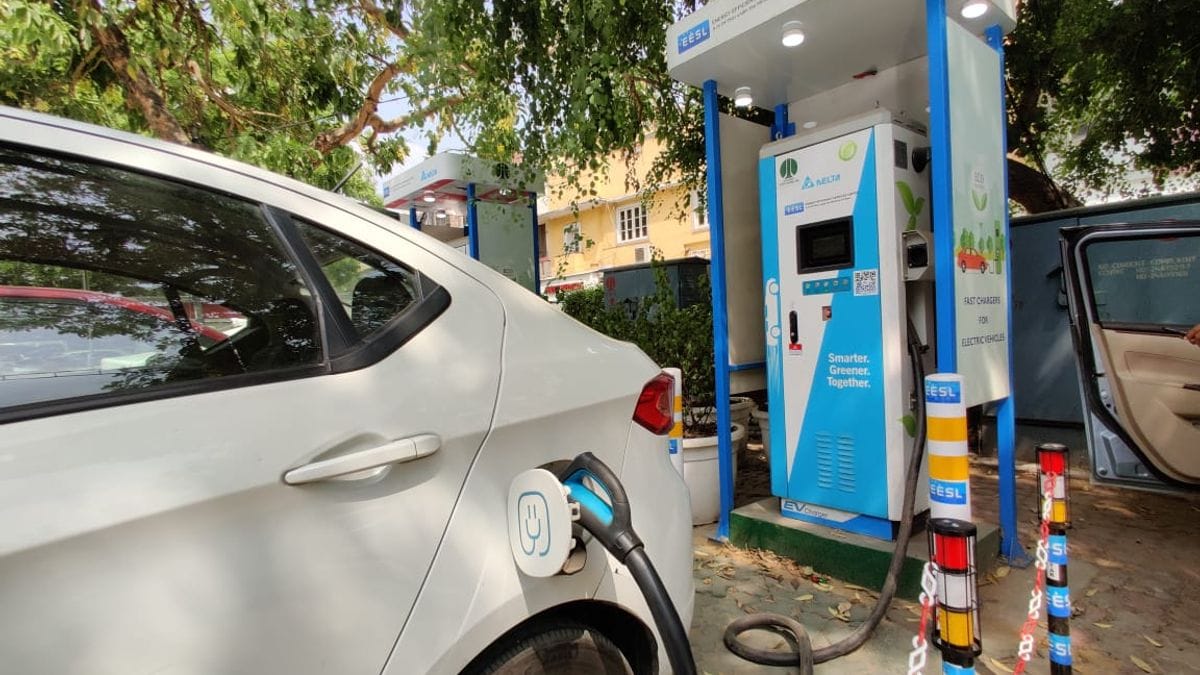
Drivers should not worry about range anxiety when buying an electric vehicle in India. An ideal range of 300-400 kilometres is enough for normal urban use. Experts suggest that people should buy a vehicle based on everyday usage rather than overspending on a larger battery for rare long trips.
The other major condition for range, and this is true on electric vehicles as it is in ICE vehicles, is the way you drive. My wife, for example, ekes out a little bit more efficiency than I do on the same vehicles. However, the question must be considered in the context of the average driver in India, who doesn't really have a heavy right foot but could have the occasional enthusiastic drive. I am also considering a mix of urban traffic with some higher-speed roads, and that the vehicle will be used mainly for commuting, with the occasional trip.
My answer is that the ideal range is 300-400 kilometres on a single charge for normal urban use. I have been living with a Maruti Suzuki e Vitara for a few months now, and after driving it nearly 2,000 kilometres all over the city, I get an efficiency of 6.4 kilometres per kilowatt-hour. With the e Vitara's 61-kilowatt-hour battery, this works out to 390 kilometres of range.
For me, that is more than enough for a week of driving. It is a similar case with the Kia Syros EV and Mahindra 3XO EV, and probably similar to the Honda Series Alpha EV coming early next month and Hyundai's small EV that will be unveiled at the Bharat Mobility Show in February 2027.
Don't overspend
One of the things I tell folks who call me for advice is not to 'overbuy' a vehicle. Do not buy a larger car because you might go on a road trip once a year. Buy a vehicle based on your everyday usage, but do consider where you will be in the next five years. Cells are heavy and expensive, even if they're made from the lightest metal on earth, Lithium. A bigger battery pack adds weight and cost to a vehicle.
Sure, you might need a larger vehicle with a bigger battery pack, such as the big Mahindra XEV 9S. You might need the space -- the reason why this vehicle is quickly becoming a favourite among Cabinet ministers -- or the superlative 600-plus kilometres of range on the 9S and its siblings. But if it is the former you need, should you simply buy the smaller battery pack option?
If you can charge your vehicle easily and your daily driving is under 200 kilometres, you should consider the smaller battery pack versions of vehicles from Hyundai, Kia, Maruti, and Tata. If you want technology features such as Advanced Driver Assistance Systems, however, you'll have to go with the higher variants.
But I realise that a car, for many, is beyond a basic mobility tool. It's a reflection of their personality. After all, why buy a luxury electric SUV when you can get the same features and similar space, as well as better performance and range, in a Tata Sierra EV? I recently saw the incredible Denza Z9 GT at the launch of the Chinese luxury brand from BYD in India. This vehicle has a scarcely believable 850 kilowatts of power, which works out to 1,150 horsepower that is delivered through three motors. While I am deeply unsure whether so much power is a good idea in India, or anywhere for that matter, there will be buyers for the vehicle.
The assumption I have made here is that if you are buying an electric vehicle, you have access to a charger of your own or would be able to install one. This assumption is by far and away a major one. Residents in even the most upscale Gurugram condominiums face issues installing chargers, as well as with power infrastructure. If you have access to a charger without any issues, whether it is a shared resource or a personal charger, buying an electric vehicle is a no-brainer. Just make sure you don't end up overspending.
Kushan Mitra is an automotive journalist based in New Delhi. He tweets @kushanmitra. Views are personal.