
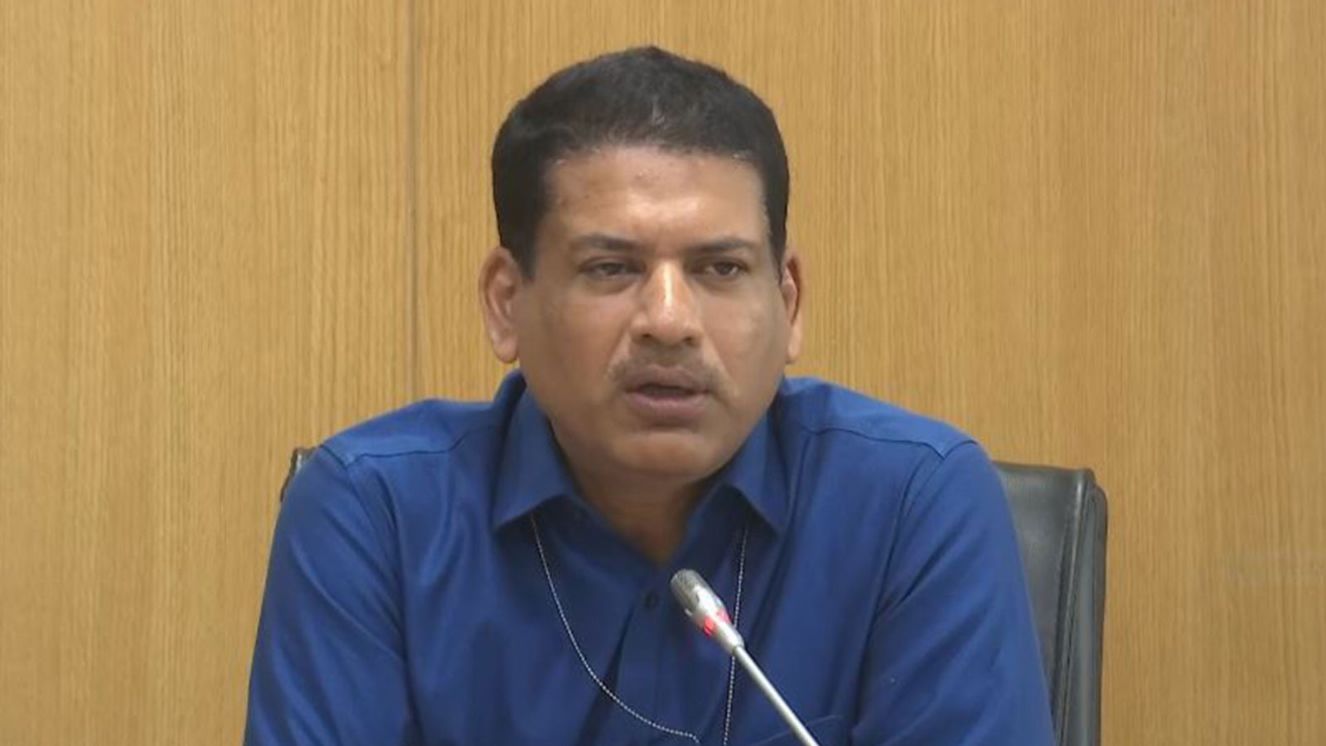
Power distribution companies face revenue pressure as industries shift to their own green power projects. Sarangi said, "Today I have not seen a single big corporate house which is not investing in renewable energy." Many firms now use solar and wind to cut costs, forcing discoms to rethink business models.
Power distribution companies face revenue challenges as industrial and commercial consumers increasingly adopt renewable energy, prompting the need for new discom business models and green energy reforms.
The shift comes as large companies across steel, cement, automobile and other manufacturing sectors invest in dedicated solar and wind power projects to reduce electricity costs and dependence on distribution utilities, adding to the financial challenges facing the sector.
Speaking at the FICCI AGM and Annual Convention 2026, Sarangi said discoms would need to rethink their business models as more companies become self-reliant in meeting electricity requirements.
"They will also have to look at new revenue models of sustaining themselves yet facilitating the C&I consumers," Sarangi said, referring to commercial and industrial electricity consumers.
The concern is significant because industrial and commercial customers generally pay higher tariffs, helping discoms recover costs while supporting electricity supply to other consumer categories.
According to the power ministry's data, state-run discoms had accumulated losses of ₹6.77 lakh crore and outstanding borrowings of ₹7.11 lakh crore as of March 2025. The Comptroller and Auditor General of India (CAG) has also begun a nationwide audit of 39 state-owned discoms and five government electricity departments, examining their finances, operational performance and electricity procurement practices.
Meanwhile, major companies are increasingly developing renewable power projects for captive use or securing electricity through long-term agreements with clean energy producers.
UltraTech Cement has around 2 gigawatts (GW) of captive renewable capacity, JSW Steel about 1 GW and Ambuja Cements nearly 980 megawatts (MW). JSW Steel has another 1.5 GW in various stages of commissioning, while Tata Steel has nearly 800 MW in its pipeline.
The shift is also extending beyond energy-intensive industries. Maruti Suzuki is expanding its own solar generation capacity alongside purchases from renewable power producers. Renewable electricity accounted for nearly 23% of power consumed at its manufacturing facilities in FY26, with the company targeting 85% by FY31.
The increasing adoption of captive renewable power is also driven by cost considerations. A 2026 report by JMK Research and the India Green Steel Coalition found that renewable electricity in several states was available at ₹4.5-6 per unit, compared with grid tariffs of ₹7-8 per unit for the secondary steel sector.
"Today I have not seen a single big corporate house which is not investing in renewable energy," Sarangi said.
The secretary stressed the need for reforms allowing businesses to procure renewable electricity directly from generators while enabling discoms to maintain their financial viability.
"So reforms in green open access and ensuring that C&I consumers get electricity as per their requirement is something which is a big reform which needs to be undertaken in the Indian context," he said.
Green open access allows eligible industrial and commercial consumers to purchase renewable electricity directly from power producers instead of relying entirely on their local distribution companies.
Sarangi also called for changes in net metering, electricity banking and time-of-day pricing policies as rooftop solar installations expand across the country.
He said rooftop solar coverage had reached 67 lakh households, describing the expansion as a "silent revolution" that was transforming households from electricity consumers into producers.
The next phase could allow households generating solar electricity to trade surplus power directly with other consumers, further changing conventional electricity distribution arrangements.
"So this peer-to-peer trading using India Energy Stack is also going to be a reality in the next couple of years," Sarangi said.