
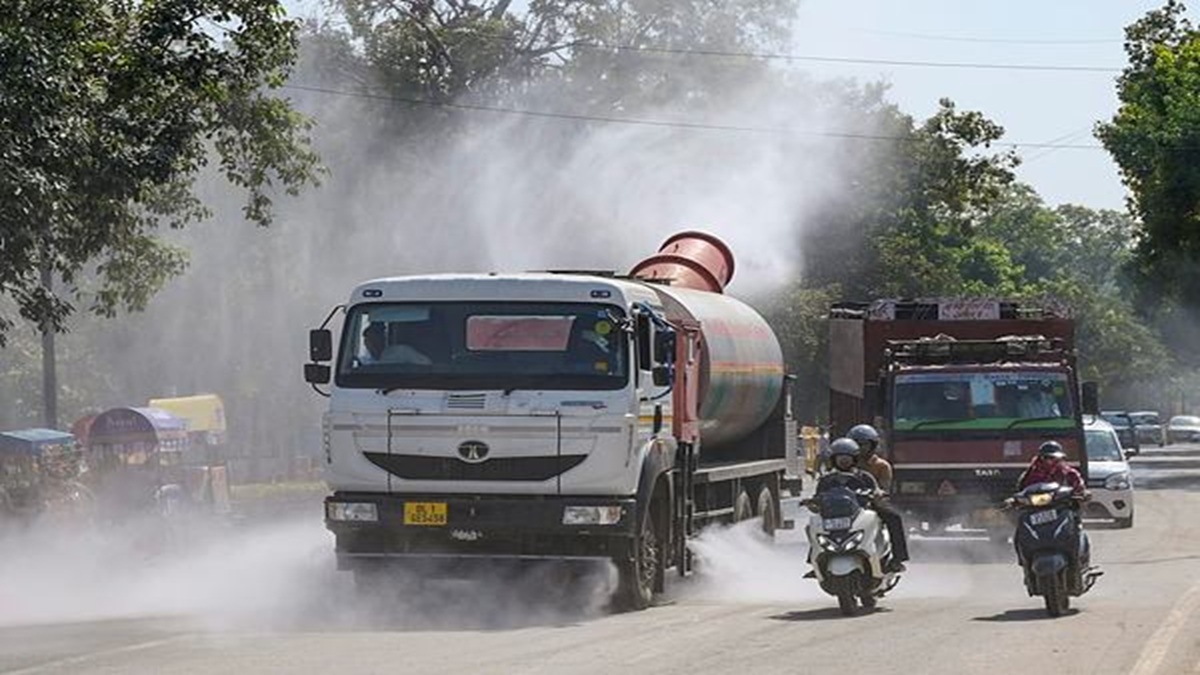
Delhi-NCR air quality hit severe levels, forcing the government to activate GRAP-3 measures. Authorities banned non-essential construction and specific vehicles to curb pollution. During a hearing on Friday, the Supreme Court questioned officials, asking, "Despite all these measures, why is pollution recurring?" Officials now hope these strict rules help residents.
Delhi Government has implemented GRAP-III level curbs amid rising pollution levels in the Delhi NCR.
The Graded Response Action Plan Stage III (GRAP-3) is an emergency set of anti-pollution measures enforced across Delhi-NCR by the Commission for Air Quality Management (CAQM). It is invoked preemptively when the Air Quality Index (AQI) reaches or is projected to cross into the "Severe" category (AQI 401-500).
GRAP Stage III bans BS-III petrol and BS-IV diesel four-wheelers (light motor vehicles) across Delhi and high-density NCR districts, including Gurugram, Faridabad, Sonipat, Ghaziabad, and Gautam Buddha Nagar (Noida). Out-of-state diesel medium and light goods vehicles are also barred from entering Delhi. Vehicles adapted for persons with disabilities are exempt.
Construction & Demolition Ban: All non-essential construction and demolition activities are strictly halted, including excavation, drilling, piling, masonry, road construction, tile cutting, and welding.
Supreme Court on Vehicular emission
The Supreme Court of India on Friday cited vehicle emissions as a major contributor to deteriorating air quality and questioned authorities on why the Air Quality Index (AQI) remains at alarming levels despite several regulatory measures.
While hearing a suo motu case on air pollution, a bench comprising Chief Justice of India Surya Kant and Justices Joymalya Bagchi and V. Mohana expressed concern over "bumper-to-bumper" traffic in the Delhi-National Capital Region (NCR). The CJI also questioned the persistent traffic gridlock in the national capital despite measures to curb vehicular pollution.
"Despite all these measures, why is pollution recurring? Is it only because of the movement of vehicles, irrespective of the quality of fuel being used, whether petrol or diesel?" the CJI asked, noting that the AQI continues to touch 400.