
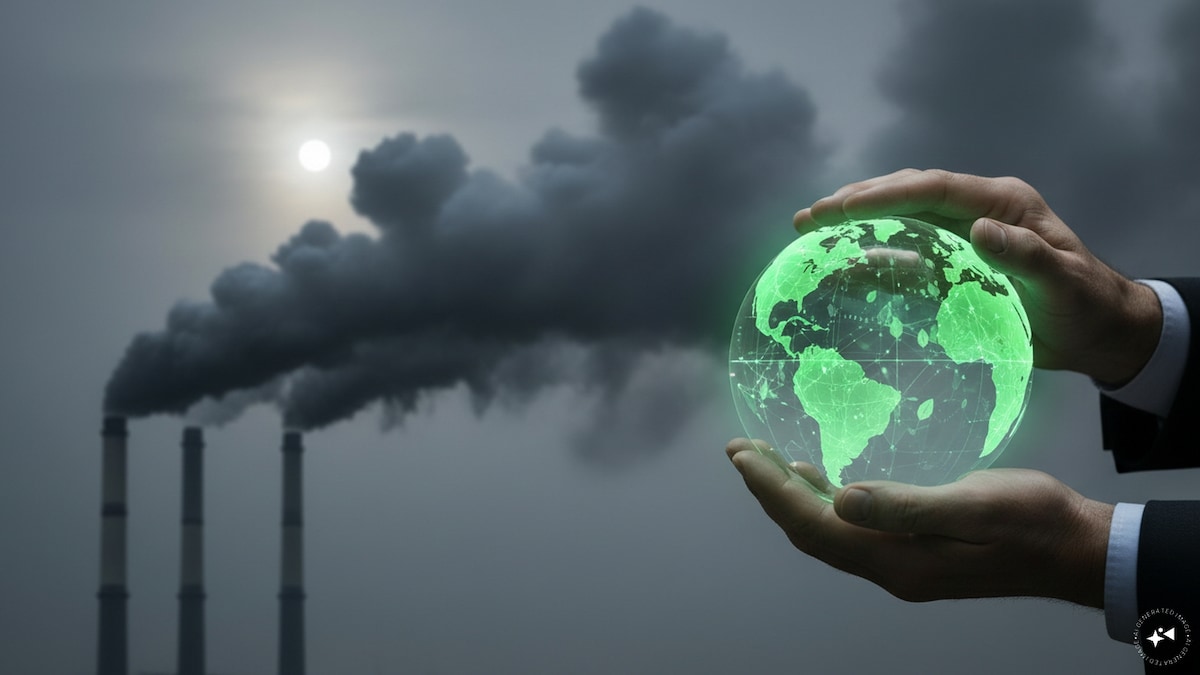
The COP31 climate summit started in Antalya on November 9, with developing nations demanding climate justice from wealthier countries. India and others argued that current finance targets are inadequate. Tina Stege said, "For Pacific Island countries, this is not an abstract discussion about temperature targets. It's about people, it's about communities."
The two-week annual United Nations climate summit, the Conference of the Parties (COP31), kicked off in Turkey's Antalya on November 9, with developing nations demanding greater accountability and climate justice from wealthier countries. As the world grapples with rising temperatures and increasingly severe climate-related disasters, India and other developing countries are seeking to highlight the disproportionate impact of the climate crisis on their economies and populations.
At previous COP meetings, India has made its position clear, arguing that the current climate finance target of $300 billion is inadequate and strongly opposing the inclusion of wealthier developing countries in the pool of nations expected to contribute to climate funding.
The debate over climate finance, emissions responsibility and climate justice comes as the world remains on track to breach the 1.5°C warming threshold set under the 2015 Paris Agreement.
This year is expected to rank among the four hottest on record, with El Niño adding to the effects of global warming, according to a United Nations report released on Monday. Heatwaves, wildfires and extreme weather events have become increasingly common, with developing countries bearing a disproportionate share of the damage.
One of the more visible impacts of the climate crisis was seen in Nepal earlier this year, where a glacier collapse triggered devastating flooding, reportedly killing more than 1,450 people and leaving thousands more missing.
The UN Emissions Gap Report 2026 says limiting global warming to 1.5°C by 2100 remains possible, with a 50% probability, but will require substantial cuts in greenhouse gas emissions. According to the report, global emissions must fall by 18% by 2030, 45% by 2035 and 69% by 2040, compared with 2025 levels.
"The urgency of this moment must drive us forward," UN Climate Change Executive Secretary Simon Stiell said, adding that progress so far was "nowhere near fast enough".
Why are developing countries more worried?
Tina Stege, COP31 climate envoy for the Marshall Islands and regional envoy for Oceania, said urgent action was essential.
"For Pacific Island countries, this is not an abstract discussion about temperature targets. It's about people, it's about communities, it is about the places we call home," Reuters quoted her as saying.
Similarly, Nepal's Foreign Minister Shisir Khanal has called for climate justice for the Himalayan region at COP31. He stressed the need to keep global warming within the 1.5°C threshold and called for a dedicated action plan for mountain regions.
Khanal highlighted that despite Nepal's relatively small contribution to global greenhouse gas emissions, its glaciers are melting rapidly, threatening millions of lives and livelihoods.
According to the United Nations Environment Programme (UNEP), even the lowest-possible 1.5°C overshoot scenario would see peak warming reach around 1.7-1.8°C by mid-century. Against this backdrop, Nepal and Bhutan are also pushing for a dedicated Himalayan climate agenda at COP31.
Last week, India's Ministry of Environment, Forest and Climate Change reiterated that the country would approach COP31 with a solution-oriented vision. Its priorities include practical solutions for the Global South, capacity building, knowledge sharing and region-specific climate action.
The 2026 Emissions Gap Report warns that if current policies continue, global warming could reach 2.8°C this century and rise further thereafter.
"Even in the most optimistic scenario, where all NDCs plus additional net-zero targets are achieved, global warming would only be limited to 2.1°C in this century," the report stated.
Such warming could intensify climate-related impacts, including extreme heatwaves, floods, droughts and rising sea levels.
According to UN estimates, around 3.3 billion to 3.6 billion people, or 43% of the global population, live in contexts that are highly vulnerable to climate change. Several reports have also identified South Asia as one of the regions most exposed to the effects of the worsening climate crisis.
For African countries, COP31 is not just about climate finance but also about securing a greater say in how the economic benefits of the global energy transition are distributed.
More than a decade after the Paris Agreement, African nations continue to push for greater access to public climate funding under the UN framework.
Omar Elmawi, convenor of the Africa Movement of Movements, told New African Magazine that the summit should be judged by what it delivers.
"Africa does not need another layer of ambitions, declarations and initiatives without the means to deliver them," he said.