
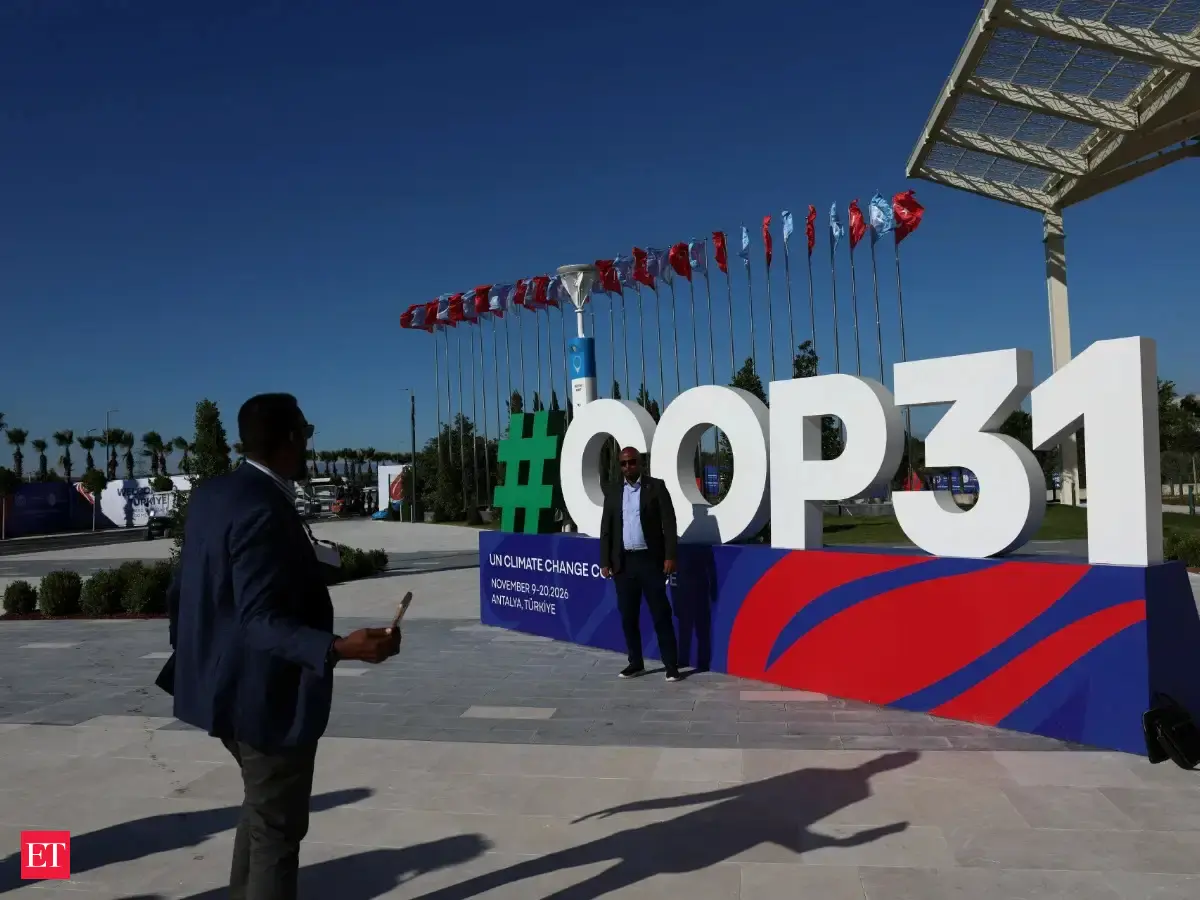
COP31 will take place in Antalya from November 9-20 to address climate finance and trade issues. Countries submitted seven proposals for the agenda, focusing on funds developed nations owe to developing ones. Australia is leading these talks, as groups push to formalize financial support strategies for future climate change initiatives.
Synopsis
COP31, scheduled to occur in Antalya from November 9-20, will address significant climate finance and trade issues. Discussions include the funding developed countries owe to developing nations for climate change adaptation. The African Group aims to formalize financial support strategies and assess funding needs for climate initiatives. Additionally, proposals regarding the impact of climate-related trade measures on developing countries have been put forward.
New Delhi: A face-off over formal discussions on finance and trade could mark the start of UN climate talks at COP31. Countries and negotiating groups have submitted seven proposals for inclusion in the formal agenda of the discussions that begin Monday.
The most contentious issues centre around finance, including money that developed countries must provide developing countries. Australia, as president of the negotiations, has been working to arrive at an understanding that addresses these concerns ahead of the formal opening.
COP31, the 31st Conference of the Parties to the United Nations Framework Convention on Climate Change (UNFCCC), will be held in the Turkish city of Antalya on November 9-20. Under a joint partnership accord, Australia is heading intergovernmental negotiations.
The African Group of Negotiators, representing 54 African countries, wants a formal discussion on finance for adapting to the impact of climate change. It has called for the UN climate process to assess the amount of funds required by developing countries to form the basis of the resource mobilisation for the Green Climate Fund. Countries agreed to setting up the fund in 2010 at the climate talks in Cancun. Although the agreement was for the UN climate process to determine and inform the target for each round of mobilisation, this has never happened. The third replenishment period of the Green Climate Fund begins in January 2028.
These proposals are separate from the appeal by COP30 president Andre Correa do Lago in June, seeking the formalisation of a decision adopted in Belem, Brazil, to set up a two-year long work programme on climate finance, particularly the obligation of developed countries to provide developing countries with funds.
Live Events
Mountain Ecosystems
Developed countries have argued that this runs counter to the agreement made at COP30, which was held in the Brazilian city.
In the aftermath of devastating floods, Nepal and Bhutan have proposed a discussion on the 1.5 degrees Celsius target and what it means for mountainous countries.
Nepal's minister for agriculture, forests and environment Gita Chaudhury pointed to the rapid warming of the Hindu-Kush Himalaya and other high mountain regions and stressed the need for "equitable access to climate finance and support for loss and damage" in her letter forwarding the submission. The proposal has called for a dedicated work programme on mountain ecosystems and integrating mountain-specific priorities into adaptation frameworks, climate finance arrangements and loss and damage mechanisms.
The other issue that has been raised for formal inclusion is trade and climate, with a reference to unilateral trade and protectionist measures being adopted in the name of climate action. The proposal made by the African countries argues that these measures shift the burden of decarbonising the economy on to developing countries.