
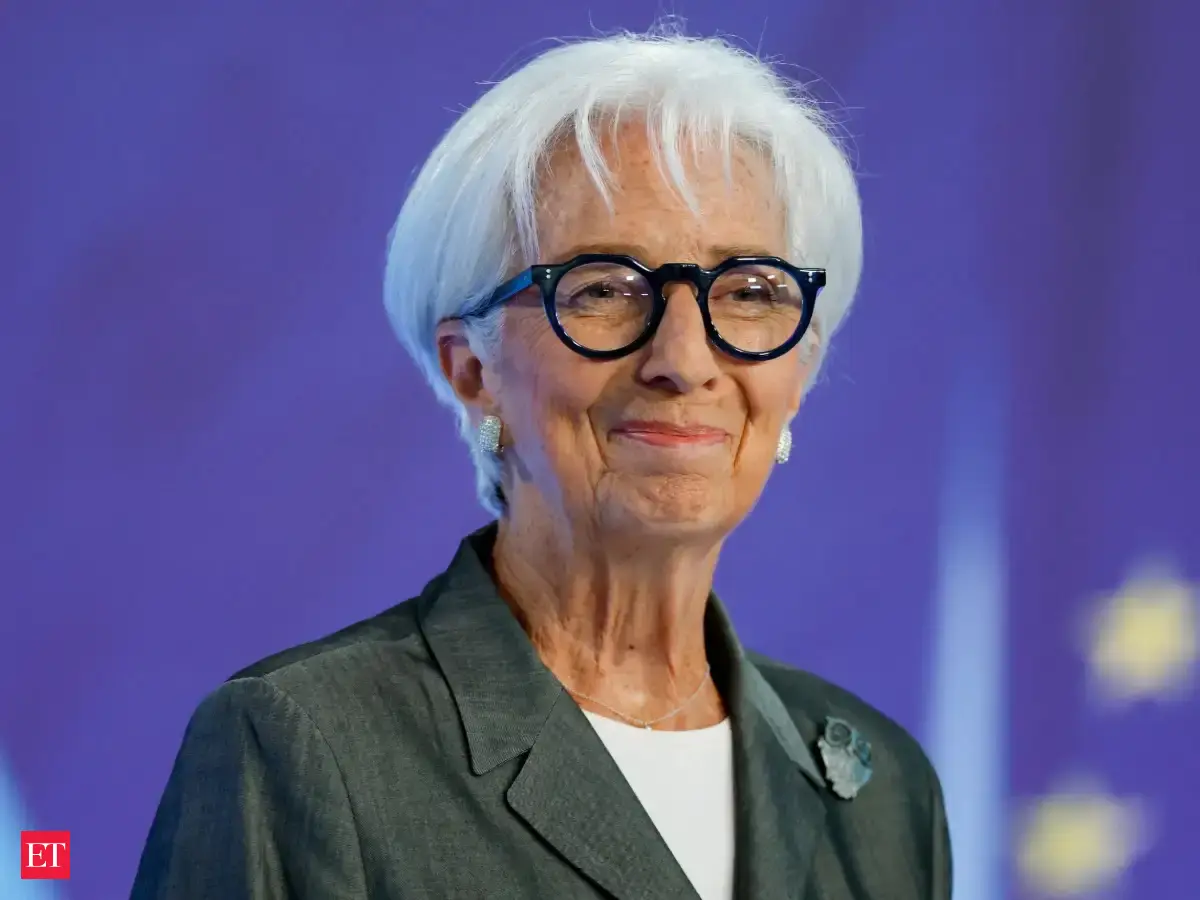
Christine Lagarde announced her resignation from the European Central Bank, set for February 7, 2027. Her departure comes earlier than the original October 2027 end date. This move allows EU leaders to pick a successor before French presidential elections. Europe now faces tough economic challenges like inflation and high energy costs.
Synopsis
Christine Lagarde announced her resignation from the European Central Bank, set for February 7, 2027. Her departure is earlier than planned, as her term was due to end in October 2027. This resignation allows EU leaders to appoint her successor ahead of upcoming French presidential elections. Europe faces economic challenges, including inflation and high energy costs, which the ECB must address.
Christine Lagarde’s resignation from her post at the European Central Bank (ECB) before her term comes to an end marks a new era for the continent’s most influential financial organisation amidst a tough economic period for Europe. Lagarde will resign on February 7, 2027, thus retiring earlier than she had initially intended.
Her term would have ended in October 2027, and the recent announcement puts an end to speculation that has surrounded her future role and enables EU leaders to appoint her successor before next year’s French presidential elections.
The timing is crucial.
Europe is facing threats of resurging inflation due to high energy costs, pressures on the cost of government borrowing, and doubts about its competitiveness in comparison with the US and China.
The ECB should find a way out of this situation without compromising its confidence in the euro currency and in the institution tasked with maintaining its purchasing power.
Live Events
Lagarde’s exit from office provides an opportunity for a new leadership style.
However, it also poses questions about continuity and political considerations, as well as about the possibility of preserving the balance she managed to achieve between policymakers with different economic preferences.
Europe's next central banker inherits a difficult economic balancing act
However, Lagarde's successor will step into his role in times when policymakers are experiencing conflicting pressures.
The increase in oil prices due to the tensions involving Iran has reignited fears regarding inflation, while higher bond yields have increased the costs of borrowing for countries, companies, and individuals.
France, in particular, is a cause for concern.
Its finances have faced criticism, and rising borrowing costs may only worsen the situation of the country, which already experiences budgetary and political uncertainties.
The problem for the ECB is how to avoid inflation due to higher energy prices from spreading to wages and other costs without causing economic growth to suffer.
Interest rate hikes are able to control the inflation problem, but they also make mortgages and business loans more expensive. On the other hand, low-interest rates may boost economic growth, but they may lead to higher inflation.
The incoming president will not be able to unilaterally determine the policy.
The interest rate is set collectively by the Governing Council of the European Central Bank. However, the president still carries out a significant function of influencing the decision-making process and delivering the decision to the market.
This means that the decision on who will be the successor carries a lot of significance since an inflationist might give higher priority to price moderation, while another personality might behave differently during conflicts between stability and growth of the economy.