
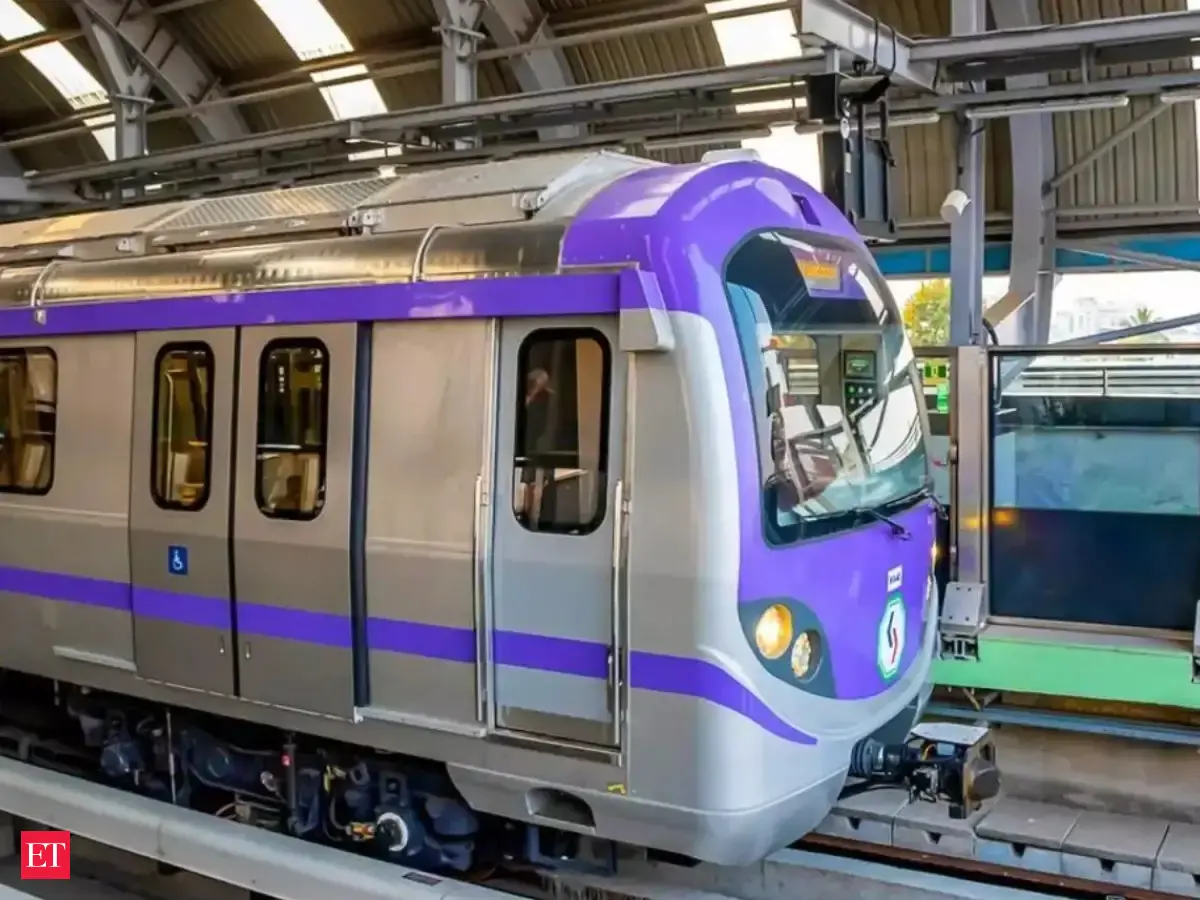
Tamil Nadu’s ongoing ban on stone transport has delayed Bengaluru’s Namma Metro Blue Line project. Contractors said the shortage of materials like quarry dust and aggregates pushed up costs. Association president GR Shanmugappa said, "More than 40,000 tonnes of stone were being transported to the city before the ban."
Bengaluru blue line news: Tamil Nadu's ongoing ban on the transport of construction materials has significantly impacted the Namma Metro Blue Line project. Contractors have reported severe difficulties in sourcing essential materials, leading to delayed construction timelines. The current situation has caused prices for aggregates to rise dramatically, creating financial strain on executing projects. Approximately 600 to 700 truck owners face economic challenges due to these restrictions.
Tamil Nadu's continued restrictions on the transportation of stones and construction aggregates to other states have disrupted supplies to Bengaluru, affecting construction work on the Namma Metro Blue Line and adding to cost pressures for contractors executing major infrastructure projects, a report by TOI said.
The shortage has affected the availability of quarry dust, crushed stone and aggregates, with contractors reporting disruptions in concreting, architectural finishing and track-related work. The restrictions have also forced suppliers to look for alternative sources, pushing up material prices.
40,000 tonnes of stone supply disrupted, truck operators affectedKarnataka Truck Owners' and Agents' Association president GR Shanmugappa said the restrictions had affected not just Metro construction but also several other infrastructure projects in Bengaluru.
"More than 40,000 tonnes of stone were being transported to the city before the ban; 600 to 700 truck owners have been affected now," GR Shanmugappa told TOI.
Why has Tamil Nadu restricted stone transportation?Tamil Nadu imposed restrictions citing rising domestic demand, inadequate supplies and escalating prices of construction materials. The move was also intended to curb illegal mining and unauthorised transportation of stone materials.
The restrictions came into effect on July 27 for an initial three-month period but have continued since then.
Blue Line contractors face shortage of construction materialsA senior Bangalore Metro Rail Corporation Limited (BMRCL) official said contractors executing the 58-km Blue Line, which connects Silk Board with Kempegowda International Airport (KIA), were facing difficulties in procuring construction materials.
While construction of the elevated corridor between Silk Board and KR Pura is at an advanced stage, work on the KR Pura-KIA stretch is still underway.
"Contractors said 30 to 40 per cent of construction materials would be sourced from crushers in Tamil Nadu's Krishnagiri district before the ban. Shortages of quarry dust, crushed stone and aggregates have affected several activities, including concreting, architectural finishing and other construction works," the official said.
Aggregate prices more than double as suppliers shift sourcingThe shortage has also affected depot construction, particularly the availability of railway ballast required for track laying. Along the Outer Ring Road (ORR) stretch, multiple activities, including the construction of entry and exit structures and travelators, are underway.
"The ban has disrupted construction activity over the past three months," said an engineer with a construction company executing works on the ORR.
"Earlier, we were procuring aggregates from Hosur, which had around 14 quarry-crusher units supplying materials. Following the ban, supplies were disrupted for months, forcing vendors to shift procurement to just 4-5 crusher units in Bidadi. Aggregate prices, which were around Rs 800 per tonne earlier, have more than doubled now. This has added to the financial strain on contractors executing big projects," the engineer said.
From airport cabs to driverless MetroFor airport commuters, the biggest draw of the Blue Line could be the option to swap road travel for a Metro ride. Once the Hebbal-KIA stretch opens, passengers from several parts of Bengaluru will be able to travel to the airport by Metro, with connectivity set to improve further as the remaining sections become operational.
The line will also mark Bengaluru's entry into driverless Metro operations. Its trains will feature automated train control and safety systems, and will undergo extensive testing before being cleared for passenger services.
Apart from TN ban, why is Bengaluru's airport Metro taking so long?The 58-km Blue Line has encountered several construction and engineering challenges, particularly along the Outer Ring Road (ORR) and the stretch between Hebbal and Kempapura.
One of the key challenges is the construction of infrastructure designed to accommodate four Metro tracks between Hebbal and Kempapura. The configuration will allow the Blue Line to integrate with the proposed Orange Line in the future.
Officials said a specialised three-pier portal structure is being built along a nearly 1-km stretch to accommodate all four tracks. This will be the first such configuration on Namma Metro's mainline network.
Construction along the ORR has also been challenging due to heavy traffic, utility shifting, land constraints and difficulties in building stations along the busy corridor.