
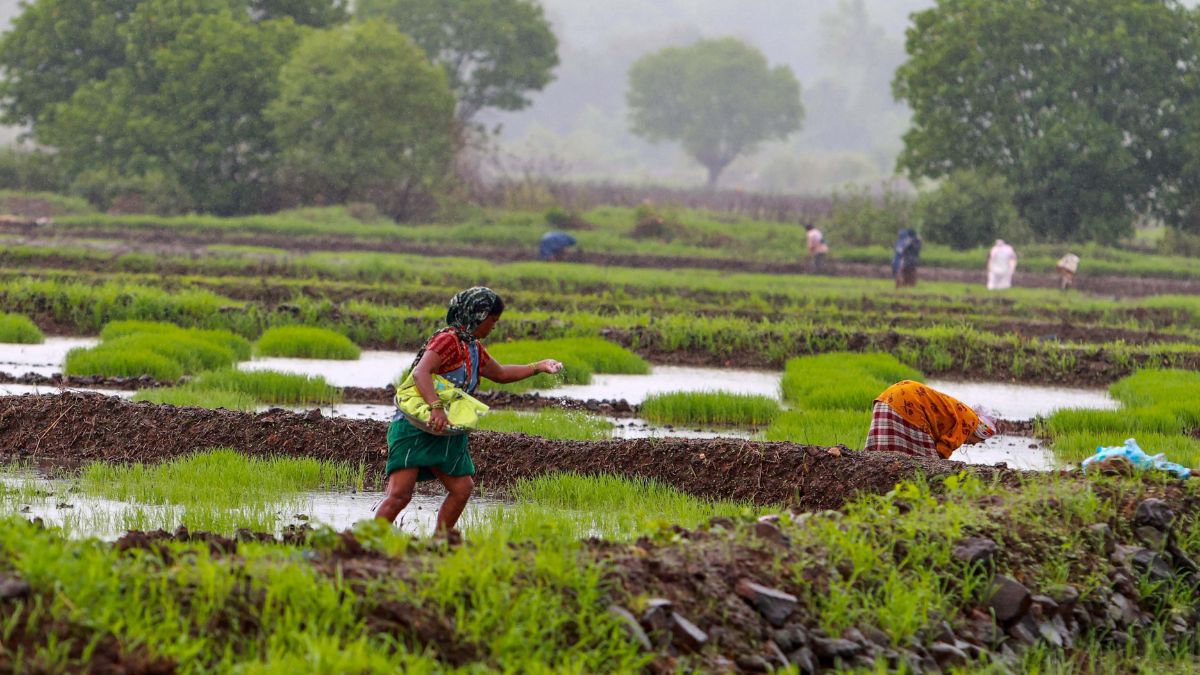
Low-productivity districts like Gadchiroli and Dantewada show progress under the PM Dhan-Dhaanya Krishi Yojana. Officials said, "Through convergence we aim to boost agriculture in these districts, and the initial response has been encouraging." The scheme uses pooled resources to improve irrigation and crop diversification across 100 aspirational Indian districts.
Several Naxal-affected and low-productivity districts like Gadchiroli, Dantewada, Alluri Sitharaman Raju, and Banka show progress in irrigation, crop diversification, and natural farming through the PM Dhan-Dhaanya Krishi Yojana scheme.
Panda said that by pooling resources from eight central and state schemes across the Departments of Agriculture, Minor Irrigation, Water Conservation, Forest and Mining, and Irrigation, over 3,100 farm ponds, recharge shafts, and farm bunding works through bamboo plantation were completed in the last year. This, according to the official, has led to improvement in post-harvest storage capacities and farmers adopting crop diversification to maize, ragi, vegetables and spices like turmeric.
The DDKY targets 100 aspirational agricultural districts and launched in July 2025 with a budget of Rs 24,000 crore drawn from the convergence of 36 existing central sector schemes across 11 ministries along with state schemes. The private sector's CSR fund is also being used.
Officials said that district-specific plans were prepared considering factors including soil fertility, rainfall and irrigation, mechanization, suitability of agro-ecological conditions for crop diversification, seed replacement rate, credit penetration and storage gap. "Through convergence we aim to boost agriculture in these districts, and the initial response has been encouraging," an official said.
Farmers in Alluri Sitarama Raju, Andhra Pradesh, stopped cultivating ganja or cannabis flower across over 7000 acres since FY26, an official said. Instead the district has started promoting high-value horticultural crops such as avocado, dragon fruit, strawberry, which require less water, across 372 hectares this season. "We pulled resources from several schemes for integrated development of agriculture, Pradhan Mantri formalisation of micro food processing enterprises, and the national mission on edible oils to boost value addition and processing, which has increased farmers' income," the official from Andhra Pradesh said.
In Banka, Bihar, the focus has been on land revival through soil testing and promoting natural farming using inter-cropping mode to boost organic matter in the soil using funds drawn from at least 13 schemes. "The aim is to end dependence on chemical fertilisers and improve soil organic carbon for boosting yield," Anshul Agarwal, district magistrate of Banka, said.
The aim of the PMDDKY was to boost agricultural productivity, crop diversification, improve irrigation and storage, and ensure credit flow in the 100 low-performing districts identified by Niti Aayog. These districts spread across Uttar Pradesh (12), Maharashtra (9), Rajasthan (8), Madhya Pradesh (8), Bihar (7), Karnataka (6), Andhra Pradesh (5) and Tamil Nadu (4) were identified based on factors such as low productivity, low cropping intensity, and less agricultural credit disbursement.
"While farmers mostly grow paddy and millets, we have initiated pulses cultivation for boosting soil health using convergence of resources from various schemes," Devesh Kumar Dhruv, collector of Dantewada, told FE.
Using the convergence mode, agriculture minister Shivraj Singh Chouhan has called for the production of pulses and oilseeds in rice fallow areas, where fields remain uncultivated after paddy harvesting. As many as 18 schemes implemented by the agriculture ministry, including Pradhan Mantri Kisan Samman Nidhi, Pradhan Mantri Fasal Bima Yojana, Modified Interest Subvention Scheme or Kisan Credit Cards, National Mission on Edible Oils, and agriculture infrastructure fund have been included under the PMDDKY.