
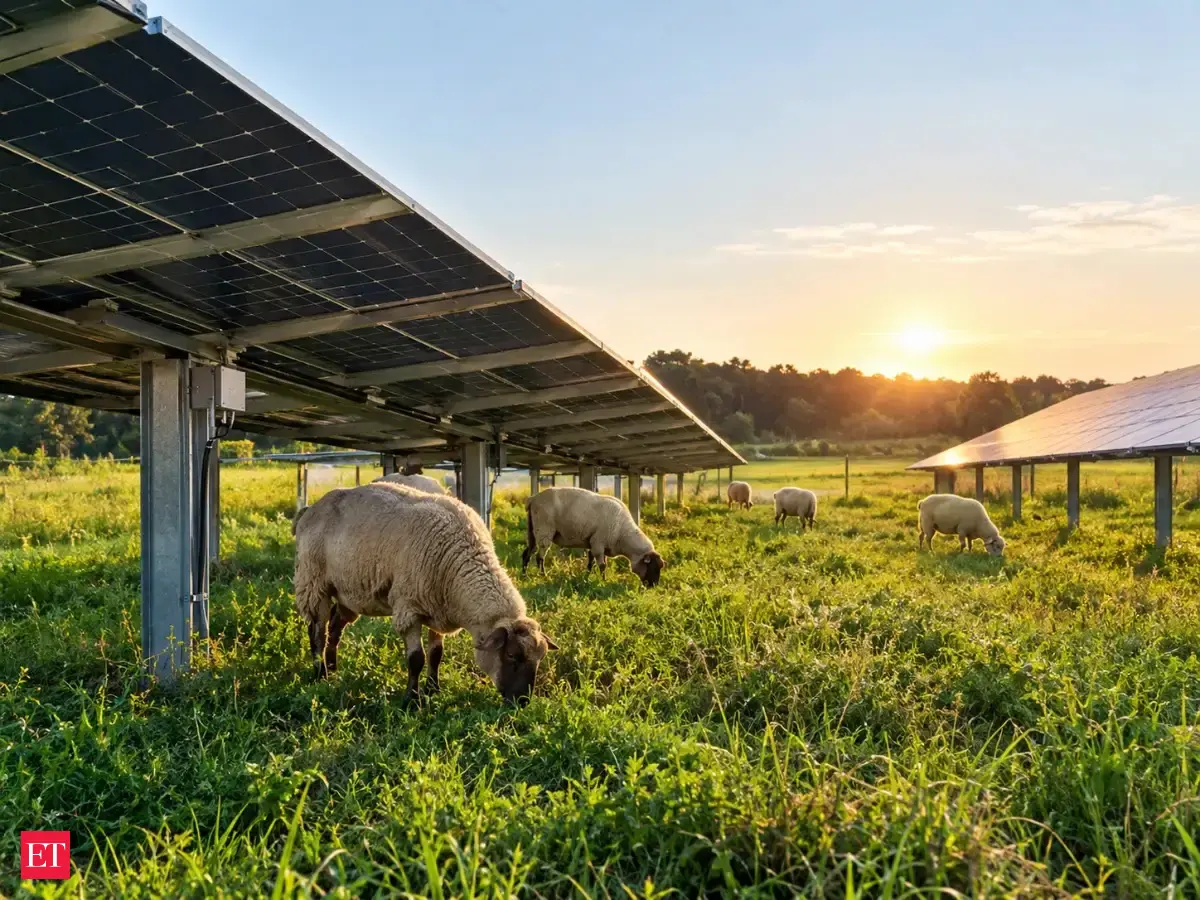
In 2021, a North Carolina farmer struggling to expand his sheep business found 33 acres beneath solar panels; then landed a second solar grazing contract. Alex Greer used the NC Choices programme to connect with Renew Petra. This smart move helped him manage 38 acres without buying any new land.
Alex Greer strategically utilized a program that links farmers with solar developers to enhance his sheep business. By securing grazing contracts across 38 acres in Asheboro and Rowan counties, he faced hurdles like controlling vegetation and installing predator-proof fencing. Interestingly, studies indicate that sheep grazing can bolster soil health and remain financially viable compared to mechanical mowing over time. Greer's journey exemplifies the promising intersection of solar farming and agriculture.
For Alex Greer, expanding his small sheep business was difficult because he lacked access to enough land. In 2021, an opportunity in North Carolina offered a different route: grazing beneath solar panels. According to North Carolina State University's Centre for Environmental Farming Systems (CEFS), the NC Choices programme connected Greer, who runs 37 Roots Farm, with the solar company Renew Petra. The first agreement covered a 33-acre site near Asheboro. By autumn, he had secured a second contract at a five-acre solar site. Together, the locations gave him access to 38 acres for grazing and vegetation management without requiring him to buy additional farmland.
A new route to pasture
Greer reached out to NC Choices for information on solar grazing in 2020. In January 2021, the programme referred him to Renew Petra, which needed vegetation controlled on its 33-acre Asheboro site. It was about 32 miles from his farm, farther than he would have liked, but his expansion options were limited. This involved more than just releasing the sheep into the solar farm since Renew Petra needed vegetation to remain below 18 inches in height so that it would not block the solar panels.
He put forward a proposal and grazing plan, and by February 2021, the two entered into an agreement regarding payment and maintenance of the site. Renew Petra also had specific requirements for weed control and herbicide use. NC Choices gave him sample budgets and agreements, and directed him to resources from the American Solar Grazing Association. Greer could graze the area as well as mow it, if necessary, to maintain the vegetation within acceptable levels.
Preparing the site for sheep
Before the arrival of the flock, Greer had to prepare the ground for grazing. Between March and April 2021, he seeded portions of the ground with rye, fescue, and clover. Additionally, fencing was strengthened following indications that coyotes had gained access to the land. Twenty sheep were added to the land during the spring, with the flock initially grazing areas where sufficient vegetation had established. After a few months of managing the first location, Greer secured a second contract with Renew Petra in autumn 2021. A November 2021 update from 37 Roots Farm said the flock was grazing on two solar arrays. CEFS lists the combined project area as 38 acres across sites in Randolph and Rowan counties.
Alex Greer strategically utilised a program that links farmers with solar developers to enhance his sheep business. Image Credits: Wikimedia Commons.
What solar grazing can, and cannot, solve
The model is part of
agrivoltaics, combining agriculture and solar power on the same land. Sheep eat vegetation that might otherwise need mechanical cutting, but site preparation, transport, animal care and fencing still cost time and money. A study in Frontiers in Sustainable Food Systems examined 28 sheep-grazed commercial solar sites and three conventionally managed sites in the north-eastern United States.
The grazed sites showed higher levels of several soil health metrics, including organic matter and active carbon. However, the researchers referred to their study as a regional baseline and noted the need for further research to distinguish between the effects of grazing and weather and other local factors. The study also noted that grazing could become more cost-competitive with mowing if contracts are long enough to spread start-up costs.
These results cannot be taken as an assessment of Greer's sites or as a guarantee of savings for any installation; costs depend on contract length and site-specific factors. Rather, it was a means of accessing farmland as a by-product of the services solar farms already needed. By pairing the 33-acre plot with another, smaller contract, the North Carolina farmer increased the size of his flock and helped manage the solar facilities.