
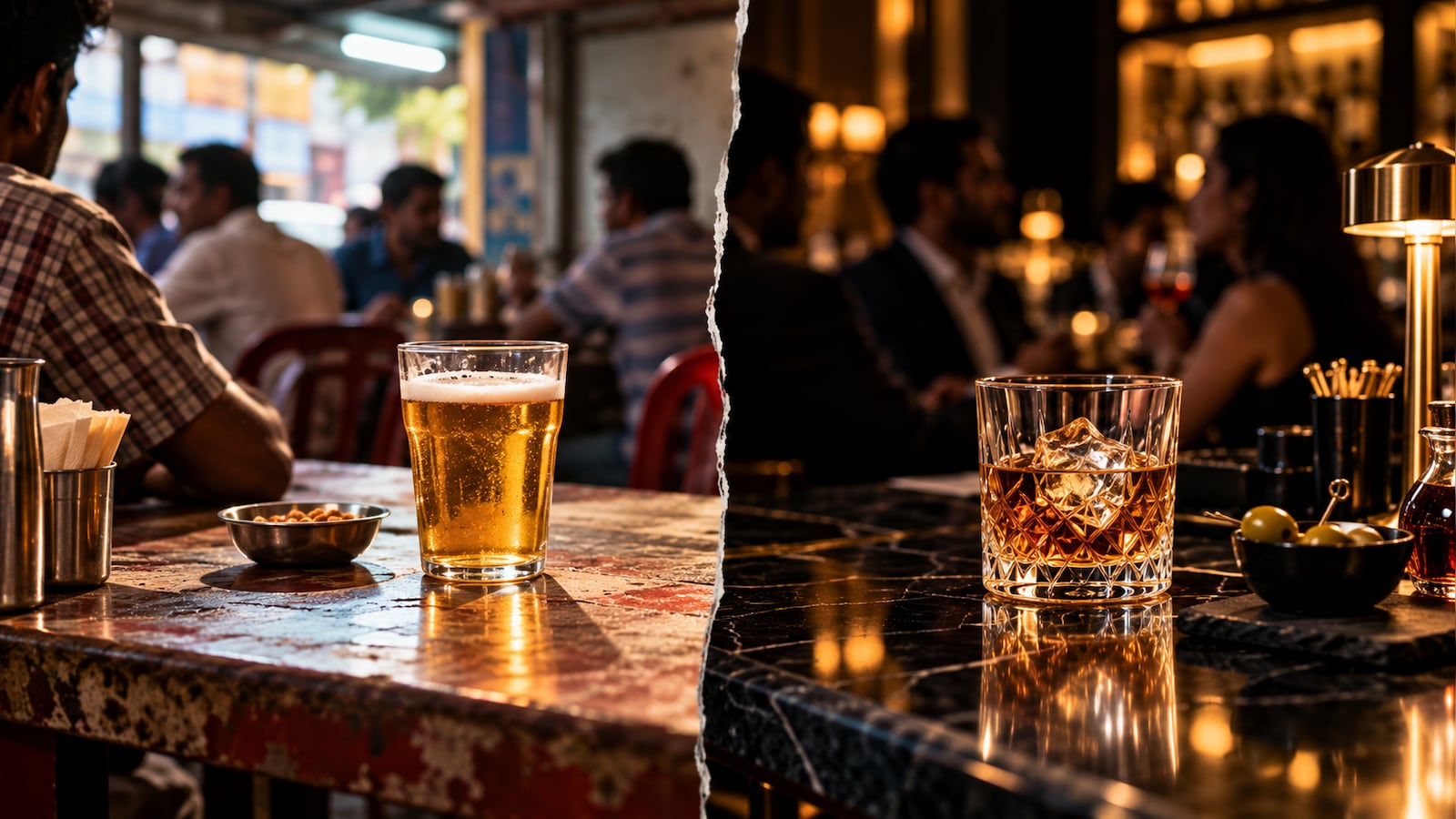
ഇന്ത്യൻ മദ്യവിപണിയിൽ പ്രീമിയം ഉൽപ്പന്നങ്ങൾക്ക് വൻ ഡിമാൻഡാണെങ്കിലും, സാധാരണ ഉപഭോക്താക്കൾ പണപ്പെരുപ്പം മൂലം പ്രതിസന്ധിയിലാണ്. നഗരങ്ങളിലെ താഴ്ന്ന വരുമാനക്കാരായ ഉപഭോക്താക്കൾ ചെലവ് ചുരുക്കുന്നതായി യുണൈറ്റഡ് സ്പിരിറ്റ്സ് വ്യക്തമാക്കുന്നു. വിപണിയിലെ ഈ അസമത്വം മദ്യക്കമ്പനികളുടെ വളർച്ചയെയും ഉപഭോക്തൃ മനോഭാവത്തെയും വ്യത്യസ്തമായി ബാധിക്കുന്നുവെന്ന് റിപ്പോർട്ടുകൾ സൂചിപ
India's alcohol market is growing, but the spending story is not the same at every price point. Premium beer and spirits are finding demand, while some consumers at the other end of the market are beginning to feel the pressure on their wallets.
That does not mean drinkers are abandoning cheaper brands or switching to more affordable options. But the management commentaries point to a market where growth and consumer sentiment are not moving in exactly the same direction. Premium products are gaining volumes, yet there are signs that inflation is weighing on the spending capacity of some urban consumers.
The numbers show why the distinction matters. Premium beer volumes rose 38% year on year in the September quarter at United Breweries, while Radico Khaitan reported 36% growth in its Prestige and Above portfolio. At the same time, Allied Blenders and Distillers reported 15.5% volume growth in its Mass Premium and Others segment, ahead of the 6.1% increase in Prestige and Above.
The clearest indication of pressure came from United Spirits. The company said consumers at the lower end of its urban market were showing signs of wallet fatigue amid inflation, even as its other consumer segments remained resilient.
One Market, Different Budgets
United Spirits CEO Praveen Sameshwar discussed the trend during the company's second-quarter earnings call. He said consumer sentiment remained subdued amid the prolonged West Asia crisis, softer monsoons and inflation.
The company divides its consumers into three groups: India 1, India 2 and India 3. India 1 represents the lower end of its urban consumer base and is a target audience for the lower half of its Indian-made foreign liquor portfolio. The other two groups represent different parts of its consumer base.
Sameshwar said India 1 consumers were showing signs of fatigue, while India 2 and India 3 remained resilient.
The company did not quantify the extent of the pressure. Nor did it say whether these consumers were buying less frequently, moving to cheaper brands or opting for smaller bottles. The comments therefore offer a signal about consumer sentiment, rather than proof of a broader fall in demand for lower-priced alcohol.
United Spirits said it was working on a calibrated price and pack structure to cater to all three groups. It has also relaunched J&B Scotch as a 100% Scotch product at what it describes as an attractive price point, with the India-UK free trade agreement enabling the proposition.
A Wider Product Mix
The push for growth is also taking alcohol companies into new products and formats.
United Spirits has launched Smirnoff Ice, a ready-to-drink product, in Goa and Mumbai, with Bengaluru next on its rollout plan. It is available in 4.8% and 8% alcohol-by-volume variants.
Radico Khaitan is expanding its flavoured vodka range. Its Magic Moments Aam Panna launch in August brought a familiar Indian summer drink flavour into the portfolio.
These launches reflect efforts to widen product choices and reach different drinking occasions. The companies have not, however, said that these initiatives are a direct response to the wallet fatigue identified by United Spirits.