
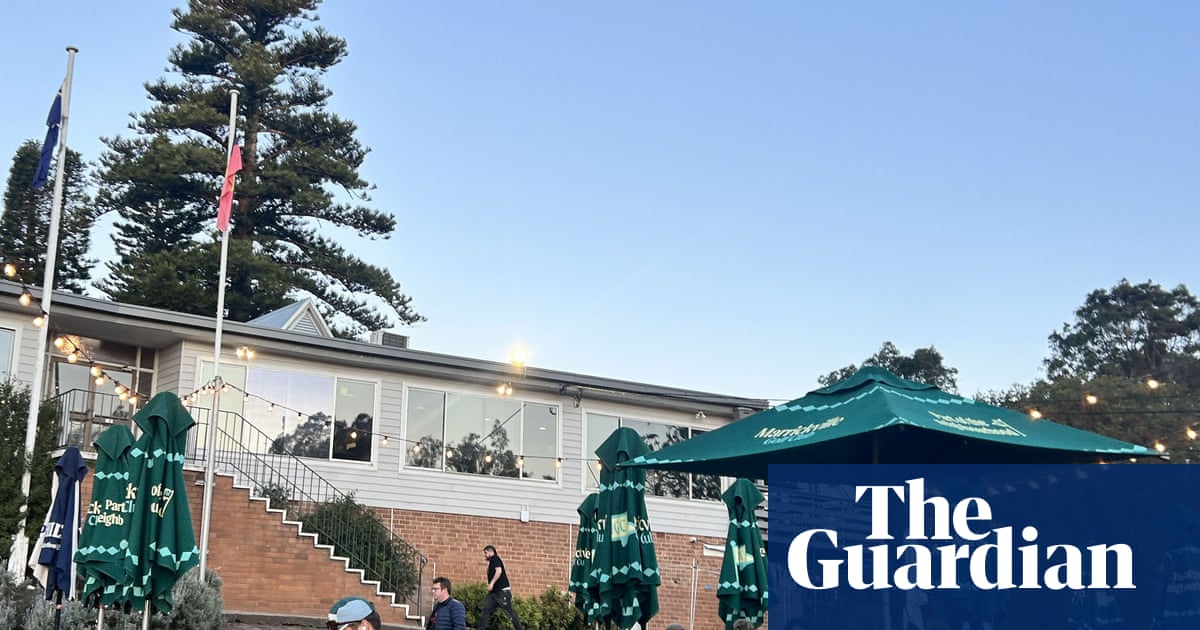
Constitutional expert Anne Twomey accused Anthony Albanese of “grey corruption” over a $6m grant given to the Marrickville Golf Club. The funds were awarded in July 2026 through a closed process. Twomey said, “Public money is not their own money to spend at will,” criticising how the government used grants.
A leading constitutional expert has accused Anthony Albanese of indulging in “grey corruption” over a $6m grant gifted to a golf club in his electorate, and called the scheme under which it was awarded a “farce”.
Anne Twomey, a University of Sydney professor emerita, submitted the scathing assessment to a Senate inquiry into an opaque $560m invitation-only grants scheme used to fund projects Labor promised at the 2025 election, and which largely went to Labor-held seats.
During the 2025 election campaign, the prime minister promised the Marrickville Golf Club, which is located in his electorate of Grayndler, $6m to make a series of upgrades. The grant was then awarded under a “closed non-competitive” process in July 2026.
Twomey accused Albanese of indulging in grey corruption, which she described as a “broad term that encompasses any actions where governments exercise their powers to favour private interests or political interests over the national interest”.
After first coming under fire last month for awarding the grant, Albanese said that the funding was meant to fix issues caused by raw sewage flowing into the adjacent Cooks River. But Twomey wrote there was no reference to this in Albanese’s original announcement in 2025, only that it involved renovations and the harvesting of stormwater to irrigate the golf course.
He said at the time: “I make no apologies for my electorate being serviced by me as a good local member”.
Twomey snapped back at this in her submission, saying: “No, this is not about ‘being a good local member’. It is about indulging in grey corruption and the misuse of public money at the public’s expense.”
“If federal politicians want to make election promises, then they should be doing so about federal matters and the policies that they propose to implement if elected. Public money is not their own money to spend at will, or money belonging to their political party.”
Twomey wrote that the promise of the $6m was made after the golf club was gifted more than $58,000 across four years for five grants that funded upgrades, including to the toilets, club-house, lockers, and planting rows of trees. All of these grants, except for one in 2019, were classified as “closed, non-competitive”.
Twomey labelled this “remarkable”, adding the “effect was that the Marrickville Golf Club was granted funds without any assessment of whether it had greater need for these grants than anyone else”.
“They were effectively gifts of political largesse, funded by taxpayers,” she wrote.
Some of the grants were awarded while the Coalition was in government. Twomey wrote that “at first glance this might be regarded as a counter to accusations of pork-barrelling” but “it in fact reveals a more systemic problem with such grants”.
She said this is because under the scheme – called the Powering Communities and Stronger Communities Programs – local MPs select organisations to apply for the grant. Twomey wrote that it appears all the grants were a consequence of a choice made by Albanese, and such schemes “provide a variation on the more common form of pork-barrelling”.
“They still favour the government of the day, because a government will almost always have more MPs than the opposition. But it gives the illusion of evenhandedness, even though the recipients for grants are chosen on political grounds,” she wrote.
Twomey labelled the grants system a “farce” as grant guidelines are “drafted after the promises have been made to ensure that they can be met”.
She said the scheme was “deliberately constructed in this way, to provide a public perception of integrity and propriety while facilitating political patronage and the grant of favours with public money, contrary to the public interest.”
She said while the program did appear to be constitutionally valid, but warned there were still obligations that needed to be met, including the efficient and ethical spending of public money.