
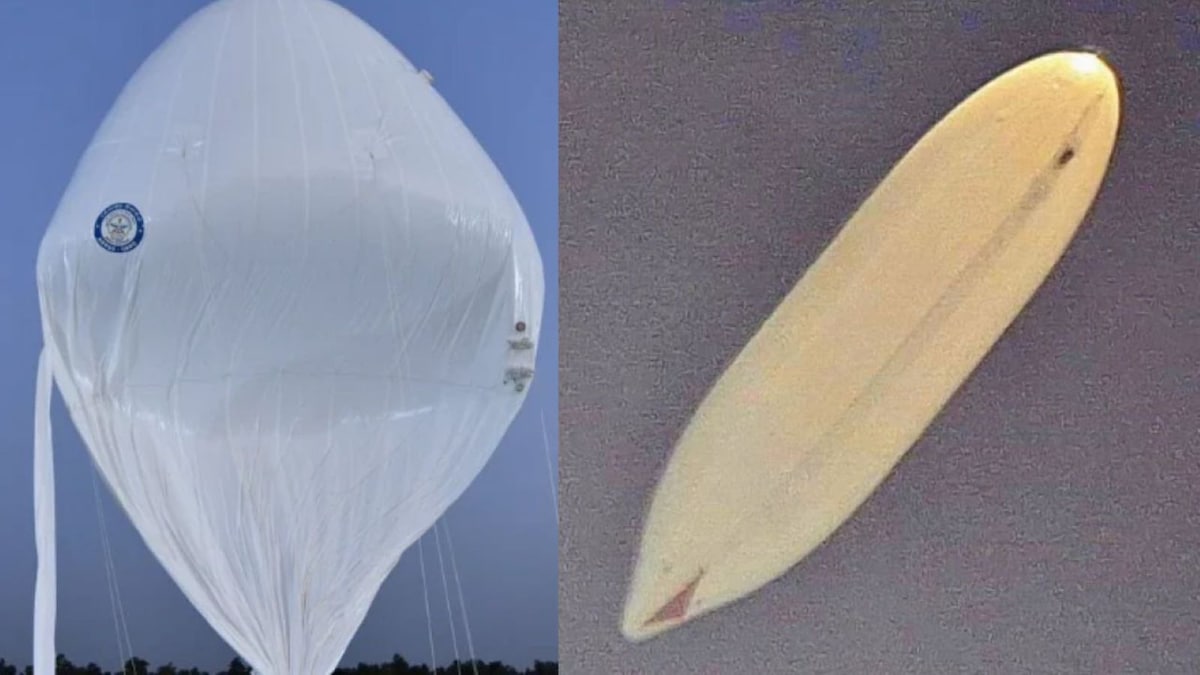
The Defence Research and Development Organisation successfully tested an indigenously developed High-Altitude Platform, reaching 21 km above sea level. The platform stayed at 20 km for over 30 minutes before a safe recovery. This unmanned system acts like a satellite, offering surveillance and communication support while remaining closer to Earth.
The Defence Research and Development Organisation (DRDO) has successfully tested an indigenously developed High-Altitude Platform (HAPS), taking it to an altitude of 21 km above sea level.
The platform stayed at around 20 km for more than 30 minutes before being brought back to the ground. The platform was successfully recovered.
What is HAPS?
HAPS stands for High-Altitude Platform Station. It is an unmanned aircraft, airship or balloon designed to operate high above the Earth, usually in the stratosphere at around 20 to 50 km altitude. It can carry cameras, sensors and communication equipment while remaining over a particular area.
HAPS can be seen as a middle ground between drones and satellites. It flies much higher than conventional drones but operates much closer to Earth than satellites.
Why is HAPS important?
HAPS can be used for surveillance, communication, Earth observation and disaster response. Since it operates much closer to Earth than a satellite, it can provide detailed and continuous coverage of a particular region.
Another advantage is that HAPS can be brought back to the ground for maintenance, repairs or upgrades. Satellites, once launched, are much harder to access.
What happened in the DRDO test?
During the flight, it sent real-time video and other flight data to a Ground Control Station. The platform carried systems such as a GPS receiver, cameras, an inertial measurement unit and an altitude-control system. These systems help the platform with navigation, monitoring and maintaining its altitude.
Who developed India's HAPS?
The platform is being developed by DRDO's Aerial Delivery Research and Development Establishment (ADRDE) in Agra. It is a lighter-than-air system designed to work as a long-endurance aerial platform in the stratosphere.
Meanwhile, Defence Minister Rajnath Singh congratulated the DRDO, IAF, public sector undertakings and industry partners involved in the construction of the 2,000th engine by HAL Koraput and described it as a historic milestone in India's aerospace journey.
"The construction of the 2,000th engine by HAL Koraput is a historic milestone in India's aerospace journey. With the successful overhaul of more than 9,000 engines, this division continues to empower our Aero-Engine Capability and the Operational Readiness of our Armed Forces," he said.