
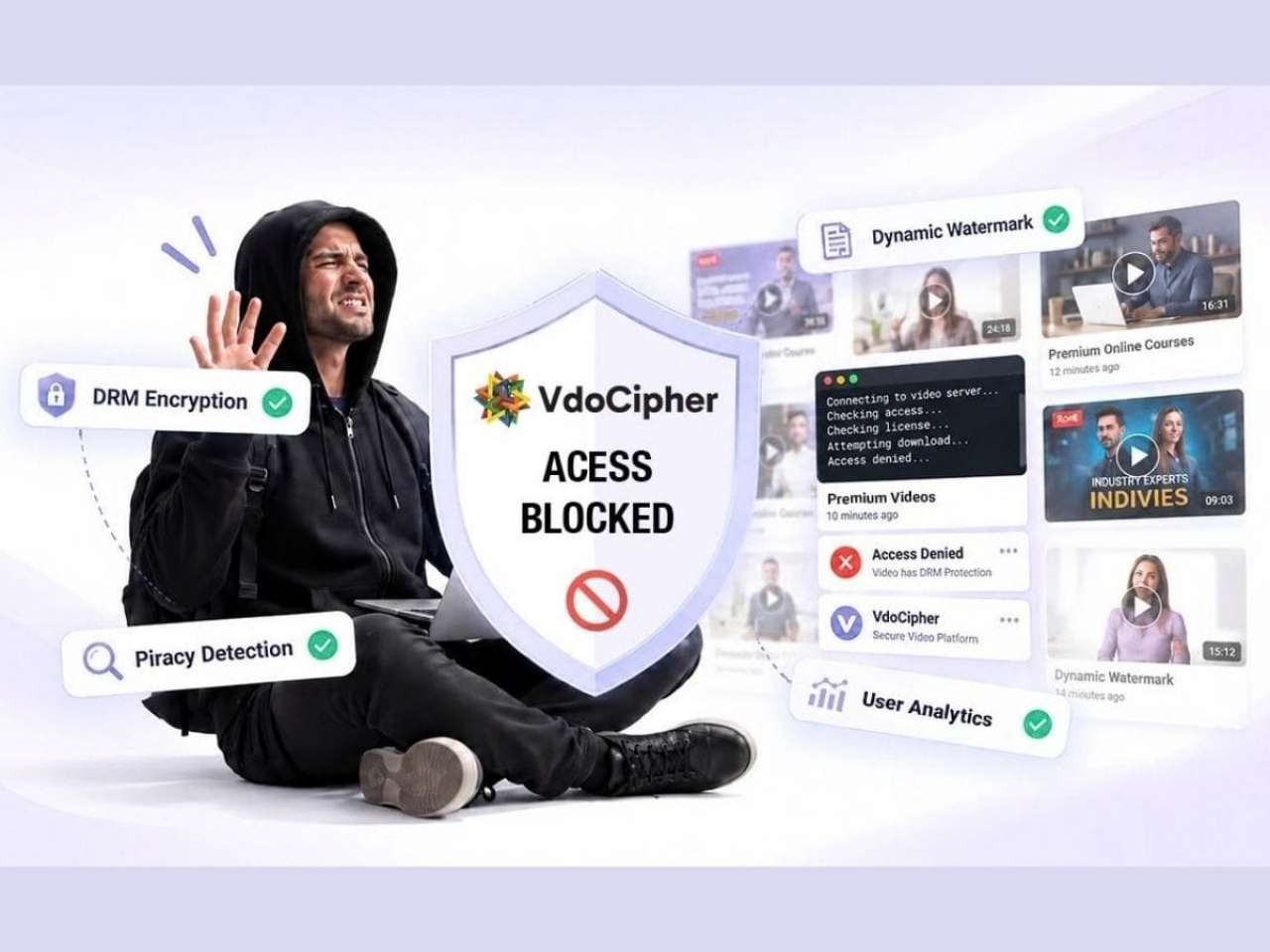
VdoCipher co-founder Siddhant Jain says stopping video piracy means identifying pirates, not just blocking them. The firm created a tracker that caught 11,300 people involved in piracy attempts. Jain said, "Knowing the logged-in user who made this attempt turns the whole situation into vicious power." This technology helped boost profits.
As piracy grows more organized, from Telegram channels to illegal sports streams, the Gurugram-based secure video platform is betting on technology that doesn't just block pirates, but identifies them.
Before the IPL 2026, the High Court of Delhi issued an injunction against JioStar on rogue sites and apps from illegally streaming matches, allowing the broadcaster to inform any other infringing websites in real time. According to the court, since piracy now works through anonymous, continuously evolving networks, the action needed consistent enforcement.
In a worldwide perspective, the problem is still bigger in size. An organization specializing in cybersecurity, Silent Push, reported the discovery of an IPTV piracy organization operating through over 1,000 domains and 10,000 IP addresses and affecting more than 20 major companies like Netflix, Prime Video, Premier League, and Formula 1.
"Seizures and court orders are important but occur after the damage is already done," commented Siddhant Jain, Co-founder and CEO of VdoCipher. "Every pirated video stream starts from some video being pulled from where it was uploaded."
However, DRM encryption isn't a magic bullet anymore. "Hackers are getting cleverer," Jain added. "Drm-breaking programs and applications are shared on the Internet. If your protection consists only of DRM, then you are protected against thieves of yesterday."
The discovery made VdoCipher create Piracy Tracker and Hacker Identification Engine which are in some ways anti piracy solution that help compare the playback sessions with more than 300 parameters like user or device. These programs check device simulation, and DRM violation attempts; geo-switching and suspicious devices are detected by the software making the blocking of illegal sessions possible in real time.
Jain stated that, "Blocking attempts provides immense help. Knowing the logged-in user who made this attempt turns the whole situation into vicious power." The app's informational panel shows piracy attempt's user ID so content owners can restrict the user from accessing the content or pursue legal action.
In the one year alone, 370,000+ hacking attempts based on DRM were blocked by the engine and it identified 11,300+ people involved in piracy attempts with this information provided to customers of the service. VdoCipher's technology, in total, provided around $200 million of extra profits thanks to the pirating prevention and conversion of users into paid audience.
The problem is bigger than just sports and media. For those who teach online, a course that is even leaked just once can wipe away weeks or months of hard work. Even a lecture that could be sold for thousands of rupees will end up on Telegram for free. Jain says that this is the elephant in the room when it comes to online education.
"Video piracy strips educators of their earned income, but it also takes away a chance for students to learn from good teachers," Jain said. "When a creator's materials are stolen, they stop paying for their original ideas. It leads to the decline in the quality of education."
The issue strikes a familiar experience for Jain. As students at IIT Delhi, he and co-founder Vibhav Sinha enjoyed seeing a friend, who was an educator, always treat the risk of his premium lectures being subjected to piracy with concern and distress. It was in October 2015, after graduating, when they started VdoCipher in Gurugram to solve that problem.
"DRM encryption and secure playback were technologies available to only giants like Netflix," Jain said. "We wanted any website or app, of any size, to integrate the same level of protection in a day or two. We are, in a way, democratizing protection from video piracy."
At present, VdoCipher covers the secure video hosting platform of more than 7,000 video press in over 120 countries, offering technology for DRM protection, dynamic watermarking based on the user and detailed analytics.
Moving forward Jain believes the key groundwork done by VdoCipher's team and the culture based on flat organizational hierarchy and fitness-first principles has helped the company survive two crises. The company is going to achieve the goal of becoming the best secure video hosting company providing piracy protection for recorded and live video content..