
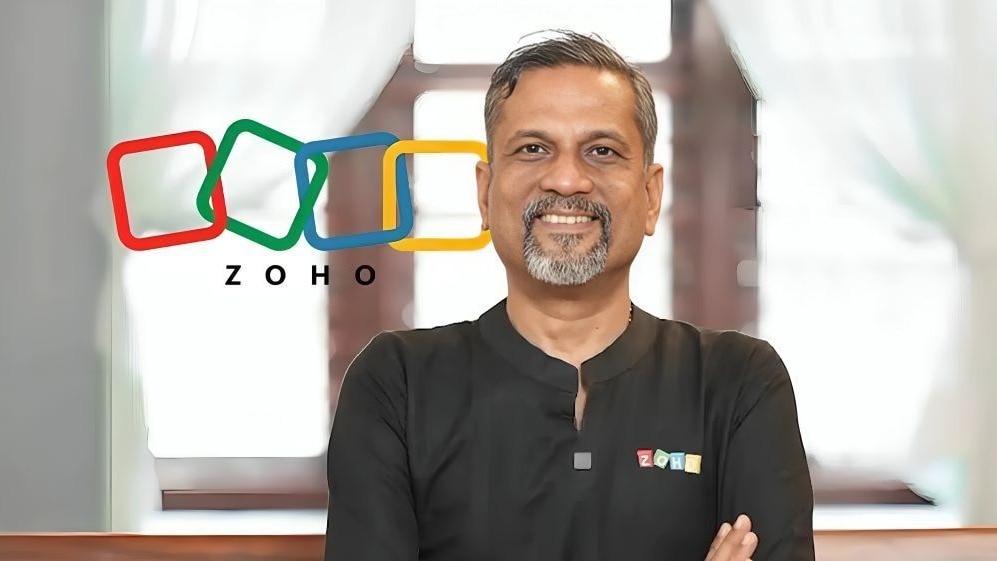
Zoho founder Sridhar Vembu hit back at Elon Musk over his sarcastic remark about Mukesh Ambani. Vembu defended India’s affordable mobile data and digital services, saying, "These are the facts Elon." He argued that Reliance Jio helped millions, while noting that Tesla also gets protection from competition in America.
Zoho founder Sridhar Vembu has hit back at Elon Musk after the Tesla and SpaceX chief took a sarcastic swipe at Reliance Industries chairman Mukesh Ambani amid the ongoing dispute over Starlink's entry into India. Vembu defended India's low-cost digital services and argued that Reliance Jio has played a major role in making mobile data affordable for millions of Indians.
In a post on X, Vembu responded to Musk's sarcastic reference to Ambani as the person in charge of India. He pointed to the country's affordable mobile data, low medicine prices and inexpensive digital payment services, arguing that these benefits are available to ordinary Indians.
"These are the facts Elon," Vembu wrote, challenging Musk's criticism of India's telecom market.
Vembu credited Ambani's launch of Jio with bringing down data prices in India. He said mobile internet was so affordable that he often relied on his phone's data connection while travelling in the country rather than connecting to local Wi-Fi. He also noted that many Indians carry dual-SIM phones with large data plans because mobile data costs relatively little.
Vembu questions Musk's criticism of India's market
Vembu also turned the argument towards the US electric vehicle market, saying Tesla faces protection from Chinese competition in its home market. He argued that this keeps EV prices in America higher than they would be in a more competitive environment.
Defending the Indian government, Vembu said Prime Minister Narendra Modi had worked to create a competitive economy in which ordinary people benefit from lower prices. He also pointed to the growth of startups in India as evidence of competition across industries.
Vembu further argued that government policies had helped Indian startups make progress in developing low-cost rockets. He said these developments could pose a challenge to SpaceX, much as Chinese electric vehicles compete with Tesla.
His comments come as Musk continues to push for Starlink's commercial launch in India, where the satellite internet service is yet to complete the remaining regulatory requirements.
Why Musk is angry with Ambani
Musk recently took a sarcastic dig at Ambani in a post on X, writing: "Dear Prime Minister Ambani, Please accept my humble apologies for not realizing that you are the real boss of India."
He went on to accuse Ambani of wanting to preserve a monopoly while questioning whether Starlink would be allowed to compete in the country.
Musk argued that satellite internet could connect people in areas where conventional internet services are unavailable. He said better connectivity could help children access educational opportunities and allow small businesses to sell their products to global customers.
The SpaceX chief also pointed to Starlink's role in restoring communications during natural disasters, arguing that the service could help save lives when other communication networks fail.
The comments came as Musk shared news reports concerning Reliance-linked company Qwik Supply's political donations and a report examining how a Reliance-funded firm promoted the BJP's election campaigns on Facebook. The reports have added to the public debate surrounding Reliance's political connections and the competition facing Starlink in India.
Jio has its own satellite internet ambitions
The dispute comes as Reliance Jio prepares to expand beyond mobile towers and fibre networks with its proposed satellite connectivity project.
At India Mobile Congress 2026, Jio presented plans for a constellation of around 1,600 low-Earth orbit satellites and 23 ground stations across India. The company is pitching the project as "Sovereign Satellite Connectivity", with the aim of extending internet access to remote villages, islands, border areas and maritime locations.
Jio wants its satellite network to work alongside its existing mobile and fibre infrastructure. The proposed services could also support businesses, aviation, maritime operations, government agencies, defence and disaster response.
Starlink, meanwhile, has already secured its GMPCS licence and IN-SPACe authorisation but must complete the remaining regulatory requirements, including the spectrum assignment process, before it can begin commercial operations.
The Indian government has rejected claims that it is unfairly blocking Starlink, saying its authorisation process for satellite communication providers is fair and non-discriminatory. It has also said that Starlink, Jio Satellite Communications and Bharti-backed Eutelsat OneWeb are at broadly the same stage of the regulatory process, with security assessments under way.